
قم بتنزيل التطبيق


معلومات عنا
حقوق الطبع والنشر © 2024 Desertcart Holdings Limited
قم بتنزيل التطبيق
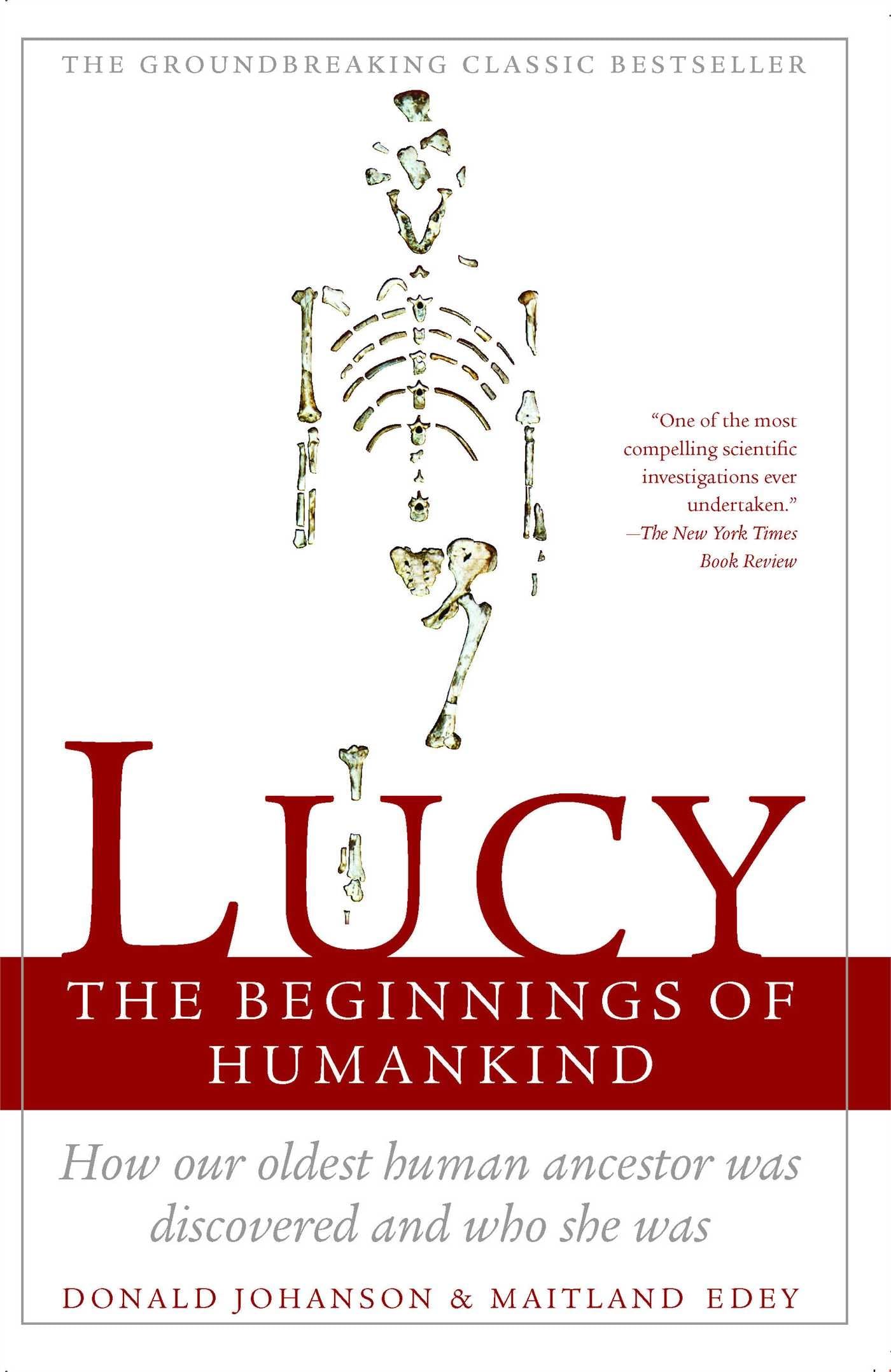
Buy LUCY: THE BEGINNINGS OF HUMANKIND on desertcart.com ✓ FREE SHIPPING on qualified orders Review: As much about paleoanthropologic field work as our ancestors - I read this book when I was writing a paleo-historic drama of the life of earliest man. My characters were Homo habilines, but they cohabited Africa with Australopithecines, so to understand the co-stars of my story, I turned to the man who has become the guru of earliest man: Donald Johanson and his amazing find, Lucy. In his book, Lucy: The Beginnings of Humankind (Touchstone Simon & Schuster 1990) Johanson and his co-author, Maitland Edey tell the fascinating tale of how they found Lucy, the most complete skeleton ever uncovered of an Australopithecene, the genus that immediately preceded Homo. Prior to this find, he was pretty much an unknown, toiling with many other paleoanthropologists in search of man's roots, maybe the now defunct 'missing link'. Johanson got an idea, followed it despite adversity, disbelievers, money problems and set-backs. These, he chronicles in the book, sharing every step of his journey with an easy-going writing style, breaking down the complicated science to an amateur's understanding and sharing his innermost thoughts on his discovery and how it changed then-current thinking on man's evolution. I learned not only about Lucy, but how paleoanthropologists do their field work, what their days are like, how they fight to prepare for an expedition, and the politics they must solve both to get there and get back. Johanson also includes well-written descriptions on the background of human evolution, field work in East Africa, the paleo-historic geology of Olduvai Gorge (the famed location where Leakey uncovered so much of our primeval roots), the discussion among scientists that pinned down the human-ness of the genus Homo and what differentiated it from older genus like Australopithecines (Lucy's genus), other animals Lucy likely lived with and survived despite of, how Lucy's age was definitively dated, and more. Johanson jumps right in with the Prologue, telling us how Lucy came to be discovered, and then takes us back to the story of how he got there and what happened after. Through Lucy's story, we learn about man's beginnings and who that earliest forebear was. Here are some of my favorite quotes: She had lain silently in her adamantine grave for millennium after millennium until the rains at Hadar had brought her to light again Bands of Homo erectus would wait in the valleys between the hills for the big game herds that migrated south for the winter. They drove the game into swamps by setting grass fires. Big men have big brains, but they are no smarter than small men. Men are also larger than women and have consistently larger brains, but the two sexes are of equal intelligence Desert people the world over shun wadis or defiles as campsites The ash became wet and, almost like a newly laid cement sidewalk, began taking clear impressions of everything that walked across it You don't gradually go from being a quadruped to being a biped. What would the intermediate stage be--a triped? I've never seen one of these. You might not think that erect walking has anything to do with sex, but it has, it has If one is to jump and snatch, one had better be able to judge distances accurately. The way to precise distance judgment is via binocular vision: focusing two eyes on an object to provide depth perception The chimpanzee...is the most adaptable of the apes. A hen is an egg's way of getting another egg. For some truly beautiful and realistic drawings of man's predecessors, check out Jay Matternes. Review: xxx - so much important information on our earliest ancestors
| Best Sellers Rank | #623,260 in Books ( See Top 100 in Books ) #86 in Biology of Fossils #97 in Physical Anthropology (Books) #1,778 in History & Philosophy of Science (Books) |
| Customer Reviews | 4.6 out of 5 stars 115 Reviews |
J**Y
As much about paleoanthropologic field work as our ancestors
I read this book when I was writing a paleo-historic drama of the life of earliest man. My characters were Homo habilines, but they cohabited Africa with Australopithecines, so to understand the co-stars of my story, I turned to the man who has become the guru of earliest man: Donald Johanson and his amazing find, Lucy. In his book, Lucy: The Beginnings of Humankind (Touchstone Simon & Schuster 1990) Johanson and his co-author, Maitland Edey tell the fascinating tale of how they found Lucy, the most complete skeleton ever uncovered of an Australopithecene, the genus that immediately preceded Homo. Prior to this find, he was pretty much an unknown, toiling with many other paleoanthropologists in search of man's roots, maybe the now defunct 'missing link'. Johanson got an idea, followed it despite adversity, disbelievers, money problems and set-backs. These, he chronicles in the book, sharing every step of his journey with an easy-going writing style, breaking down the complicated science to an amateur's understanding and sharing his innermost thoughts on his discovery and how it changed then-current thinking on man's evolution. I learned not only about Lucy, but how paleoanthropologists do their field work, what their days are like, how they fight to prepare for an expedition, and the politics they must solve both to get there and get back. Johanson also includes well-written descriptions on the background of human evolution, field work in East Africa, the paleo-historic geology of Olduvai Gorge (the famed location where Leakey uncovered so much of our primeval roots), the discussion among scientists that pinned down the human-ness of the genus Homo and what differentiated it from older genus like Australopithecines (Lucy's genus), other animals Lucy likely lived with and survived despite of, how Lucy's age was definitively dated, and more. Johanson jumps right in with the Prologue, telling us how Lucy came to be discovered, and then takes us back to the story of how he got there and what happened after. Through Lucy's story, we learn about man's beginnings and who that earliest forebear was. Here are some of my favorite quotes: She had lain silently in her adamantine grave for millennium after millennium until the rains at Hadar had brought her to light again Bands of Homo erectus would wait in the valleys between the hills for the big game herds that migrated south for the winter. They drove the game into swamps by setting grass fires. Big men have big brains, but they are no smarter than small men. Men are also larger than women and have consistently larger brains, but the two sexes are of equal intelligence Desert people the world over shun wadis or defiles as campsites The ash became wet and, almost like a newly laid cement sidewalk, began taking clear impressions of everything that walked across it You don't gradually go from being a quadruped to being a biped. What would the intermediate stage be--a triped? I've never seen one of these. You might not think that erect walking has anything to do with sex, but it has, it has If one is to jump and snatch, one had better be able to judge distances accurately. The way to precise distance judgment is via binocular vision: focusing two eyes on an object to provide depth perception The chimpanzee...is the most adaptable of the apes. A hen is an egg's way of getting another egg. For some truly beautiful and realistic drawings of man's predecessors, check out Jay Matternes.
F**Y
xxx
so much important information on our earliest ancestors
R**R
Informational
Fact filled.
J**B
Good lay description of key event in paleoanthropolgy
I am reading this book 35 years after its publication date, which makes it...and me behind the times. So, a few things may have changes in the field of paleoanthropology since then, but it is probably pretty accurate. It is not easy to take a pot ntially complcated discussion like this and reduce it to layman level, but the author has succeeded. If you have any interest in the prehuman creatures from whom we may have descended, this is an excellent read. Some will, for religious reasons, object to the entire subject, and the book does not waste much time dealing with a defense of evolution. Nonetheless, such a defense is mounted anyway by the shear application of scientific reasoning, and the hesitation to draw conclusions until much evidence had been obtained.
D**Y
Lucy is the most Facinating book on our species, ever!
Everyone should read it. Yes, at times the scientific stuff drags on, But, you can not fully comprehend the work without it. Everything adds up later! How this book leaves you in the end makes you want to continue reading other books in the genre. I already read Sapien. That is a wonderful book, also. But, Lucy will leaving you rethinking, what you thought you already knew.
A**I
Great!
Great!
C**R
A Cautious "Thumb's Up"
Dr. Johanson shows both his strengths and weaknesses in this largely enthralling look at risks and rewards of paleoanthropology. His expertise in hominid development comes well-wrapped in the role of storyteller. And his experiences in the field are a story worth telling. Johanson disappoints when he steps outside his field of expertise. For instance, his chapter on radiometric dating is riddled with inaccuracies. And "Is It A Matter Of Sex?" is intrinsically flawed in its discussion of evolutionary "strategies." Overall a great book and a good read!
K**Y
Hubby approved!
My hubby wanted this so I got it for him. He opened it and was impressed with it. It was second hand but it was stuff was highlighted and there were notes in it. He was so excited.
ترست بايلوت
منذ أسبوعين
منذ أسبوعين