
قم بتنزيل التطبيق


معلومات عنا
حقوق الطبع والنشر © 2024 Desertcart Holdings Limited
قم بتنزيل التطبيق
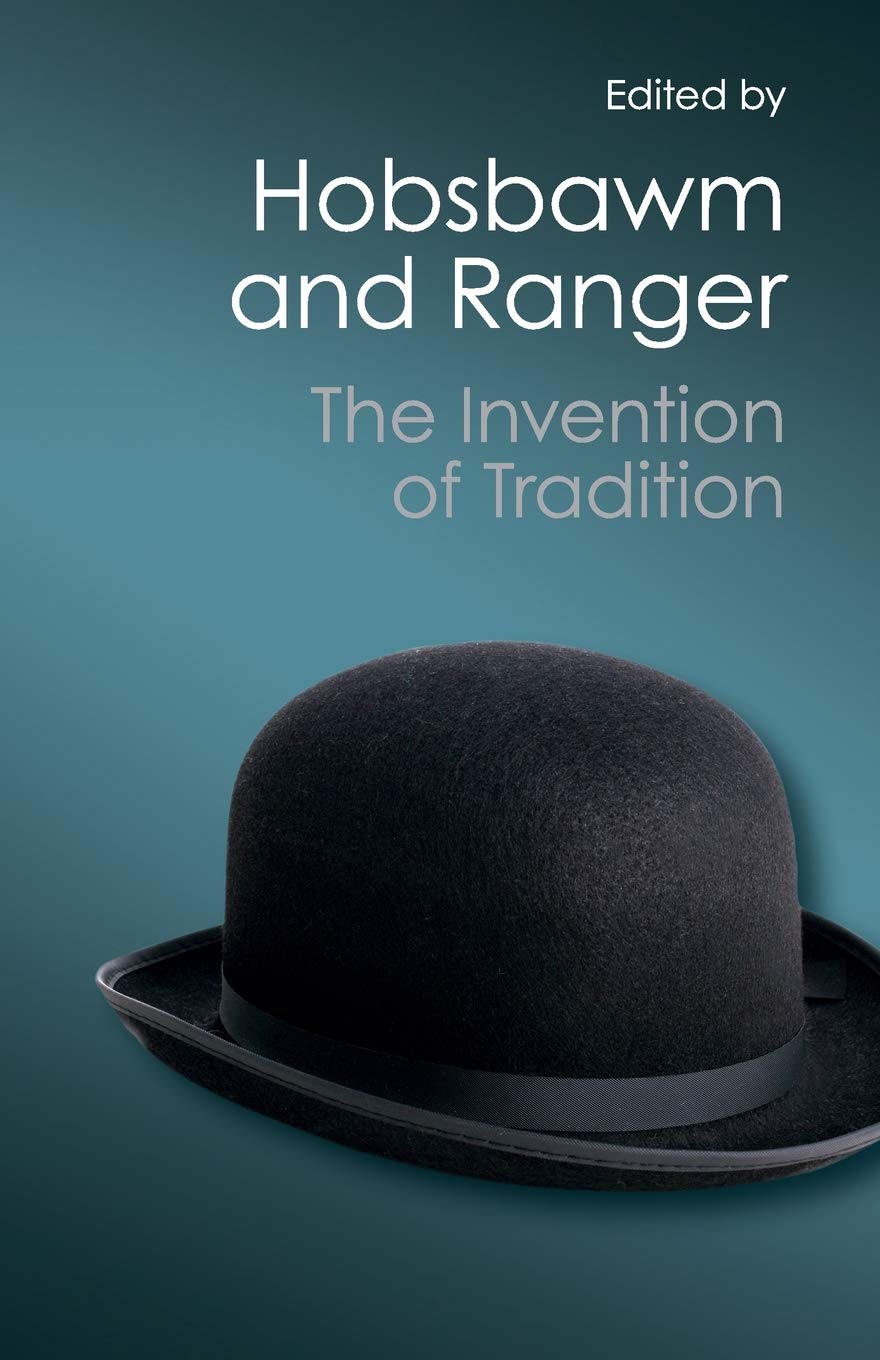
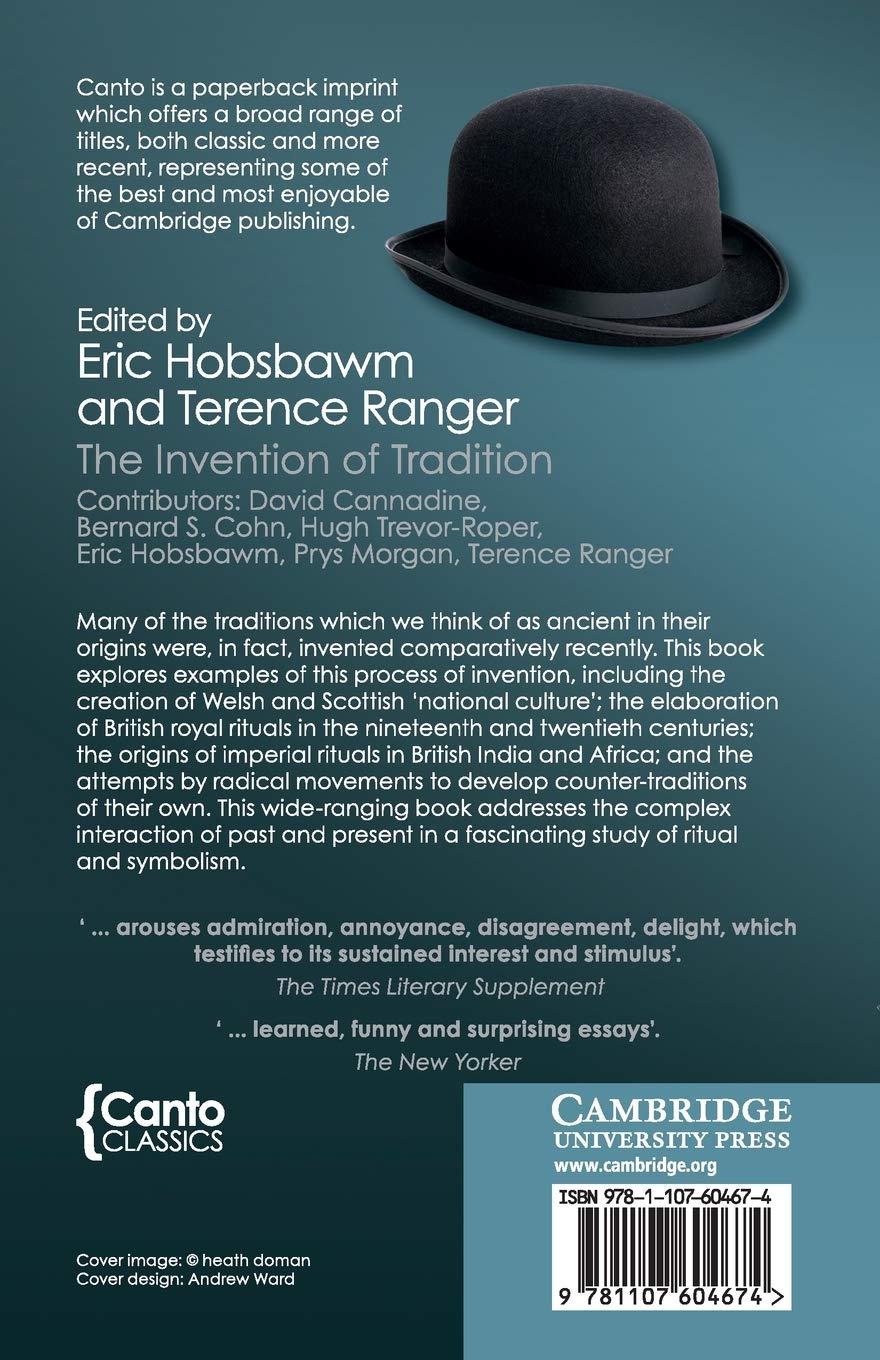
desertcart.com: The Invention of Tradition (Canto Classics): 9781107604674: Hobsbawm, Eric, Ranger, Terence: Books Review: A Classic, Albeit a Pernicious One - The Invention of Tradition is a classic in Marxist-Critical scholarship, though it does contain some of its pernicious tendencies. First, the positives. The opening two chapters are an ingenious unraveling of the stereotypes associated with Scotland and Wales. Historically, the Highlands of Scotland are shown to be derivative of Irish civilization. The bagpipes and kilt are proven to be no more than commercial artifacts of the 18th century. But then the book suffers a bit in its arguments. The ornately done coronation of the English monarchy is shown to be more elegant than its predecessors—thanks to technology and resources—but it’s a stretch to call this invented. While the bagpipes were foisted on unsuspecting Scotsmen as their national instrument instead of the historical harp, monarchical traditions that date back to the Middle Ages but are now on TV for mass consumption isn’t invented tradition in the same sense. As you can see, the book centers almost exclusively on Britain which is where I see the Marxist liability. It seems like the authors want to use the fact that many “hoary old” traditions date only to the nineteenth century to undermine every element of British culture. Nationalities are hokum, the monarchy is silly at best and public schools (American private schools) are the result of the imperial past. In all, it seems like the collected authors are dissatisfied with the props the capitalist/liberal state relies on for stability. It’s not that the criticism is all off-based, it’s that there’s a lot of good in the liberal/capitalist order that I, for one, would be loathe to lose sight of. So while this is some of the finest scholarship of modern Marxist historians, I can’t help but feel that its theme has an underlying pernicious effect. But, by all means, read it for yourself and see whether you agree that its authors are pushing for more than the mere recognition that democratic states also have myths/stories that bend or distort history. Review: Scholarly And Readable—A Rare Combination - Excellent. Pretty impressive historians unpack how various traditions get manufactured. Good adjunct to provide depth for some who’s interested in something like Roland Barthes’s Mythologies or Victor Turner’s The Forest of Symbols. And you get Hobsbawn, who simply was (is) the best.
| ASIN | 1107604672 |
| Best Sellers Rank | #247,840 in Books ( See Top 100 in Books ) #79 in Customs & Traditions Social Sciences #232 in History (Books) #3,153 in World History (Books) |
| Customer Reviews | 4.5 4.5 out of 5 stars (179) |
| Dimensions | 5.43 x 0.75 x 8.51 inches |
| Edition | Reissue |
| ISBN-10 | 9781107604674 |
| ISBN-13 | 978-1107604674 |
| Item Weight | 1 pounds |
| Language | English |
| Print length | 324 pages |
| Publication date | March 26, 2012 |
| Publisher | Cambridge University Press |
A**S
A Classic, Albeit a Pernicious One
The Invention of Tradition is a classic in Marxist-Critical scholarship, though it does contain some of its pernicious tendencies. First, the positives. The opening two chapters are an ingenious unraveling of the stereotypes associated with Scotland and Wales. Historically, the Highlands of Scotland are shown to be derivative of Irish civilization. The bagpipes and kilt are proven to be no more than commercial artifacts of the 18th century. But then the book suffers a bit in its arguments. The ornately done coronation of the English monarchy is shown to be more elegant than its predecessors—thanks to technology and resources—but it’s a stretch to call this invented. While the bagpipes were foisted on unsuspecting Scotsmen as their national instrument instead of the historical harp, monarchical traditions that date back to the Middle Ages but are now on TV for mass consumption isn’t invented tradition in the same sense. As you can see, the book centers almost exclusively on Britain which is where I see the Marxist liability. It seems like the authors want to use the fact that many “hoary old” traditions date only to the nineteenth century to undermine every element of British culture. Nationalities are hokum, the monarchy is silly at best and public schools (American private schools) are the result of the imperial past. In all, it seems like the collected authors are dissatisfied with the props the capitalist/liberal state relies on for stability. It’s not that the criticism is all off-based, it’s that there’s a lot of good in the liberal/capitalist order that I, for one, would be loathe to lose sight of. So while this is some of the finest scholarship of modern Marxist historians, I can’t help but feel that its theme has an underlying pernicious effect. But, by all means, read it for yourself and see whether you agree that its authors are pushing for more than the mere recognition that democratic states also have myths/stories that bend or distort history.
J**3
Scholarly And Readable—A Rare Combination
Excellent. Pretty impressive historians unpack how various traditions get manufactured. Good adjunct to provide depth for some who’s interested in something like Roland Barthes’s Mythologies or Victor Turner’s The Forest of Symbols. And you get Hobsbawn, who simply was (is) the best.
C**N
Of merit, but one must not overconclude from the essays
A collection of essays by different historians that problematize the notion of clearly inherited traditions being taken at face value. The are a variety of different historiographic commitments in these essays, but the focus on traditions being conjured into being to legitimatize and problematize being a colonial subject runs as thread through all the texts--although of which relate to the British or continental European empires. This text can be abused to, however, discredit "traditions" that are beyond its scope and one should be wary with using thusly.
C**I
Five Stars
Very glad to have found a copy of this book. Important to consider the circulation of cultural myths as opposed to stories based in reality, in light of the current exposure of the "fake news" phenomenon.
L**E
Five Stars
Enjoyable and pleasant.
C**R
Five Stars
Great
E**F
This is UNBELIEVABLY dense and if you don't have a ...
This is UNBELIEVABLY dense and if you don't have a wicked case of Anglophilia (I don't) I doubt you will find this very engaging. That is all the more a shame because the authors are clearly subject matter experts and bring a lot of interesting information to the table. For me, this didn't make up for the mental effort required to keep up with obscure Welsh words (see "eisteddfodau") and names in order to hold onto the big picture.
M**S
The truth behind the tartans!
Hugh Trevor-Roper's contribution to this book is priceless. In his chapter "Invention of Tradition: The Highland Tradition of Scotland", he details for the reader where the supposedly "ancient" costume of Scotland came from. The kilt was invented by an English Quaker about 1726 to allow his Highland workmen to more easily move while smelting the iron ore he was extracting. The kilt was thus an expression of the Industrial Revolution rather than an ancient freedom of the heather. The "setts" of tartans purporting to show a particular pattern of plaid belonging to a particular Highland clan is an even more recent invention. The concept of a unified group wearing the same tartan began with the English formation of the Highland regiments in the 1740s and later. The Scottish cloth industry recognized a good thing when they saw it and with the help of the Scottish Romantic movement and with promotion by Sir Walter Scott, by the 1820s, Clan/tartan pattern books (which often disagreed with one another) were happily catering to this invented tradition. Invented by mis-guided or plainly fraudulent "antiquarians", the concept of particular tartan patterns being associated with a specific Clan is one of the long-running jokes played by the Scots on the rest of the world. Rather like the game of golf.
V**O
Trattasi di un'opera miscellanea con contributi di studiosi diversi che rivela come tradizioni ritenute antiche e autentiche siano in realtà costruzioni relativamente recenti e aventi finalità ben precise, p.es. commerciali. Un libro che rende il ns. sguardo più avvertito e smaliziato. Esiste la traduzione italiana.
E**R
Ex library but nice condition, hardback, wonderful articles of prominent historians
F**O
10
P**.
The Invention of Tradition: c’est bien le livre que j’ai donné à lire et étudier à mes étudiants et étudiantes à l’Université de Lisbonne pour bien connaître et comprendre la naissance des traditions dans le quadre des nations européennes du XIXème siècle à nos jours et leur influence sur notre éducation et la vie culturelle de l’Europe.
B**N
I read this book while studying a post-grad course in history and had been looking for it for a while. The book is well written in a style that is easy to understand with the reader needing no previous knowledge of the subject. The authors describe how the cultural traditions that we assume have developed organically throughout the ages have in fact been reinvented, or in most cases invented, during the 19th century usually by the middleclass intelligentsia. It focuses on the cultural revivals that took place in Ireland and Wales and the origins of Scottish cultural traditions and how it was fabricated. The credentials of the authors, as historical and political writers, are beyond reproach and in this book they give a fascinating insight into how notions of national identity and culture are developed and manipulated and remind us how ethereal and subjective ideas of cultural nationalism are and how they are social and psychological constructs. One need only look at the development of the Ulster-Scots tradition in recent time to see the invention of tradition in action. The book reminds us that cultural nationalisms develop in opposition to each other and are socially divisive and can lead to more than just the simple, innocent pursuit of quaint regional customs, traditions and the differences in cultural idiosyncrasies. The book arrived on time and in very good condition.
ترست بايلوت
منذ أسبوعين
منذ 5 أيام