
قم بتنزيل التطبيق


معلومات عنا
حقوق الطبع والنشر © 2024 Desertcart Holdings Limited
قم بتنزيل التطبيق
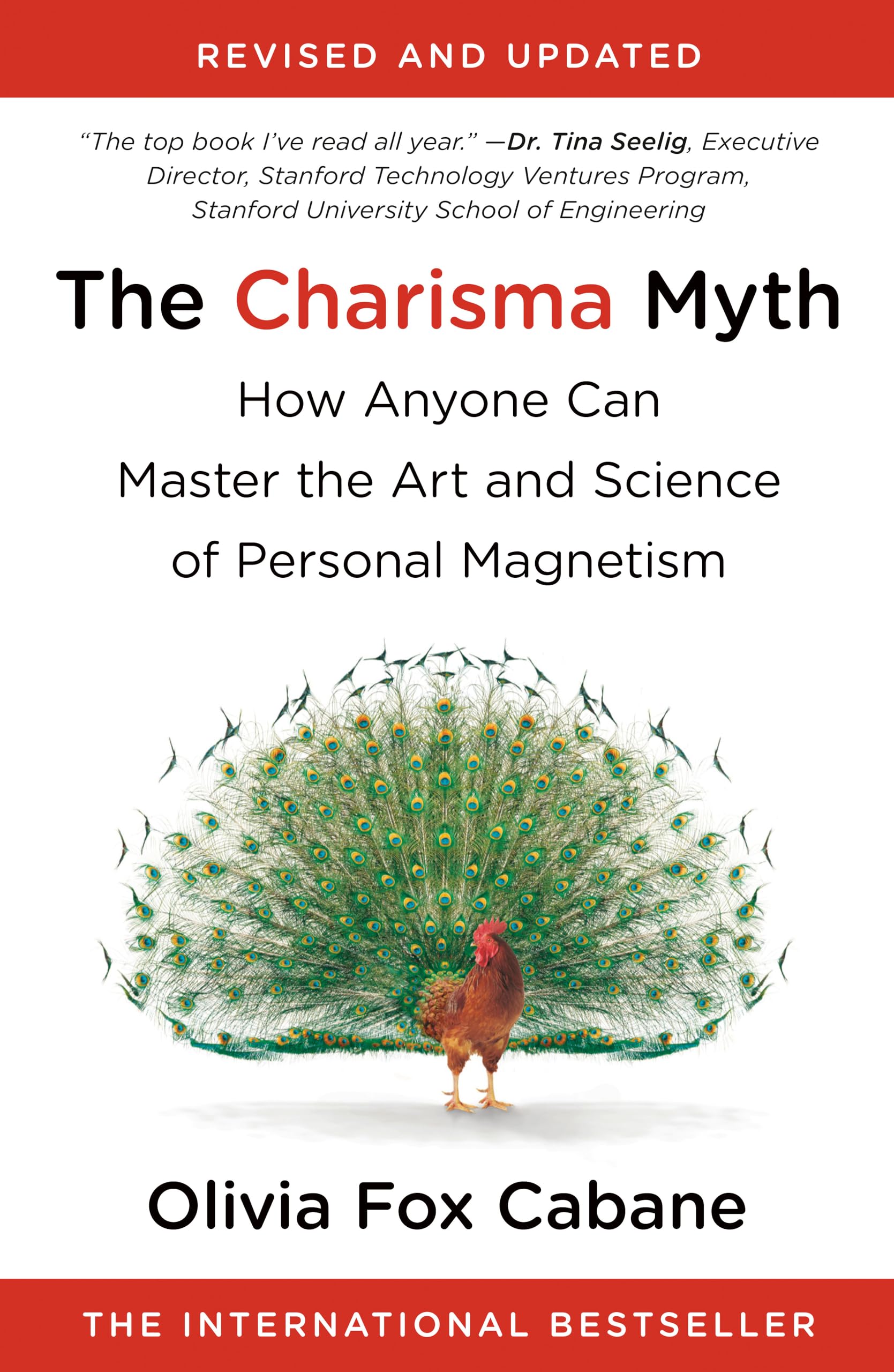
The Charisma Myth: How Anyone Can Master the Art and Science of Personal Magnetism [Cabane, Olivia Fox] on desertcart.com. *FREE* shipping on qualifying offers. The Charisma Myth: How Anyone Can Master the Art and Science of Personal Magnetism Review: The best book of its kind I've ever read - I read a lot of books in this genre - call it "professional self-help." I've spoken professionally a few times now about leadership and communication, and for my most recent one just a few months ago I did a ton of reading research and a lot of it was books like this one. Most of them are mediocre. I began reading The Charisma Myth expecting more of the same, frankly: platitudes, some common sense stuff, the kinds of advice that will only make sense to people who don't need it. I was just hoping for a tidbit or two that would be useful. I don't really gush about things. If anything I tend to be very demanding and therefore very critical. Like I said, I think most books in this genre are essentially useless. The Charisma Myth is a truly phenomenal book. It's so good that I have recommended it to several of my colleagues and it has already changed the way I manage my team and relate to my coworkers. In fact, my first gut reaction when I read it was "I guess I should stop speaking, now, because everything I'd want to talk about is covered in here." Here's the thing: most of these kinds of books give you a few things: 1. Platitudes: useless, pithy sayings. 2. Random Anecdotes: stories that don't really offer any takeaway you can act on. 3. Abstract Imperatives: things like "be a good listener!" If you're not already a good listener that's kind of like saying "Roast Beef Recipe: Get some beef and roast it." It's not helpful - it doesn't tell me what actual specific actions to take. Here's what this book gave me: 1. Extremely concrete, specific actions: Every piece of advice about conduct or mindset is accompanied by direct actions to take. When you're in a conversation and find your mind drifting, bring it back to a physical sensation in the present, like the feeling in your toes. That's just one example of many, but they're all things you can actually DO, not abstract imperatives like "be a better listener" or pithy-but-vapid stuff like "smile more!" 2. Visualizations: I've never seen anyone push visualization like Olivia does. She makes the compelling point that visualization is something top athletes and actors have known about forever. In my talks I've always felt slightly uncomfortable urging people to do visualizations, but not anymore, not after reading this. She runs through a lot of specific visualizations, and they're immediately useful practices. 3. Taxonomies: Of the most useful business and management blogs I read, some of their most useful posts (I'm thinking of randsinrepose.com, for example) are taxonomies. "The five kinds of meeting attendees." "The four kinds of firefighting." Or whatever. These are helpful to me because by enumerating a problem space as a handful of distinct categories they help me crystallize my own thinking about it. Olivia does this when she enumerates the four kinds of charisma. Look, I think I'm a good manager and leader, an empathetic guy and good at my job, I'm not gonna lie, but I'd never thought about it in this way. This was pretty eye-opening to me. I read this part and thought, oh yeah, I've got the "focus" and "kindness" charisma but less of the "authority" and definitely least of all the "visionary" charisma. And that gives me specific things to work on, and a way to understand why I'm better at motivating people in certain circumstances rather than others. To anyone who wants to be more charismatic: to be more successful at work, more able to positively influence those around them, more able to open up and make real connections with others, and just more able to lead a rich and happy life - and I know how this sounds, I swear I don't usually gush like this! - this book tells you everything you need to know. Everything! No other book I've read does that. To be clear, that's like saying Rippetoe's "Starting Strength" tells you everything you need to know to be a very good, extremely strong weightlifter. You still have to do a ton of really hard work! This book doesn't make you magically charismatic. But it gives you direct, specific, applied practices that, if you do them, will make you more charismatic and enrich your life. Of all the pop psychology, management, leadership, and professional self-help books I've ever read, I cannot say that about a single other one. I give this book my absolute highest recommendation. It is absolutely superb. I don't say that lightly. Review: not just for sparkly-toothed sales people - Simply put, this book is a good read and an extremely useful toolbox. For anyone. The first chapters deconstruct charisma from something mystical and genetic into a few basic behaviors that we can do something about. It's an idea both liberating and reassuring, and piqued my curiosity to read the rest (the framework for the book is in the first few chapters which you can read for free on desertcart). What makes this book useful is the fact that you can act on it. Quickly. Every chapter has suggestions for actions you can take to improve how you present yourself to people. And these suggestions are not about reaching some nebulous goal of "improving charisma", they are about making better first impressions, giving better presentations, dealing with difficult people... scenarios that we all encounter regularly and all of us know we could handle better. This is not just the province of sparkly-toothed sales people. I run a nonprofit, for example. I have to deal with donors and fundraising, I have presentations to give, and I have a team to manage. Every one of those activities --- whether I like it or not -- depends on how people perceive me. I think about the times I've given incredibly thorough pitches to foundations, or proposed a new budget to my team, only to have it fall flat because of the way I presented the content and myself. Here's one tiny example of something I found useful. One of the chapters made me realize that I nod often in conversation. I suppose I do it to indicate that I'm listening. According to the book, nodding in agreement with people demonstrates empathy but lowers your projection of power and status. When you stop to think about it for a minute (imagine someone who nods a lot in conversation), it's absolutely true. I'm trying to do it less. Small tips like that, or pausing two seconds before you answer questions, are simple things that can make a difference in the outcome of critical interactions. Do I want that donor thinking I'm a nice guy, or someone who can accomplish great things with her money? This book presents a wide range of tools, from simple physical behaviors (like nodding, speaking, and handshakes); to more complicated communication like structuring feedback to people in difficult situations and making a better impression over the phone; to more subtle actions to improve your mental state going into important situations. All of these tools are actionable and summarized helpfully at the end of the chapter. Criticisms? As with all of these kinds of books that deal with behavioral psychology and influence -- like Robert Cialdini's Influence -- there is a dollop or two of pop psychology that feels overly simplified. One or two of the examples are well-trodden and you may recognize them from other books. The author doesn't have time to go into the issue of how these observations translate across cultures -- and I imagine the rules would be different if you were in a business meeting in Japan. Lastly, the sheer breadth of topics and examples sometimes makes it feel like a grab bag. However, it's a useful kind of grab bag: more like a swiss army knife than an overstuffed purse. Overall, the thesis of the book is great, and the content was engaging and actionable. I would recommend it to my dad to improve the results he gets with his church vestry, an MBA looking to help navigate her way up the corporate ladder, a buddy going on his first date after a divorce, or a teacher preparing for her PTA meetings.


| Best Sellers Rank | #12,865 in Books ( See Top 100 in Books ) #191 in Leadership & Motivation #365 in Motivational Self-Help (Books) #387 in Success Self-Help |
| Customer Reviews | 4.5 4.5 out of 5 stars (3,003) |
| Dimensions | 5.4 x 0.7 x 8.4 inches |
| ISBN-10 | 1591845947 |
| ISBN-13 | 978-1591845942 |
| Item Weight | 2.31 pounds |
| Language | English |
| Print length | 320 pages |
| Publication date | March 26, 2013 |
| Publisher | Portfolio |
B**P
The best book of its kind I've ever read
I read a lot of books in this genre - call it "professional self-help." I've spoken professionally a few times now about leadership and communication, and for my most recent one just a few months ago I did a ton of reading research and a lot of it was books like this one. Most of them are mediocre. I began reading The Charisma Myth expecting more of the same, frankly: platitudes, some common sense stuff, the kinds of advice that will only make sense to people who don't need it. I was just hoping for a tidbit or two that would be useful. I don't really gush about things. If anything I tend to be very demanding and therefore very critical. Like I said, I think most books in this genre are essentially useless. The Charisma Myth is a truly phenomenal book. It's so good that I have recommended it to several of my colleagues and it has already changed the way I manage my team and relate to my coworkers. In fact, my first gut reaction when I read it was "I guess I should stop speaking, now, because everything I'd want to talk about is covered in here." Here's the thing: most of these kinds of books give you a few things: 1. Platitudes: useless, pithy sayings. 2. Random Anecdotes: stories that don't really offer any takeaway you can act on. 3. Abstract Imperatives: things like "be a good listener!" If you're not already a good listener that's kind of like saying "Roast Beef Recipe: Get some beef and roast it." It's not helpful - it doesn't tell me what actual specific actions to take. Here's what this book gave me: 1. Extremely concrete, specific actions: Every piece of advice about conduct or mindset is accompanied by direct actions to take. When you're in a conversation and find your mind drifting, bring it back to a physical sensation in the present, like the feeling in your toes. That's just one example of many, but they're all things you can actually DO, not abstract imperatives like "be a better listener" or pithy-but-vapid stuff like "smile more!" 2. Visualizations: I've never seen anyone push visualization like Olivia does. She makes the compelling point that visualization is something top athletes and actors have known about forever. In my talks I've always felt slightly uncomfortable urging people to do visualizations, but not anymore, not after reading this. She runs through a lot of specific visualizations, and they're immediately useful practices. 3. Taxonomies: Of the most useful business and management blogs I read, some of their most useful posts (I'm thinking of randsinrepose.com, for example) are taxonomies. "The five kinds of meeting attendees." "The four kinds of firefighting." Or whatever. These are helpful to me because by enumerating a problem space as a handful of distinct categories they help me crystallize my own thinking about it. Olivia does this when she enumerates the four kinds of charisma. Look, I think I'm a good manager and leader, an empathetic guy and good at my job, I'm not gonna lie, but I'd never thought about it in this way. This was pretty eye-opening to me. I read this part and thought, oh yeah, I've got the "focus" and "kindness" charisma but less of the "authority" and definitely least of all the "visionary" charisma. And that gives me specific things to work on, and a way to understand why I'm better at motivating people in certain circumstances rather than others. To anyone who wants to be more charismatic: to be more successful at work, more able to positively influence those around them, more able to open up and make real connections with others, and just more able to lead a rich and happy life - and I know how this sounds, I swear I don't usually gush like this! - this book tells you everything you need to know. Everything! No other book I've read does that. To be clear, that's like saying Rippetoe's "Starting Strength" tells you everything you need to know to be a very good, extremely strong weightlifter. You still have to do a ton of really hard work! This book doesn't make you magically charismatic. But it gives you direct, specific, applied practices that, if you do them, will make you more charismatic and enrich your life. Of all the pop psychology, management, leadership, and professional self-help books I've ever read, I cannot say that about a single other one. I give this book my absolute highest recommendation. It is absolutely superb. I don't say that lightly.
N**N
not just for sparkly-toothed sales people
Simply put, this book is a good read and an extremely useful toolbox. For anyone. The first chapters deconstruct charisma from something mystical and genetic into a few basic behaviors that we can do something about. It's an idea both liberating and reassuring, and piqued my curiosity to read the rest (the framework for the book is in the first few chapters which you can read for free on Amazon). What makes this book useful is the fact that you can act on it. Quickly. Every chapter has suggestions for actions you can take to improve how you present yourself to people. And these suggestions are not about reaching some nebulous goal of "improving charisma", they are about making better first impressions, giving better presentations, dealing with difficult people... scenarios that we all encounter regularly and all of us know we could handle better. This is not just the province of sparkly-toothed sales people. I run a nonprofit, for example. I have to deal with donors and fundraising, I have presentations to give, and I have a team to manage. Every one of those activities --- whether I like it or not -- depends on how people perceive me. I think about the times I've given incredibly thorough pitches to foundations, or proposed a new budget to my team, only to have it fall flat because of the way I presented the content and myself. Here's one tiny example of something I found useful. One of the chapters made me realize that I nod often in conversation. I suppose I do it to indicate that I'm listening. According to the book, nodding in agreement with people demonstrates empathy but lowers your projection of power and status. When you stop to think about it for a minute (imagine someone who nods a lot in conversation), it's absolutely true. I'm trying to do it less. Small tips like that, or pausing two seconds before you answer questions, are simple things that can make a difference in the outcome of critical interactions. Do I want that donor thinking I'm a nice guy, or someone who can accomplish great things with her money? This book presents a wide range of tools, from simple physical behaviors (like nodding, speaking, and handshakes); to more complicated communication like structuring feedback to people in difficult situations and making a better impression over the phone; to more subtle actions to improve your mental state going into important situations. All of these tools are actionable and summarized helpfully at the end of the chapter. Criticisms? As with all of these kinds of books that deal with behavioral psychology and influence -- like Robert Cialdini's Influence -- there is a dollop or two of pop psychology that feels overly simplified. One or two of the examples are well-trodden and you may recognize them from other books. The author doesn't have time to go into the issue of how these observations translate across cultures -- and I imagine the rules would be different if you were in a business meeting in Japan. Lastly, the sheer breadth of topics and examples sometimes makes it feel like a grab bag. However, it's a useful kind of grab bag: more like a swiss army knife than an overstuffed purse. Overall, the thesis of the book is great, and the content was engaging and actionable. I would recommend it to my dad to improve the results he gets with his church vestry, an MBA looking to help navigate her way up the corporate ladder, a buddy going on his first date after a divorce, or a teacher preparing for her PTA meetings.
D**Y
Olivia' Fox Cabane's jewel of a book, "The Charisma Myth: How Anyone Can Master the Art and Science of Personal Magnetism" is about so much more than simply improving what most self-help books have traditionally called charisma. This book is essentially in depth cognitive behavioural therapy for the introvert's soul. Why the book likely resonates with so many of her readers to an even greater extent than even Olivia might realize, is her ability to bring an inner psychological clarity to the scientific reasons many of us have experienced a lifetime of confusion derived from our own misinterpretation of the subconscious signals we receive from our brains and our bodies, and the subconscious signals we send and receive to and from others. Through an eclectic selection of real-life anecdotes, and sometimes peculiar but always fascinating scientific data to back up her proposed charisma-enhancing activities, Olivia manages to expertly and succinctly summarize the science behind conscious and subconscious perception, what it all means from an evolutionary, cognitive, and social psychology perspective, and how we can use this use this powerful science to triumph over the misunderstandings our conscious minds have made of our innately subconscious interactions with the people we yearn to engage with. Unlike many self-help books, Olivia gives the reader permission to be true to themselves; being genuine, it seems, is a very big part of releasing your inner charisma. The book is jam-packed with practical exercises, as well as tips and tricks that at once will seem to create a magical influence on your life. You will find yourself effortlessly practicing your new skills on a daily basis without nearly as much conscious effort as you might expect, and the improvement in your engagement with others will be obvious. A highly recommended read for anyone wanting to let their genuine inner charismatic voice out of shadows, and for anyone ready to move forward into a new state of self-acceptance, called "Charisma".
M**N
If you want to be charismatic and attractive you dont need much more than this book! From the beginning to the end, Olivia presents us with the best in modern psychology, motivation, all with solid research and professional experiencie in the bases. Simply, EXCELLENT. This book changes my life.
C**N
I wasn't expected so much from this book but it has definitively a great value. Very well structured, it slowly bring you into all aspect of charisma. Exercices are sooo useful when you have something very important (meeting, interview, presentation). Summary of all chapters at the end is a very nice take-away!
G**E
Perfect
J**A
Recommend it to those interested in psychology .
ترست بايلوت
منذ شهر
منذ 3 أيام