Hundred Years War Vol 3
Product ID: 156821319
Desertcart purchases this item on your behalf and handles shipping, customs, and support to OMAN.
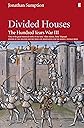
Divided Houses is a tale of contrasting fortunes. In the last decade of his reign Edward III, a senile, pathetic symbol of England's past conquests, was condemned to see them overrun by the armies of his enemies. When he died, in 1377, he was succeeded by a vulnerable child, who was destined to grow into a neurotic and unstable adult presiding over a divided nation. Meanwhile France entered upon one of the most glittering periods of her medieval history, years of power and ceremony, astonishing artistic creativity and famous warriors making their reputations as far afield as Naples, Hungary and North Africa. Contemporaries in both countries believed that they were living through memorable times: times of great wickedness and great achievement, of collective mediocrity but intense personal heroism, of extremes of wealth and poverty, fortune and failure. At a distance of six centuries, as Jonathan Sumption skilfully and meticulously shows, it is possible to agree with all of these judgments. Review: The third volume of one of the great history books of our time - This third volume of Jonathan Sumption's great history of the Hundred Years War lives up to expectations raised by the earlier volume. Superb! Review: Amazing - Amazingly good. Tells the reader about the war on all levels, from the peasants to the soldiers to the nobility and the king himself. Incredibly detailed and informative.
| Best Sellers Rank | #631,279 in Books ( See Top 100 in Books ) #1,115 in Great Britain History (Books) #6,003 in Christian Church & Bible History (Books) |
| Customer Reviews | 4.7 out of 5 stars 155 Reviews |
D**N
The third volume of one of the great history books of our time
This third volume of Jonathan Sumption's great history of the Hundred Years War lives up to expectations raised by the earlier volume. Superb!
S**E
Amazing
Amazingly good. Tells the reader about the war on all levels, from the peasants to the soldiers to the nobility and the king himself. Incredibly detailed and informative.
J**Z
Narrative history at its best
Jonathan Sumption's spectacular history of the Hundred Years War is a treat for any history fan. Rarely will you find a scholarly and massively researched history as fluently and engagingly written as these volumes. A fine testament to the value of narrative history. Can't wait till the bext volume
V**O
An amazing work of history. Must read books!
Fantastic book. I love it and the entire series. However the back and front cover of this book is pealing. The previous two did not have this issue. I think they have different publishers. So be warned to handle it with care.
T**R
WELCOME ADDITION
Continues the series, well-written and based on what appears to be meticulous research. One hopes that Mr. Sumption will continue this look at history. I have travelled a little in France and seen some of the towns mentioned in the series as well as Paris.
A**R
Great Read!
Read them all!
J**Y
Five Stars
Excellant history and great service from the provider.
J**X
Professor Sumption's History of the Hundred year's War
Professor Sumption has written a narritive of the hundred Years war that is very carefull and very detailed, yet is so well written that it pulls the reader right into the tase and feel of the period and the war.
A**A
Exceptionally skilled writing
History is not boring; at least in the manner in which Sumption writes. His history is detailed - day by day, even hour by hour telling of event. His characters are complex - aggressive, mad, devious. His locations include most of western Europe from the Scottish Highland to Naples, from Lisbon to Bohemia. And of course England and France. His clear crisp writing and narrative style brings this tragic period to life. Never pompous or sententious, just simple clear short sentences accompanied by maps that allow the reader to enter into the actions of battles, sieges and chevauchées. Hours of delight reading such excellent prose and absorbing so much information so easily.
M**.
Muy interesante
Una obra imprescindible
R**L
Absolutely the best chronicler of the French 100 Years War
I have only peered inside but Jonathan Sumption is the absolute best historian and chronicler of the 100 Years Wars. This collection—a total of 5 hefty volumes by the Pennsylvania Press, and a collection in the Middle Age Series at the Pennsylvania Press—is a feat requiring great knowledge, skill, and wisdom. When I learned that my French ancestors had been employed as nobility and had worked closely with and to a number of French Kings in Bourges for at least 500 years, I had to get to know both the physical and social landscape in which they thrived. This collection—of which I have read less than a chapter—will you you in awe, as it has left me, not only of the historical accounts, but of Jonathan Sumption’s brilliant mind.
N**K
Almost perfect history
Volume 3 of Jonathan Sumption's history covers the(for me) least known section of the Hundred Years War - the period between Edward III and the Black Prince's triumphs - Crecy, Poitiers etc - and Henry V and Agincourt. It was a pretty bleak period for England, as they were politically and militarily outmanoeuvred, and driven from many of their hard won gains. The book covers the battle field, the domestic politics of both countries and diplomatic manouevring. As before, I found his economic analysis particularly interesting - the two kings' relative abilty to raise taxes was as decisive as anything else. I loved the first two volumes, and this one as well. First, the writing is superbly clear and readable, keeping you turning pages despite the length and complexity. Secondly, the grasp of detail brings events and people to life - this is no dry academic history. Third, Sumption sets out a clear overall narrative that knits the mass of events together, and paints a convincing picture of how England steadily gave ground. (How Sumption manages to combine writing these books with being one of the UK's top lawyers is beyond me). I sometimes felt that Sumption was enjoying writing so much that he was deliberately slowing down - less seems to happen than in Volumes 1 and 2, and I began to wonder how many Volumes the whole series will run to. Occasionally, you think you have covered every square inch of British occupied France - and a few more maps would help. But Sumption still manages to keep you interested and reading, despite the level of detail and lack of 'spectaculars'. Such pure quality of writing keeps him at 5 stars.
I**S
France recovers while England flounders
As well as being a lock-down sceptic and former supreme court judge, Jonathan Sumption is a distinguished historian who has produced a magisterial five-volume history of the Hundred Years War between England and France. Divided Houses is the third volume in the series. It was first published in 2009 and is regarded as the most accurate and detailed account of the war so far written – on this side of the Channel at any rate. This volume covers the period from 1369 to 1399. During this period France recovered from the disasters of Crecy and Poitiers, despite the early death of King Charles V and the madness of his son and successor, Charles VI. During the same period England lost the ageing – and increasingly incapable – Edward III, who was replaced by his son Richard II, who was nine years old when he was crowned in 1377. This brings us to another similarity between the two countries. Both acquired boy kings who were under the thumbs of frustrated royal uncles who yearned to get their hands on the levers of power somewhere, somehow. In both countries we have royal uncles who dream of carving out independent kingdoms for themselves outside the country of their birth. In the case of the French Duke of Anjou, he plots to make himself King of Naples; while England’s John of Gaunt marries a Spanish princess and tries to make himself King of Castile. The ambitions of these men widen the scope of the war, so we have Portugal allying with England, while Castile forms an alliance with France. Other Spanish states – Aragon and Navarre – had already jumped in, along with the Low Countries, Scotland, the Irish chieftains and states within the Holy Roman Empire. We also have conflict between the rival Popes of Rome and Avignon and a crusade against the Turks in Hungary. The author includes a chapter on military service and makes it clear how ruinously expensive it is. Only a minority of English knights served in France, apparently because of the high cost of armour, weapons and horses. Nevertheless, this period saw the rise of a corps of professional soldiers operating on their own account, for pillage and plunder, or hiring themselves out to whichever ruler needed their skills and had a deep pocket. Patriotism didn’t come into it. The author is also really good on explaining the complexities of taxation and the difficulties rulers across Europe had in recruiting soldiers and sustaining armies in the field. He is also really good on explaining the horrendous impact of warfare on civilian populations, especially the practice of sacking towns and cities and ravaging the countryside. In the later chapters we see growing discontent in England with the rule of Richard II. Having tried to free himself from the influence of his uncles, he developed a tendency to pick advisors who were not considered acceptable by either the royal family and aristocracy or by the increasingly influential merchant class. The result was a period of rebellions – most famously the Peasants’ Revolt of 1381 – and coups and machinations. This gave the French a breathing space in which to deal with the mental instability of Charles VI and the ambitions of his uncles. In fact, Richard II was very keen on making a lasting peace with the French and when he was deposed in 1399, the French interpretation was that he was done away with because he was a man of peace and a lover of France. I’m glossing over the fact that in 1393, at the age of 28, Richard married a French princess who was five days short of her seventh birthday….. I would recommend this book to anyone who wants to learn more about English history and about our relations with Europe, especially our turbulent relationship with France. I am looking forward to getting stuck into Volume IV.
Trustpilot
2 months ago
3 weeks ago