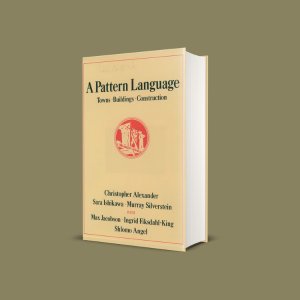
A Pattern Language: Towns, Buildings, Construction (Center for Environmental Structure Series) [Christopher Alexander, Sara Ishikawa, Murray Silverstein, Max Jacobson, Ingrid Fiksdahl-King, Shlomo Angel] on desertcart.com. *FREE* shipping on qualifying offers. A Pattern Language: Towns, Buildings, Construction (Center for Environmental Structure Series) Review: Good for non-specialists with an interest in architecture - Odd that this should come up for a review from me, when I must have bought and read it twenty years ago. I remember it well, however, and am glad that I read it. I have always been interested in architecture (one of those things I would have studied if I had several lifetimes). I learned a great deal from this about architecture in general, and what makes a building appealing to humans. It sometimes gave me the words for something I only felt about a house or a building. The 'low, sheltering roof' of a house in my neighborhood was just the phrase I needed to express why the first time I saw it, I was drawn to that particular house as an ideal, cozy home. This book helped me understand why we instinctively respond to older buildings, buildings with 'character' and 'history' to them, buildings that have a patina from decades or centuries of human inhabitants making their mark on the bricks and boards that make up the structure. However, I have to say that as a graduate of UC Berkeley, I was aware of the Marxist sub-text of some of the authors' recommendations in this book. It is clearly influenced by the Marxist current in academia in the late 1960s and early 1970s, for example in its assertion that in the future, people would want to live in sort of 'compounds' with less privacy and more shared space - architecture and housing being planned to in effect 'force' a 'communal' lifestyle on people. Of course, it is presented as 'what people want' and what people naturally desire: living with no privacy from your neighbors instead of individual private spaces. So some of the assertions about domestic architecture come across a bit like the promises that we'd all be driving flying cars and eating entire meals in tablet form. The ideology clearly has not been borne out by experience since the book was written, though there are probably Marxist-leaning readers who will take it as gospel and even try to convince people to live in compounds where all your comings and goings are known and noted, your neighbors will see everything you do through your windows and in your yard, and you will be happy. Review: Perfect for Downsizing! Must read!! - The ideas in this book will forever change how you look at city and building design. Urban planners, architects, builders and interior designers who want to keep their jobs-- read up! This book will help you create low-cost solutions to the real estate downturns in your area. You have unprecedented opportunities to rethink your cities, towns, strip malls, etc. to make them more user-friendly and inviting while trimming the ugly wasted space that fills so many of our urban centers and McMansion neighborhoods. More careful expansion of the cities along logical pathways, with rainwater harvesting, edible self-managed self-watered landscaping, and tree-shaded roads with neighborhood shops and small industry woven in would have created more jobs and more meaning plus kept people together in sustainable neighborhoods at a much lower cost, both initially and long-term. Now we face the prospect of bulldozing entire vacant blocks and turning them into the rural spaces that so many longed to be near to begin with. This is not good business sense-- it's pathology. 'A Pattern Language' is the perfect medicine for this sickness. Like a healthy diet, it gets down to basics: how the human body relates to space; how people 'feel' in certain environments; the criteria of places that draw people in as opposed to others that are left usused or avoided. These principles are classic patterns that have stood the test of time, and Mr. Alexander gives numerous examples from around the world, from entire regions down to the height of windowsills and the best designs for office space. Anyone planning their own house needs this book! I designed a big house in Arizona for my large family using these principles and it's amazingly light and functional while being cool in summer and warm in winter. The kitchen is smaller than most custom homes, yet eight people can prepare food together comfortably while 3 more surf the internet and Dad reads his paper.


| Best Sellers Rank | #8,299 in Books ( See Top 100 in Books ) #1 in Urban & Land Use Planning (Books) #1 in Architectural Drafting & Presentation #1 in Architectural Criticism |
| Customer Reviews | 4.7 4.7 out of 5 stars (1,027) |
| Dimensions | 2 x 5.7 x 7.9 inches |
| ISBN-10 | 0195019199 |
| ISBN-13 | 978-0195019193 |
| Item Weight | 2 pounds |
| Language | English |
| Part of series | Center for Environmental Structure |
| Print length | 1171 pages |
| Publication date | January 1, 1977 |
| Publisher | Oxford University Press |
D**R
Good for non-specialists with an interest in architecture
Odd that this should come up for a review from me, when I must have bought and read it twenty years ago. I remember it well, however, and am glad that I read it. I have always been interested in architecture (one of those things I would have studied if I had several lifetimes). I learned a great deal from this about architecture in general, and what makes a building appealing to humans. It sometimes gave me the words for something I only felt about a house or a building. The 'low, sheltering roof' of a house in my neighborhood was just the phrase I needed to express why the first time I saw it, I was drawn to that particular house as an ideal, cozy home. This book helped me understand why we instinctively respond to older buildings, buildings with 'character' and 'history' to them, buildings that have a patina from decades or centuries of human inhabitants making their mark on the bricks and boards that make up the structure. However, I have to say that as a graduate of UC Berkeley, I was aware of the Marxist sub-text of some of the authors' recommendations in this book. It is clearly influenced by the Marxist current in academia in the late 1960s and early 1970s, for example in its assertion that in the future, people would want to live in sort of 'compounds' with less privacy and more shared space - architecture and housing being planned to in effect 'force' a 'communal' lifestyle on people. Of course, it is presented as 'what people want' and what people naturally desire: living with no privacy from your neighbors instead of individual private spaces. So some of the assertions about domestic architecture come across a bit like the promises that we'd all be driving flying cars and eating entire meals in tablet form. The ideology clearly has not been borne out by experience since the book was written, though there are probably Marxist-leaning readers who will take it as gospel and even try to convince people to live in compounds where all your comings and goings are known and noted, your neighbors will see everything you do through your windows and in your yard, and you will be happy.
J**S
Perfect for Downsizing! Must read!!
The ideas in this book will forever change how you look at city and building design. Urban planners, architects, builders and interior designers who want to keep their jobs-- read up! This book will help you create low-cost solutions to the real estate downturns in your area. You have unprecedented opportunities to rethink your cities, towns, strip malls, etc. to make them more user-friendly and inviting while trimming the ugly wasted space that fills so many of our urban centers and McMansion neighborhoods. More careful expansion of the cities along logical pathways, with rainwater harvesting, edible self-managed self-watered landscaping, and tree-shaded roads with neighborhood shops and small industry woven in would have created more jobs and more meaning plus kept people together in sustainable neighborhoods at a much lower cost, both initially and long-term. Now we face the prospect of bulldozing entire vacant blocks and turning them into the rural spaces that so many longed to be near to begin with. This is not good business sense-- it's pathology. 'A Pattern Language' is the perfect medicine for this sickness. Like a healthy diet, it gets down to basics: how the human body relates to space; how people 'feel' in certain environments; the criteria of places that draw people in as opposed to others that are left usused or avoided. These principles are classic patterns that have stood the test of time, and Mr. Alexander gives numerous examples from around the world, from entire regions down to the height of windowsills and the best designs for office space. Anyone planning their own house needs this book! I designed a big house in Arizona for my large family using these principles and it's amazingly light and functional while being cool in summer and warm in winter. The kitchen is smaller than most custom homes, yet eight people can prepare food together comfortably while 3 more surf the internet and Dad reads his paper.
J**Y
A Must-Have in Learning About Architecture
I love this book! Such an interesting meditation on architecture. Really brilliant.
M**E
Excellent guide with valuable info
Very good book with lots of excellent tips and info. Happy to see a lot of things we have been doing naturally with our home construction projects have aligned with the authors advice! But learning a lot more details to make it even better. Thank you.
A**F
Où l'on comprend comment les villes ont été pensées, par des humains, pour des humains. Un cadeau parfait pour un architecte ou n'importe quel fan d'urbanisme.
D**M
if you are an architect or a student, or just curious, this book is for you. it explores the patterns of every kind of things you can build, from houses to rooms to skyscrapers, a limitless source of inspiration
D**D
Excellent book, I recommend anyone who is interested in design their own home or renovation to read it. I bought this book for a friend who is a builder.
R**R
Gutes Buch
M**S
Every architecture student must read this book !
ترست بايلوت
منذ شهر
منذ يوم واحد