
قم بتنزيل التطبيق


معلومات عنا
حقوق الطبع والنشر © 2024 Desertcart Holdings Limited
قم بتنزيل التطبيق
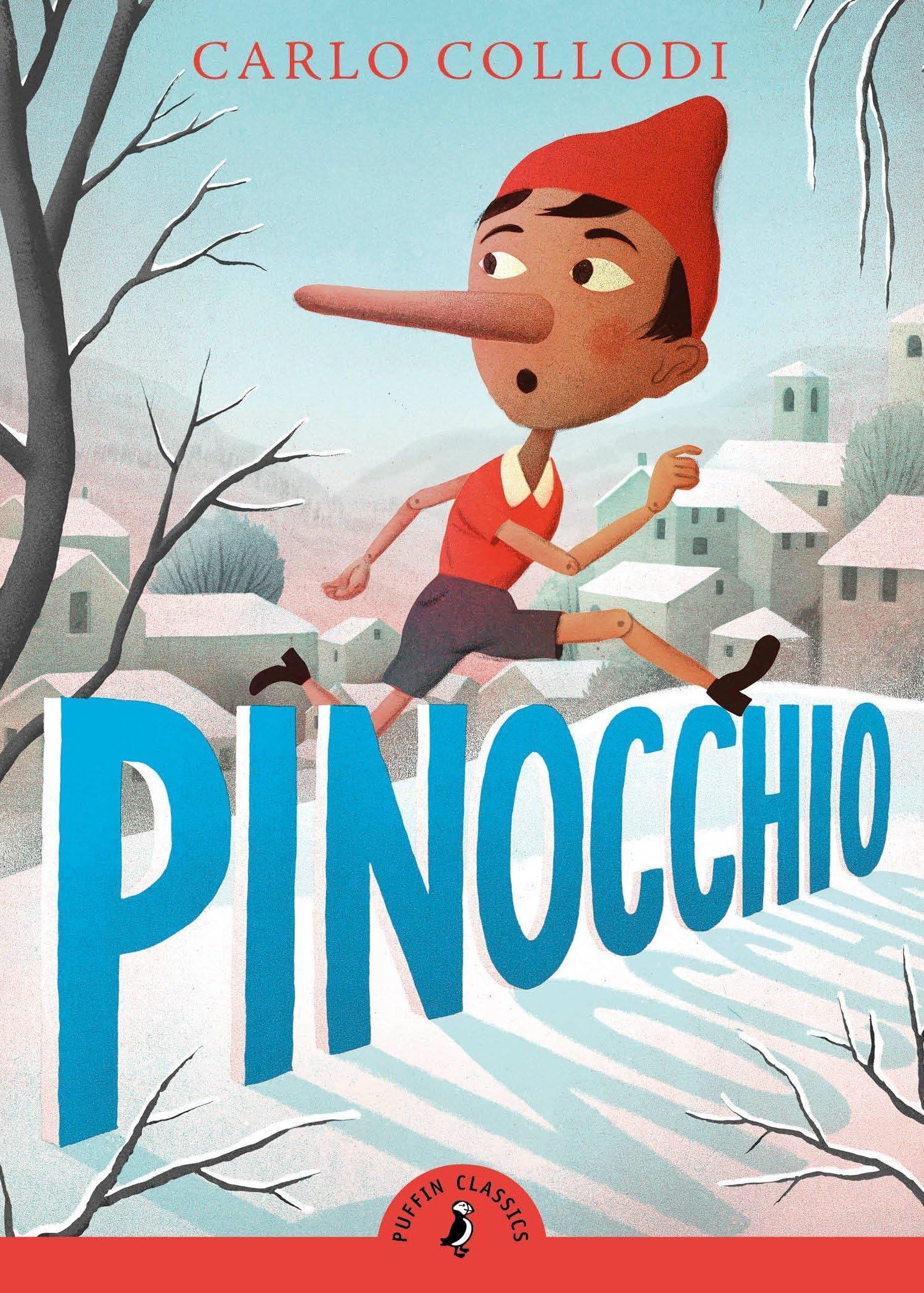
desertcart.com: Pinocchio (Puffin Classics): 9780141331645: Collodi, Carlo, Boyne, John: Books Review: More than a real boy! - Pinocchio is an Italian children's book that is well worth reading. I have never read this book until now and had only known it from the Walt Disney movie. As with most films, the book is much better. In this case, it is almost an entirely different story. The Disney movie makes the story of Pinocchio sound like a whimsical fantasy about a puppet who wants to be a real boy. The film is all about "when you wish upon a star." The book, on the other hand, starts with a naughty sentient piece of wood. Gepetto is tricked into taking the wood and making a marionette. Immediately, Pinocchio is alive causing Gepetto heartache and trouble, but the woodcarver still calls Pinocchio his son without hesitation. The story follows Pinocchio from one stubborn and foolish choice after another where he reaps the full consequences of his choices being saved only from death. By the end of the book, Pinocchio learns wisdom and virtue the hard way. When Pinocchio becomes a real boy, it is synonymous with being a well-behaved boy. The Story is about listening to good advice and those who love you. I read quite a few reviews which criticized this book for being harsh. It is harsh in the way tradition fairy tales are. Magical and arbitrary thing happen to magnify Pinocchio's choices. The consequences of his choices often lead to near death experiences. The characters tell Pinnochio the truth about his behavior without a filter. The message of the book says that even a boy is responsible for his own choices. This is certainly not the popular sentiment today. I enjoyed this book more than I expected. I also saw layers and layers of wisdom in this spectacular fantasy story. The way the false friends used Pinnochio like a puppet makes sense of what he is versus a real boy. The unconditional love of Gepetto and the fairy show the actions of loving parents. The various adventure translates into the kind of temptations on experiences in life. I believe this would be a good story for children eight years old and older, but they may not grasp the hidden wisdom in the book until much later. Pinocchio is a book well worth reading and rightfully a classic. Review: The text is complete, the print is easy on the eyes, and the book is a convenient size. - Being a classic, Pinocchio often appears in hardback editions with heavy pages. That’s fine for collectors. But it’s nice to have a light, easy-to-carry copy if you plan on reading and re-reading this wonderful book. And people who think the original story is exactly like the Disney version will be in for a surprise. The book goes into Pinocchio’s personality in way more detail, and there are many more characters, situations and places to enjoy reading about. Here and there, it is a tad preachy, but still it’s a delightful story, full of adventure, emotion, and deep-felt love and devotion. It’s easy to see why this Italian book from 1882 still ranks with children and adults as a continual favorite.

| Best Sellers Rank | #126,207 in Books ( See Top 100 in Books ) #937 in Children's Folk Tales & Myths (Books) #1,291 in Children's Classics #3,852 in Children's Action & Adventure Books (Books) |
| Customer Reviews | 4.6 4.6 out of 5 stars (449) |
| Dimensions | 5.06 x 0.67 x 7 inches |
| ISBN-10 | 014133164X |
| ISBN-13 | 978-0141331645 |
| Item Weight | 6.5 ounces |
| Language | English |
| Print length | 272 pages |
| Publication date | June 9, 2011 |
| Publisher | Puffin Books |
| Reading age | 10 years and up |
L**E
More than a real boy!
Pinocchio is an Italian children's book that is well worth reading. I have never read this book until now and had only known it from the Walt Disney movie. As with most films, the book is much better. In this case, it is almost an entirely different story. The Disney movie makes the story of Pinocchio sound like a whimsical fantasy about a puppet who wants to be a real boy. The film is all about "when you wish upon a star." The book, on the other hand, starts with a naughty sentient piece of wood. Gepetto is tricked into taking the wood and making a marionette. Immediately, Pinocchio is alive causing Gepetto heartache and trouble, but the woodcarver still calls Pinocchio his son without hesitation. The story follows Pinocchio from one stubborn and foolish choice after another where he reaps the full consequences of his choices being saved only from death. By the end of the book, Pinocchio learns wisdom and virtue the hard way. When Pinocchio becomes a real boy, it is synonymous with being a well-behaved boy. The Story is about listening to good advice and those who love you. I read quite a few reviews which criticized this book for being harsh. It is harsh in the way tradition fairy tales are. Magical and arbitrary thing happen to magnify Pinocchio's choices. The consequences of his choices often lead to near death experiences. The characters tell Pinnochio the truth about his behavior without a filter. The message of the book says that even a boy is responsible for his own choices. This is certainly not the popular sentiment today. I enjoyed this book more than I expected. I also saw layers and layers of wisdom in this spectacular fantasy story. The way the false friends used Pinnochio like a puppet makes sense of what he is versus a real boy. The unconditional love of Gepetto and the fairy show the actions of loving parents. The various adventure translates into the kind of temptations on experiences in life. I believe this would be a good story for children eight years old and older, but they may not grasp the hidden wisdom in the book until much later. Pinocchio is a book well worth reading and rightfully a classic.
F**D
The text is complete, the print is easy on the eyes, and the book is a convenient size.
Being a classic, Pinocchio often appears in hardback editions with heavy pages. That’s fine for collectors. But it’s nice to have a light, easy-to-carry copy if you plan on reading and re-reading this wonderful book. And people who think the original story is exactly like the Disney version will be in for a surprise. The book goes into Pinocchio’s personality in way more detail, and there are many more characters, situations and places to enjoy reading about. Here and there, it is a tad preachy, but still it’s a delightful story, full of adventure, emotion, and deep-felt love and devotion. It’s easy to see why this Italian book from 1882 still ranks with children and adults as a continual favorite.
T**O
A classic fairytale.
A rascal of a toy becomes a kindhearted boy. It is old-school storytelling at its best. Carlo Collodi is a Florentin master.
M**S
Very different from the movie. But a good read, and good moral lessons for kids.
I always heard the book was way different from the Disney movie, much longer and more graphic. It definitely was. Pinocchio spends most of the first 1/2 of the book as a evil little dirtbag of a child, and the second half of it trying to redeem himself. Essentially a retelling of the parable of the Prodigal Son, but many times longer, with dozens of twists and turns, and many painful life lessons that Pinocchio has to endure repeatedly before he finally begins to learn how to become a decent human being. Definitely worth reading, and reading to your kids as well.
M**E
Outstanding Book
This classic book is so enjoyable to children and adults as well! It is full of humor, adventure, and wonderful life lessons!
S**F
Pinocchio does not disappoint. This is not the Disney version
It is a pleasure reading the Everyman's classic books. I read both their children's series and the adult series. These books are the kind you want to hand down to the next generation. Pinocchio does not disappoint. This is not the Disney version. It is the original. It also contains many illustrations to add to the atmosphere of the story. If you are considering this edition, you will not regret it.
M**E
Not the Disney version…
Let me just say…this is not the sweet little Pinocchio you grew up with. I had no idea the original story was this dark! Bought it for my second grader and we had to stop not far into the book because it was waaaay too upsetting to him!
K**K
Change of Heart
I've always dislike Pinocchio. Especially how he was in the Disney movie (of which I do remember clearly). I read this book for my university course and as I was reading, my love for Pinocchio grew. It was indeed an adventure to be with Pinocchio who makes you angry and disappointed, but also happy when he finally realizes what it means to have a family.
G**K
Black stain liking to oil covers the bottoms and back of the book-poor condition
R**L
Its surerly is the best book ever.. A true classic as well as interesting read.. it can be read eagerly by a child as well as it can serve for any age.. u can reagard it as a coffee table book or a travelling companion or a classic or a modern adventure fantasy or simply a story book.. It can be read light as breeze in many sittings episode wise or in one go.. best quality is it's simplicity with characters like Gepetto, Pinocchio & blue-haired fairy.. One must read it to believe how endearing a book it is..
I**R
Die CD-Hüllen und die CD's sind graphisch wunderbar poetisch gestaltet. Toll, diese Geschichte ungekürzt anhören zu können, vorgelesen von einem grossartigen Erzähler. Ein kostbarer Schatz in meiner Mediathek. Ich werde mir die Cd's immer wieder anhören, um die Qualitäten wirklich auskosten zu können. Vielen Dank den Künstlern !
D**1
A wonderful hardback edition of the classic novel
E**T
When I was growing up, I would sometimes hear my mother talking to my Nonna and be completely baffled by what they were saying. They were speaking dialect. My mother’s family comes from a little village in Piedmont, Italy called Pavone and my mother’s first language was not Italian but dialect. The dialect of her village lay midway between Italian and French. So, for instance, hot and cold in dialect were cald and fredd but in Italian they are caldo and freddo and in French chaud and froid. But to give an idea of just how specific these dialects were, there would sometimes be words I overheard that completely stumped me. I asked my mother once what they had been talking about and it turned out that my Nonna had been using a dialect word from her native village, which was about 20 kilometres away from where she lived once she got married, and that word was completely different from the Pavone dialect. That’s how regional Italian dialects were. Which brings me on to Pinocchio. When Carlo Collodi wrote the story in 1881, Italy had only been unified into a single country for ten years. The problem was, while it was now politically one country, most of the country could not speak, nor understand, most of the rest of the country. Everyone spoke their own dialects of Italian, with many of these so different from each other as to be mutually unintelligible. It’s hard to maintain a country where people don’t speak the same language. Italian nationalists had decided that the Florentine dialect, in which Dante, Boccaccio and Manzoni had written, was the purest and best form of Italian, the one to be elevated to the status of national language. But Dante and Manzoni are not exactly classroom texts – and still less Boccaccio, whose tales in the Decameron can still make the readers’ eyes widen in shock at their sheer rudeness; certainly not acceptable in 19th-century classrooms. Which was where Carlo Collodi stepped in. His tale of the wooden boy, crafted by Giappetto the carpenter, who comes to life but has an unfortunate tendency towards nose-lengthening lying, became hugely popular when published and immediately found its way into Italian classrooms up and down the land. So it was Pinocchio, the wooden boy with the big heart but spectacularly poor judgement in friends, who taught generations of Italians to be able to speak to each other in the same language. Very few stories have been so crucial in a nation’s history. Indeed, without Pinocchio, there’s a good case for saying that the always fissiparous elements of Italy would have split apart into their constituent republics, duchies and kingdoms, all of which had longer histories and more deeply ingrained loyalties than the Italian state. A little wooden boy became the father of modern Italy. Che sorpresa!
ترست بايلوت
منذ 3 أسابيع
منذ شهر