Communist Manifesto
Desertcart purchases this item on your behalf and handles shipping, customs, and support to OMAN.
Description
📚 Own the manifesto that sparked revolutions and conversations worldwide!
- ACCESSIBLE CLASSIC - Penguin Classics edition offers a high-quality, durable hardback for your professional library.
- ENDURING RELEVANCE - Explore class struggle and capitalism’s mechanics with insights still debated today.
- CONVERSATION STARTER - Join millions of readers engaging with one of history’s most provocative texts.
- HISTORICAL GAME CHANGER - Dive into the manifesto that reshaped political thought and ignited global movements.
- INTELLECTUAL FOUNDATION - Authored by Marx & Engels, the cornerstone of Marxist theory and economic critique.
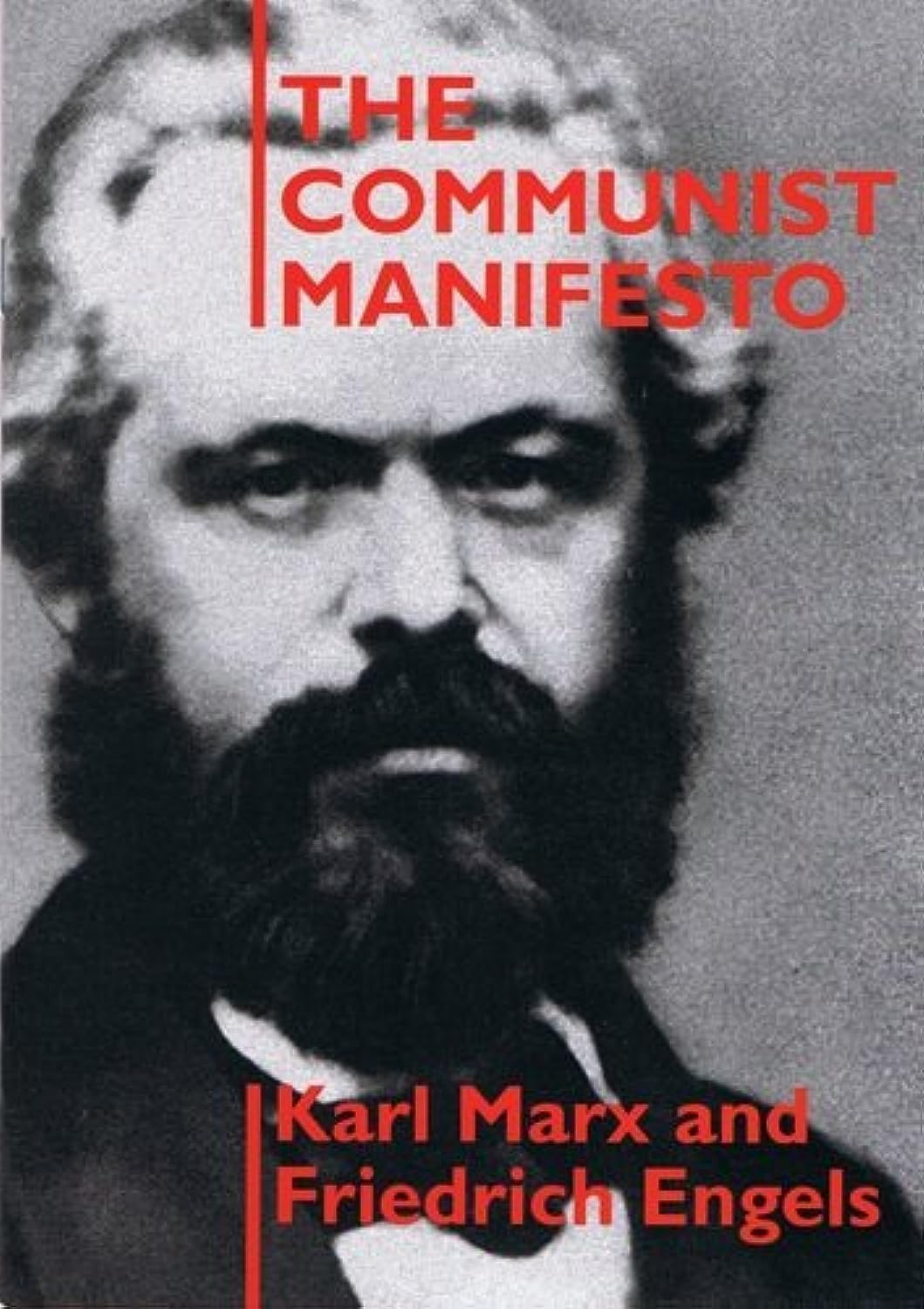
The Communist Manifesto, published in 1848 by Karl Marx and Friedrich Engels, is a seminal political manuscript analyzing class struggle and capitalism. This Penguin Classics hardback edition combines historical significance with enduring intellectual impact, boasting a 4.3-star rating from nearly 20,000 readers. Essential for professionals seeking to understand the economic and social theories that continue to influence global discourse.








Specifications
| Dimensions | 14.61 x 0.51 x 22.23 cm |
| Edition | New |
| Isbn 10 | 0850364787 |
| Isbn 13 | 978-0850364781 |
| Item Weight | 54 g |
| Language | English |
| Print Length | 32 pages |
| Publication Date | 24 Mar. 1998 |
| Publisher | The Merlin Press Ltd |
Reviews
User
A manifesto of great historical significance
It merits five stars because of its importance, though it is not the best introduction to Marxist theory. A key element is the materialist conception of history, also called historical materialism and dialectical materialism. This views history as the inevitable progress from primitive communism to feudalism to capitalism and finally modern communism. The theory sees economics as the key shaper of historical events. In Marxism the all-important economic structure, or "foundation", of society determines the "superstructure" of ideas, morals, religion, social and political institutions etc. In its extreme form historical materialism is completely deterministic and in this form it is open to serious objections, but though Marx and Engels probably did not do enough to disown the determinism of their followers, it is clear they meant something less. Later Engels was to write that historical materialism "is in the last resort decisive in the production and reproduction of actual life...the economic condition is the basis but the various elements of the superstructure...exert an influence of the historical struggles, and in many instances determine their form."Marx's historical materialism operates via the class struggle. "class" is used in the sense of an economic group defined by its position in the process of production: slave/master, serf/feudal lord, worker/capitalist. According to Marx, whenever private ownership of the means of production exists there is class conflict over the division of the fruits of production. The Manifesto claims that what is new in the capitalist era is that classes have been reduced to just two, because small employers and self-employed craftsmen were being driven into the ranks of the proletariat and exploitation worsens:"The bourgeoisie...has pitilessly torn asunder the motley feudal ties that bound man to his `natural superiors', and has left remaining no other nexus between man and man naked self-interest, than callous cash payment...for exploitation, veiled by religious and political illusions, it has substituted naked, shameless, direct, brutal exploitation."What, then, of the inevitable collapse of capitalism? The key element is the theory of the surplus value of labour, by which Marx meant that labour is not paid the full value of its product - the difference between the wage and the value of the workers' labour being profit. Hence capitalism is based on exploitation. On this flimsy edifice an entire structure is built. The nature of capitalism means constant competition with wages driven down to subsistence level and when they can fall no further capitalists turn to machines, which create a "reserve army of the unemployed". Wages become so low that not all the good produced can be purchased. This leads to trade cycles of booms and slumps and ever-deepening crises. The constant competition also means that over time the number of firms is reduced to a few large firms, which is an inherent contradiction (a word much loved by Marxists) within capitalism. Not surprisingly, think Marx and Engels, all this breeds alienation among the proletariat. Eventually revolution in the most advanced capitalist states will overthrow the bourgeoisie and usher in a classless society. All political authority will disappear, for only administrative functions will remain in "an association in which the free development of each is the condition for the free development of all", with equal access to culture and education in a society in which all willingly embrace the principle of "From each according to his ability; to each according to his needs."Objections to all this include asking what does "in the last resort" actually mean in the materialist conception of history. As for the class struggle, capitalism has not seen society divided into just two classes, and the proletariat has not sunk into the pitiful state predicted. Marx failed to see that the new industrial technology might create new ruling managerial elite - a possibility already discussed by Saint Simon and Comte. Revolutions have not taken place in the most advanced countries, and most historians regard the "communist revolutions" in backward countries as coup d'états rather than revolutions - and not even "communist". However, there is much of interest and value in Marx and Engels. For example, after Marx historians began to re-evaluate the history of the sixteenth to eighteenth centuries with the economic tools fashioned by Marx. Some Marxists believe that the revolutions have merely been delayed and will come to pass. I am not of that persuasion.
User
Everyone should read this
I'm a beginner to communist discourse and am not well versed. This was my first foray into communism and I have to say, this has been an incredible read.Without talking too much about the book, there's people here that are much more knowledgeable, here's my review.I researched a lot for what the best translation would be and I was very pleased to be lead to the Penguin Classics translation. I love a good hardback book, and this is one.I can't comment on the introduction as I skipped it. Great value for money .
User
A very Interesting 🤔
4.25 starsReally enjoyed the book, the ideas were so powerful and real."You are horrified at our intending to do away with private property. But in your existing society, private property is already done away with for nine-tenths of the population."Like so true!Ig i’m a marxist? LOL IDK
User
Awesome collection
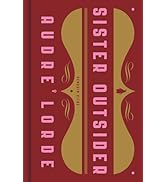
I've been collecting this series for a few years now.For the simple reason that I'm a fan of philosophy and this set is absolutely gorgeous.A beautifully designed collection of some of the best philosophical works throughout the ages. Covering everything from Stoicism, Politics, Dao and Buddhism to Theology, Metaphysics and Early Feminism.If you don't own any of these books already then I'd highly recommend collection this set.Trust me, you will no be disappointed.
User
Average
Good read but cheaply printed.
User
The communist manifesto.
I think this is the shortest and most concise statement of Marx's thought. All the elments are there, the economic, political, technological and historical.It is also I think, one of his most readable pieces... if not the most. This work alone shows Marx is still the most eloquent and accurate critic of 'capitalism'. Unfortunately for Marx his grand theory turns out to be only half the story. He never managed to read Freud's 'The Id and the Ego' (how could he)!Alas for Karl, it turns out that the world's poor and oppressed are not dreaming of liberty, equality, fraternity and socialism, but rather of being rich, famouse and 23 forever. KM was always railing against various utopias, although he managed to invent one himself. Anyway, read both the mentioned books. Briliant but incompatible... a bit like general relativity and quantum theory.
User
Hey Jeff Bezos! Gie it a read.
As powerful and relevant a document to working people as it has ever been. Maybe your man Bezos could benefit from a read of it too? Workers of the world unite. You have nothing to lose but your amazon chains of bezos!
User
The Communist Manifesto
This book is a good introduction to Marx's work and to Communist theory as a whole.Much shorter (and cheaper) than Capital: Critique of Political Economy v. 1 (Classics S.), the Communist Manifesto is a short, concise summary of Marx's mission and his goals. Now that it is available for only £1, it should be bought by anyone interested in communism or Marx.This edition (The Communist Manifesto) is alow quality (in terms of binding) edition, and a better quality edition would be the Penguin Classic one. However, this version is cheaper and has the same basic book inside (minus the introductions to the various different language copies) so it is a better choice for the price.All in all, a very valuable (and near obligatory)addition to a communist-interested readers shelves.
User
Nice product
Good quality
User
Perfect
Very good, no frills edition of the text. What more could you want?
User
‘One of the world's most influential political manuscripts’
“The Communist Manifesto originally titled Manifesto of the Communist Party is a short 1848 publication written by the political theorists Karl Marx and Friedrich Engels. It has since been recognized as one of the world's most influential political manuscripts.’’Of course, I’ve heard about this document since youth. Never read it. But, seems so influential, especially recently, decided to examine it.“Commissioned by the Communist League, it laid out the League's purposes and program. It presents an analytical approach to the class struggle (historical and present) and the problems of capitalism, rather than a prediction of communism's potential future forms. The book contains Marx and Engels' theories about the nature of society and politics, that in their own words, "The history of all hitherto existing society is the history of class struggles".It also briefly features their ideas for how the capitalist society of the time would eventually be replaced by socialism, and then eventually communism.’’This from preface. Marx penned this in 1848. This English translation by Engels in 1888.Some highlights . . .These measures will of course be different in different countries. Nevertheless in the most advanced countries, the following will be pretty generally applicable.1. Abolition of property in land and application of all rents of land to public purposes.2. A heavy progressive or graduated income tax.3. Abolition of all right of inheritance.4. Confiscation of the property of all emigrants and rebels.5. Centralisation of credit in the hands of the State, by means of a national bank with State capital and an exclusive monopoly.6. Centralisation of the means of communication and transport in the hands of the State.7. Extension of factories and instruments of production owned by the State; the bringing into cultivation of waste-lands, and the improvement of the soil generally in accordance with a common plan.8. Equal liability of all to labour. Establishment of industrial armies, especially for agriculture.9. Combination of agriculture with manufacturing industries; gradual abolition of the distinction between town and country, by a more equable distribution of the population over the country.10. Free education for all children in public schools. Abolition of children's factory labour in its present form. Combination of education with industrial production.’’Fascinating that most of these programs have been implemented in many western societies.Another is this rejection of history.“There are, besides, eternal truths, such as Freedom, Justice, etc. that are common to all states of society. But Communism abolishes eternal truths, it abolishes all religion, and all morality, instead of constituting them on a new basis; it therefore acts in contradiction to all past historical experience."Recalls Daniel’s prophecy about the king of the north . . .“He will show no regard for the God of his fathers; nor will he show regard for the desire of women or for any other god.’’Marx . . .“Abolition of the family! Even the most radical flare up at this infamous proposal of the Communists. On what foundation is the present family, the bourgeois family, based? On capital, on private gain. In its completely developed form this family exists only among the bourgeoisie.’’How abolish family? Forbid private property.“The proletarians cannot become masters of the productive forces of society, except by abolishing their own previous mode of appropriation, and thereby also every other previous mode of appropriation. They have nothing of their own to secure and to fortify; their mission is to destroy all previous securities for, and insurances of, individual property.’’‘Destruction of all property’ seems to be now coming to pass.“ All previous historical movements were movements of minorities, or in the interests of minorities. The proletarian movement is the self-conscious, independent movement of the immense majority, in the interests of the immense majority. The proletariat, the lowest stratum of our present society, cannot stir, cannot raise itself up, without the whole superincumbent strata of official society being sprung into the air.’’‘Official society cut loose’ from its world.“Though not in substance, yet in form, the struggle of the proletariat with the bourgeoisie is at first a national struggle. The proletariat of each country must, of course, first of all settle matters with its own bourgeoisie. In depicting the most general phases of the development of the proletariat, we traced the more or less veiled civil war, raging within existing society, up to the point where that war breaks out into open revolution, and where the violent overthrow of the bourgeoisie lays the foundation for the sway of the proletariat.’’‘Violent overthrow’ and ‘veiled civil war’. Well . . .Another heartfelt cry of anguish . . .““ The bourgeoisie cannot exist without constantly revolutionising the instruments of production, and thereby the relations of production, and with them the whole relations of society. Conservation of the old modes of production in unaltered form, was, on the contrary, the first condition of existence for all earlier industrial classes. Constant revolutionising of production, uninterrupted disturbance of all social conditions, everlasting uncertainty and agitation distinguish the bourgeois epoch from all earlier ones.’’Note Marx complaining about ‘everlasting uncertainty’. Marx’ personal life was just that - uncertain, troubled, turbulent. His family eventually refused to support him. He was furious. He is really demanding that someone else guarantees him a comfortable life. In fact, Engels (rich factory owner) did eventually support Marx.“All fixed, fast-frozen relations, with their train of ancient and venerable prejudices and opinions, are swept away, all new-formed ones become antiquated before they can ossify. All that is solid melts into air, all that is holy is profaned, and man is at last compelled to face with sober senses, his real conditions of life, and his relations with his kind.’’And this unique facet of capitalism, its turbulent, uncertain, constant change to unknown directions obviously disturbs many. Marx nailed it!Last paragraph —“The Communists disdain to conceal their views and aims.They openly declare that their ends can be attained only bythe forcible overthrow of all existing social conditions.Let the ruling classes tremble at a Communistic revolution.The proletarians have nothing to lose but their chains.They have a world to win.’’Lots of familiar ideas that seem current. I wonder how many recognize the influence of this German philosopher on modernity. I didn’t realize how much of his thought still remains.One thing which has not endured is his analysis of economics. The labor theory of value which he borrowed from Adam Smith is now known to be completely wrong. Capitalism has not self-destructed. In fact, world dozens of times richer than when Marx lived.Nevertheless, this goal, desire to destroy is stronger than ever in the mind of many.
User
No review needed
No review needed for the content. The book is printed and binded professionally.
User
Wow what a premenition
I’m not a fan of communism per say, but what a philosophy on problems faced with capitalism. An eye opening read, great historical gem.
Common Questions
Trustpilot