
Buy anything from 5,000+ international stores. One checkout price. No surprise fees. Join 2M+ shoppers on Desertcart.
Desertcart purchases this item on your behalf and handles shipping, customs, and support to OMAN.
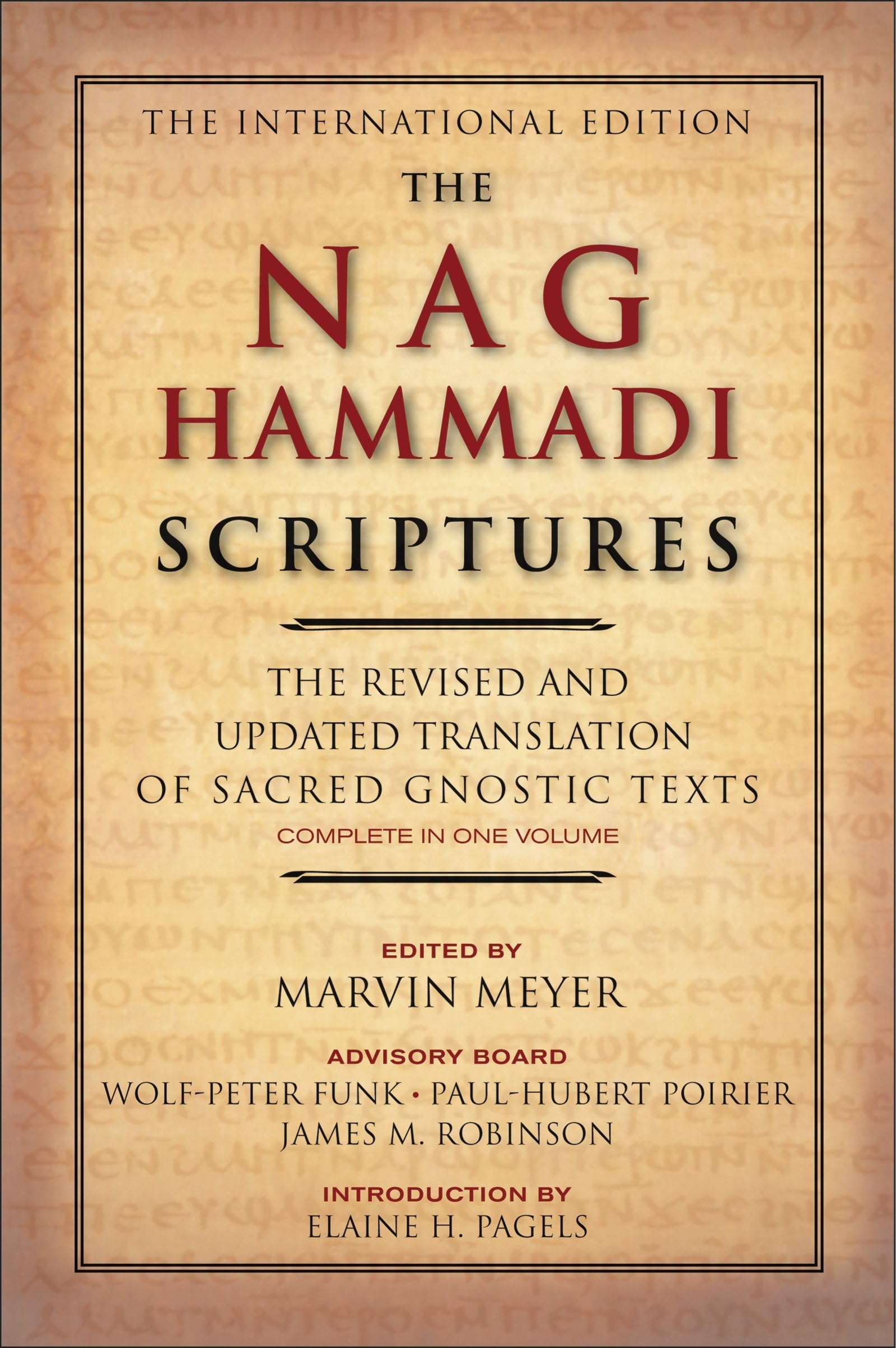
The Nag Hammadi Scriptures , edited by Marvin Meyer, is the most complete, up-to-date, one-volume, English-language edition of the renowned library of Gnostic manuscripts discovered in Egypt in 1945, which rivaled the Dead Sea Scrolls find in significance. It includes the Gospel of Thomas, the Gospel of Mary, and the recently discovered Gospel of Judas, as well as other Gnostic gospels and sacred texts. This volume also includes introductory essays, notes, tables, glossary, index, etc. to help the reader understand the context and contemporary significance of these texts which have shed new light on the complex history of early Christianity and ancient Gnostic thought. The landmark compilation of ancient manuscripts that constitute The Nag Hammadi Scriptures is a discovery that challenges everything we thought we knew about the early Christian church, ancient Judaism, and Greco-Roman religions. This essential scholarly edition offers a direct encounter with foundational Gnostic gospels and sacred texts: The Gnostic Gospels: Read the complete texts of the Gospel of Thomas, the Gospel of Mary, and the recently discovered Gospel of Judas in a single, accessible volume. Complete Nag Hammadi Library: Explore the most complete, up-to-date English edition of the entire renowned library of manuscripts discovered in Egypt in 1945. Scholarly and Accessible: Navigate these ancient writings with the help of comprehensive introductory essays, notes, a full glossary of terms, and a complete index. A New Look at Early Christianity: Discover ancient texts that challenge long-held beliefs about the early Christian church, ancient Judaism, and Greco-Roman religions. Review: Excellent study material of heretical "gospels" - Contrary to the sensationalism that many people love and want to buy into, these "gospels" are not lost. They are not gospels or inspired to begin with, even if they are named after known biblical characters, and you can tell when you start reading them and then comparing them to the actual gospels that are inspired (Matthew, Mark, Luke and John). These are 2nd - 3rd century documents were fabricated as gospels by a heretical sect called the gnostics, who believed that God did not create the universe but that it was a demiurge who did, and that there was hidden knowledge that needed to be understood to gain enlightenment unto salvation. They also believed that the physical was evil and the spiritual was good, contrary to God's account of creation in Genesis when He called everything "good" (see Colossians 2:16-22 also). To try and validate their beliefs, they named their false gospels after known apostles and biblical characters. The Gospel of Thomas, for example, portrays Jesus as a speaker of secret sayings, and it teaches that we need to discover the hidden meaning of His words and "finding the light within". There is no focus on His death and resurrection, or any mention at all. Also, in 114, the Gospel of Thomas claims that Jesus said to Mary Magdalene that she had to become a male to enter the kingdom of Heaven. In gnosticism, it was believed that males symbolised fullness in spirituality while females symbolised materialism. This is a big problem. Again, no mention of God’s love through Jesus’ death and resurrection for the forgiveness of our sins. Furthermore, the tone of Jesus makes Him sound like a much different person in these gnostic texts, and they fall in comparison to the original gospels as historical accounts of Jesus' life. The writing is sloppy; the sequence between the texts is poor, and it is just easy to tell they are not historical narratives. Oddly, reading them strengthened my faith, not because there is any inherent good or divine inspiration behind them, but because of how easy it was to notice why they aren't included in scripture, especially after seeing so many sensationalist content claiming that they're lost books from the Bible. Truly, only the four synoptic gospels are inspired and faithful accounts of our Saviour's life. However, this book is excellent for studying those documents. If you want to understand them and complete a collection you've started, I highly recommend it. Review: One of the most astounding, illuminating and fascinating books i have ever read - Contained in the fragments of this book is the explanation of Life, the human race, our place in existence and our creator. Its supremely difficult to comprehend but It answered every question i have ever had about the human race, our origins, our end, our religions, philosophy, death, life and why we exist and what will become of us when we die. Its incredibly deep in places, even for a philosopher or scholar. Its certainly not a simple read and i had to stop reading to reflect on many sentences and think deeply on their meaning before i could proceed to the next sentence or paragraph. Its probably way beyond most people to even begin to comprehend a fraction of it. Any question i ever had about the concept or reality of what we call God is answered in the lines of these scriptures. I also felt after reading and studying The Bible and The Quran in depth that we truly already have all the answers to anything we wish to know, all the keys to happiness and ultimate knowledge but like these Nag Hammadi scriptures the ultimate truth has been hidden from us in a cave for centuries and not become a freely available part of our lives. It has been hidden, obscured and changed to suit the purposes of Rulers and Kings for centuries. For example; the Book of Esther is in The Bible but not one of the Nag Hammadi scriptures is. The question is.....why?


| Best Sellers Rank | 17,535 in Books ( See Top 100 in Books ) 6 in Christian Reference (Books) 8 in Religious Studies Encyclopaedias 14 in Mythology Encyclopaedias |
| Customer Reviews | 4.6 out of 5 stars 4,342 Reviews |
N**R
Excellent study material of heretical "gospels"
Contrary to the sensationalism that many people love and want to buy into, these "gospels" are not lost. They are not gospels or inspired to begin with, even if they are named after known biblical characters, and you can tell when you start reading them and then comparing them to the actual gospels that are inspired (Matthew, Mark, Luke and John). These are 2nd - 3rd century documents were fabricated as gospels by a heretical sect called the gnostics, who believed that God did not create the universe but that it was a demiurge who did, and that there was hidden knowledge that needed to be understood to gain enlightenment unto salvation. They also believed that the physical was evil and the spiritual was good, contrary to God's account of creation in Genesis when He called everything "good" (see Colossians 2:16-22 also). To try and validate their beliefs, they named their false gospels after known apostles and biblical characters. The Gospel of Thomas, for example, portrays Jesus as a speaker of secret sayings, and it teaches that we need to discover the hidden meaning of His words and "finding the light within". There is no focus on His death and resurrection, or any mention at all. Also, in 114, the Gospel of Thomas claims that Jesus said to Mary Magdalene that she had to become a male to enter the kingdom of Heaven. In gnosticism, it was believed that males symbolised fullness in spirituality while females symbolised materialism. This is a big problem. Again, no mention of God’s love through Jesus’ death and resurrection for the forgiveness of our sins. Furthermore, the tone of Jesus makes Him sound like a much different person in these gnostic texts, and they fall in comparison to the original gospels as historical accounts of Jesus' life. The writing is sloppy; the sequence between the texts is poor, and it is just easy to tell they are not historical narratives. Oddly, reading them strengthened my faith, not because there is any inherent good or divine inspiration behind them, but because of how easy it was to notice why they aren't included in scripture, especially after seeing so many sensationalist content claiming that they're lost books from the Bible. Truly, only the four synoptic gospels are inspired and faithful accounts of our Saviour's life. However, this book is excellent for studying those documents. If you want to understand them and complete a collection you've started, I highly recommend it.
J**N
One of the most astounding, illuminating and fascinating books i have ever read
Contained in the fragments of this book is the explanation of Life, the human race, our place in existence and our creator. Its supremely difficult to comprehend but It answered every question i have ever had about the human race, our origins, our end, our religions, philosophy, death, life and why we exist and what will become of us when we die. Its incredibly deep in places, even for a philosopher or scholar. Its certainly not a simple read and i had to stop reading to reflect on many sentences and think deeply on their meaning before i could proceed to the next sentence or paragraph. Its probably way beyond most people to even begin to comprehend a fraction of it. Any question i ever had about the concept or reality of what we call God is answered in the lines of these scriptures. I also felt after reading and studying The Bible and The Quran in depth that we truly already have all the answers to anything we wish to know, all the keys to happiness and ultimate knowledge but like these Nag Hammadi scriptures the ultimate truth has been hidden from us in a cave for centuries and not become a freely available part of our lives. It has been hidden, obscured and changed to suit the purposes of Rulers and Kings for centuries. For example; the Book of Esther is in The Bible but not one of the Nag Hammadi scriptures is. The question is.....why?
C**E
Perfect condition. An interesting read...
Nice looking book, arrived in perfect condition. It will be an interesting read...
J**B
Good addition to any historical / religious library
Some of the texts are remarkably short, for instance the gospel of Mary Magdelin consists of a single conversation between Mary and the apostles after jesus’ death. Others are basically praise or prayers and reading these can be a little tedious. What is outstanding is the level of introduction and explanation of each book, where it stands, possibly where it was written etc. There is extensive reference to where quotes within the Bible have been used, pointing to the view that many of these have been copied from earlier texts, including the gospels themselves. In a lot of cases you can see why these texts were removed from the New Testament, there are some that are not consistent with the emergence of the new faith. All in all I do think that the reading of the book would strengthen faith rather than diminishing it. As an amateur scholar of early religion I find it quite fascinating, especially the copious footnotes, linking parts of the Bible and early texts. The level of academic research is very thorough and I can recommend this book to anyone interested in early Christianity.
S**Y
Brilliant
Very enlightening read, a piece of history that escaped being erased. Sensational read and a beautiful quality book.
G**.
Great ancient book.
The book itself is so unique , you can feel the effort of the people who translated for us this ancient Christian knowledge, strongly linked in content to the Bible, but with a depth in more unusual views, that can't be find in the Bible, some content of this book feels like a pure Christian revelation and other content it feels so shockingly different.
J**R
Overrated Texts, but Worth Looking Into!
I only just bought this copy, and, based on a cursory skim and scan of some of the texts I can see why this collection of books didn’t make it into the canon of the 27 texts that we know as the Christian Bible today. Maybe it is just the translation, but they are hard going, and, quite often undecipherable on a comprehensive and literary level. I am not saying that they are useless and a waste of time (heck, I don’t mind paying £16 for any religious-based work that ends at page 844 - that’s worth something!) But, I fail to see how they shed any major light on Christianity between the 2-4th centuries, other than that they reveal a host of tangential ideas that veer off into the downright esoteric. (It seems to me that if I want to find out about Christianity at this time then the Church Fathers are the way to go!) Further, though the “Nag Hammadi” were discovered in 1945, around the same time as the Dead Sea Scrolls, they are not in the same league, and do not have the same historical weight, in my personal view. I would also be reluctant to call them “Scriptures” as found in the title of this collection, but no doubt many will disagree. To me Jesus did not present the bulk of his teachings so that they would not make sense to his hearers. He spoke in parables, largely, had a preferential option for the downtrodden peasants of his era and those in debt (hence all his talk of wealth and its snares) and was very down to earth. You can deduce from this comment that I don’t buy into the “Jesus-sage” idea as one of the main keys for defining the person of Jesus and I get the sense that this is an over-arching idea that pervades Gnosticism generally, though I may be wrong here. It has to be said too, I think, that gnosticism itself is also an interpretation of the Jesus phenomenon, just as the Four Gospels are. But to collect in one place, a whole bunch of specific esoteric texts, as the “Nag Hammadi” does, is bordering on the cultic. To conclude: I am glad I bought this book as a reference tool, great value print wise etc, but it is certainly not a book to be read from cover to cover.
R**H
The Lost Scriptures
I found this book excellent in the insight it gives us into all the books that didn't make it into the Bible. There is a lot of good cross-referencing with the appropriate Bible texts and helpful introductions to each of the Nag Hammadi Scriptures. I would suggest that it is required reading for anyone, particularly Theology students of any faith not just Christian, who wishes to know more about the whole story of Christ, and particularly about the significance of Mary of Magdala. The book is quite difficult to tackle but well worth while for those with an open mind and imagination to other points of view rather than simply those we are offered in the New Testament. Actually as a Catholic it has deepened my faith and I hope this will happen for others too.
S**L
A must have for anyone studying the Bible
Interesting book! I wouldn't mind if the print were larger, but then I'm getting older. John 21:25 - "But there are also many other things that Jesus(Yeshua) did; and if they were all to be recorded, I don't think the whole world could contain the books that would have to be written!" I believe these are some of those books. It is a collection of Papyrus bound books, not scrolls, found near the city of Nag Hammadi in Upper Egypt, in a clay jar, sent to translators as a collective around the world, English speaking, French, German. These people obviously dedicated much of their lives to translating and piecing together evidence of other works as well..."Gospel of Thomas", "Gospel of Philip", "Wisdom of Jesus Christ", "Dialogue of the Savior". This is a must have for anyone studying the Bible.
L**A
Livro imprescindivel na historia do pensamento religioso.
Quem quer conhecer mais a fundo o gnosticismo tem que ler esse livro.
P**A
👌
Fantastic
M**F
Small print
The book is very interesting but, unfortunately, the print is small and will strain your eyes after a while.
D**N
Prompt delivery
A gift for my son who is really enjoying it
Trustpilot
1 month ago
1 month ago