

Desert Online General Trading LLC
Dubai, United Arab Emirates
Desert Online General Trading LLC
Dubai, United Arab Emirates
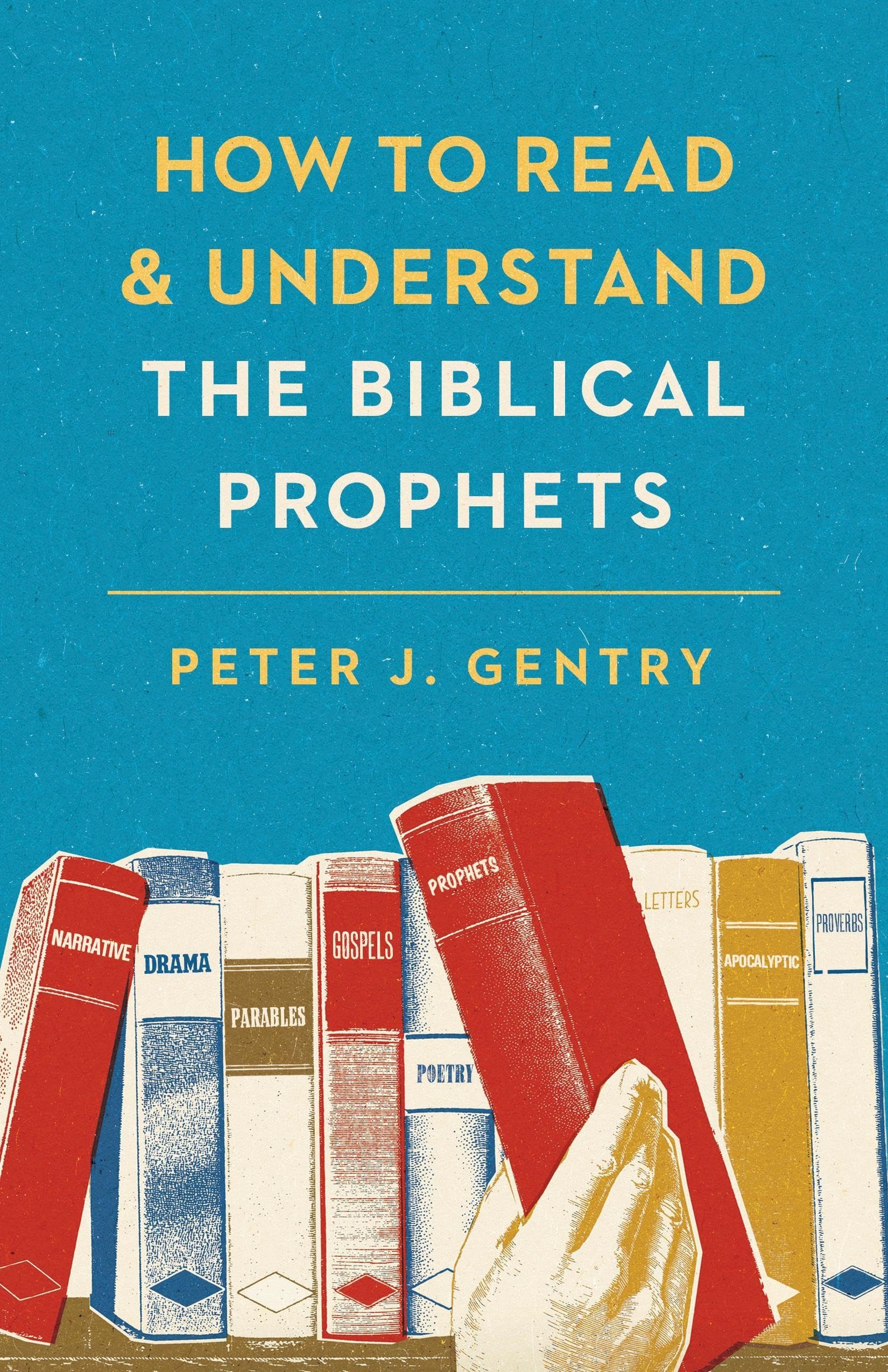
How to Read and Understand the Biblical Prophets: How to Read and Understand the Biblical Prophets
B**H
The patterns, customs, and traits of Hebrew idiom for understanding the Biblical prophets
Peter J. Gentry offers us a beneficial guidebook on reading and understanding the Biblical prophets written in a concise format that is useful for classroom, church context, or self study. He helps us to navigate the Ancient Near East mindset of the Israeli prophets and Hebrew literature. He addresses a central problem of reading the prophets the same way we read the Old Testament narratives, the Gospel accounts, Acts, and Romans. Similarly, he explains that nineteenth and twentieth century critical scholarship did not ask rigorous questions about the Hebrew’s own patterns, rules, customs, and traits governing their own writings. So, he immerses the reader into the mindset of the Hebrew, in order to better understand their writing style, particularly the prophets in order to better grasp how to read and understand them. He offers many prophetic texts as examples to illustrate evidence for his reasoning.The book is composed of seven characteristics of prophetic literature in the Bible. His purpose avoids pushing any particular school of eschatology. However, he is opposed to so-called literal and spiritual interpretations that overlook how the texts are structured and how literary forms, patterns, and Hebrew idioms influence interpretation. He is faithful to the Protestant Reformers who understood a literal interpretation to mean according to the literary forms or genres found in Scripture. Thus, he offers rules for interpreting prophecy in order to avoid pitfalls.The first characteristic of prophecy is calling the people back to the covenant. Everything in the prophets is derived from the Lord covenanting with humanity. Because covenant is the basis upon which Yahweh relates to humanity. The message of the prophets is largely not about future predictions (although it contains them) but how the Word of God given to Moses in the past at Mount Sinai in a covenant document applies to their present circumstances. He therefore observes in the Book of Deuteronomy a model for understanding for how the prophets call the people back to covenant. He rightly reasons that the plain reading of the promise of judgement against disobedience to Yahweh in Deuteronomy did not require any special understanding, and it constitutes the largest part of the prophets.The second characteristic is prediction, including short-term and distant prophecies relating to covenant judgement and restoration. First, Yahweh validates the prophets by giving them short-term prophecies that addressed their immediate circumstances, so that when these events came true the people would be able to distinguish Israel’s true God from false gods, and true prophets from false prophets. Gentry derived this principle from Deuteronomy 18:9-22, where God clearly spelled out in plain language wrong ways to discern the Word of the Lord, and then explains how to discern the true way—when the prophecy comes true. This principle enables the people to believe the true prophets when their short-term prophecies came true. Secondly, when the prophets gave predictions concerning the distant future, they were believed due to these other short-term prophecies that came true. These future predictions were necessary to explain the coming judgement of exile due to Israel’s covenant unfaithfulness, and subsequent deliverance and restoration of Israel due to God’s covenant faithfulness. Gentry observes in the Book of Exodus a model for understanding prophecies concerning deliverance from the nations and restoration to the promise land.The third characteristic is the function of repetition in Hebrew literature. The pattern of Hebrew literature is to present topics in a recursive manner which means a progressively-repetitive manner. In this pattern, a Hebrew writer initiated a discourse on one topic, then develops that same thought from another angle or perspective, and then adds something new. He provides notable examples of the Hebrews repetitive devices such as couplets in poetry, word pairs, and chiasm that structures the text or passage (i.e., in ABCBA poetic type repetitive patterns). He then focuses on how these repetitive patterns aid in interpreting the prophets.The fourth characteristic is the purpose of prophetic oracles and foreign nations. The oracles function as a covenant lawsuit where Yahweh, the offended party, cross-examines and announces indictments and binding oaths promising judgement of exile upon Israel, as defined by the terms and conditions of the covenant document agreed upon by both parties under the Mosaic covenant (Deuteronomy 28). The oracles further serve against a kind of thinking that the nations military power is the primary cause behind these historical events. Rather, the oracles present Yahweh using the nations for his own purposes of bringing about His judgement against Israel. The oracles are sometimes used to explain the idolatrous evils of the nations who worship the creation rather than the Creator, and the promise of deliverance and restoration of Israel from them. Again, the pattern of the Exodus applies to these oracles against the nations. When describing these distant prophecies, the prophets often employed the use metaphors and similes. Gentry explains these prophetic concepts did not exist in their ordinary language, so they did not have a contemporary equivalent of explanation, similar to having to describe computers and electricity to an ancient people.The fifth characteristic is concerning typology. Gentry explains typology as a correspondence between events, people, and places from the past that function as a pattern of events, people, and places in the future. This correspondence exists due to the providence of God sovereignly controlling the flow of history, whereby there is consistency in His works and acts that give us repetitive patterns in history. Typology further requires biblical warrant in the form of exegetical evidence that the text is dealing with an intended model or pattern for something to historically follow. The progression of the covenant narrative is the plot of Scripture that creates, controls, and develops typological structures throughout the Bible. In the promised New Covenant, Jesus fulfills all of these roles.The sixth characteristic is apocalyptic language. Gentry admits to the difficulty of describing apocalyptic. However, he settles on defining it as revealing secrets, usually about the future which he derives from the first verse of the Book of Revelation which he says alludes to Daniel 2:28-30, 45. Because of the distance in time and cultural differences, apocalyptic employs metaphor, similes, and symbols. He describes Second Temple Judaism as having a number of common features: a narrative framework; a historical scheme arranged in periods; the message is mediated by a heavenly messenger; a God’s-eye view of history; colorful metaphors and symbols; and a future hope under present suffering. Gentry refers to apocalyptic as both a literary form (as just described) and a way of speaking that involves a development of creation language, using creation metaphors (i.e., sun, moon, stars). Apocalyptic exhibits literary links (i.e., chronologically, linguistically, and structurally) with the past.The seventh characteristic is the already and not yet. While the Kingdom of God in the New Testament is already and not yet, that is, having been inaugurated but not consummated, the prophets of the Old Testament give us one grand picture of the latter days rather distinguishing the first coming of Christ and the Second or final Messianic coming. For this reason, we cannot construct a chronology of events that include the King and kingdom. This requires the teaching of Jesus, and the apostles and prophets to clarify which Old Testament prophecies apply to the first coming and which apply to the Second coming.Gentry offers an appendix on how to structure the Book of Revelation. He acknowledges that while the apostle John writes in Greek, he thinks in Hebrew. He divides the book into seven sections that include the letters to seven churches, seven seals, seven trumpets, seven bowls (as a huge literary clue to the book), and three remaining smaller sections. He offers analysis and reasoning for such a structure employing Hebrew characteristics outlined above, including applicable allusions to Old Testament passages. He notably observes a chiasm structure within the book that features the resurrected Christ as a divine warrior to explain the visions of warfare and judgement occurring repetitively in multiple sections of the book as chronologically parallel. He maintains the Book of Revelation is consistent with and agrees with Jesus’ teaching in Matthew 24, and the apostle Paul’s instructions in 1 Thessalonians 4. The book does not end with judgement of God’s people but employs metaphoric covenant language of the new creation characteristically of restoration. Gentry concludes that the apostle John follows a Hebrew structure similar to that found in the Book of Daniel.In closing, this book offers a great value to the field of Biblical interpretation. It honors the God of the Bible who spoke to and through the prophets in how it seeks to be faithful to the ancient text in expositing it correctly according to its own patters, customs, literary forms, devices, and traits. It offers a corrective and warning to the unbridled enthusiasm and wild interpretations that we observe in contemporary studies of prophetic eschatology and in critical scholarship. It is well-deserving of a wide audience including pastors, teachers, and students of the Bible.
D**N
Structure IS meaning
Gentry brings his formidable expertise to a more general audience, making for an easy and profitable read for pastors and also an informative read for interested laypersons. I especially appreciate Gentry's emphasis on the fact that discerning the structure of a book is not simply a task for those interested in that way of looking at texts, but is foundational to the meaning of the prophets, or any biblical literature. While he focuses his examples mostly on Isaiah, the principles he discusses can be applied to all the prophets. The book is not a commentary such that the reader will understand all the prophets, but a "how to" (as the title indicates) to equip the reader to be a better student of the prophets. Highly recommended.
R**E
Book Review: How to Read & Understand the Old Testament Prophets by Peter Gentry
Many Christians struggle to make sense of the Old Testament. If you fall into this camp, you're not alone. Its not easy, let's face it. Peter Gentry's new book, How to Read & Understand the Old Testament Prophets is a great read and one that can assist the Bible reader with comprehension of the O.T.This is not a scholarly work. It is written in simple language that even the newest of believers to understand. It will open the door to some of the most difficult passages to wrap your head around and perhaps provide a new perspective on some of those same passages....reading and studying the Bible may not be straightforward for readers with a modern and Western background in culture and language. The biblical texts in origin are ancient and Eastern— they come from a different culture and a different time. Kindle Location 168). Crossway.One of the highlights of the volume is acquiring an understanding of the difference between modern western literature and that of ancient Hebrew literature. There is a vast chasm between the two that most readers today are unaware of. Moreover, Hebrew authors employed the recursive approach.The normal pattern of Hebrew literature is to consider topics in a recursive manner, which means that a topic is progressively repeated. Such an approach seems monotonous to those who do not know and understand how these texts communicate. (Kindle Location 172). Crossway.Grasping these two points will do much to enhance the reading and study enjoyment for the modern Bible reader.As Gentry continues, he offers specific and valuable examples from the O.T., often from Isaiah. These examples will do much to increase the reader's grasp of the prophets. Word pairs, triplets, typology, metaphors, symbolic language and especially apocalyptic language are subjects covered with enough clarity that the reader will derive an enhanced ability to engage with the OT authors.Of most import, why was this written for us? What was the ultimate purpose?...one major purpose of the Old Testament prophets was to bring the people back to faithful love and loyalty to Yahweh in the covenant relationship established at Sinai (Exodus 19– 24) and renewed at Moab (Deuteronomy). (Kindle Locations 446-447). Crossway.I can recommend this book with great enthusiasm. Not all of Scripture is perspicuous and this book will be an indispensable aid to those who wish to delve further and more deeply in the study of the O.T.Crossway has provided a complimentary copy of this book through Beyond the Page.
K**R
Wonderful and thoroughly accessible
Blessed be God the Father and our Great Prophet and King Jesus, who, through the ministry of The Spirit, has given to The Bride such learned and godly teachers like Dr. Gentry!This "tract" (by Puritan measurements) is incredibly helpful to the laity, God's people!Silk For Gloria!
T**E
Simple enough
Simple. Gives lots of examples. Talks about some great concepts like the new exodus, the now and not yet, helps define apocalyptic genre, etc. buy it.
G**S
Great book
Great concise book about how interpret Hebrew writing on Scriptures. Highly recommended. It helped me to understand how their minds work on structuring their writing
G**T
Very Insightful
This was truly helpful to my studies. I always appreciate reading work that has been clearly thought through to help learners see the Scriptures better. Thanks to the author. I strongly recommend this for all who seriously wanting to understand God's Word.
ترست بايلوت
منذ 3 أيام
منذ 4 أيام