We remain fully operational. Our teams are working around the clock to ensure your deliveries continue safely.

قم بتنزيل التطبيق


معلومات عنا
حقوق الطبع والنشر © 2024 Desertcart Holdings Limited
قم بتنزيل التطبيق
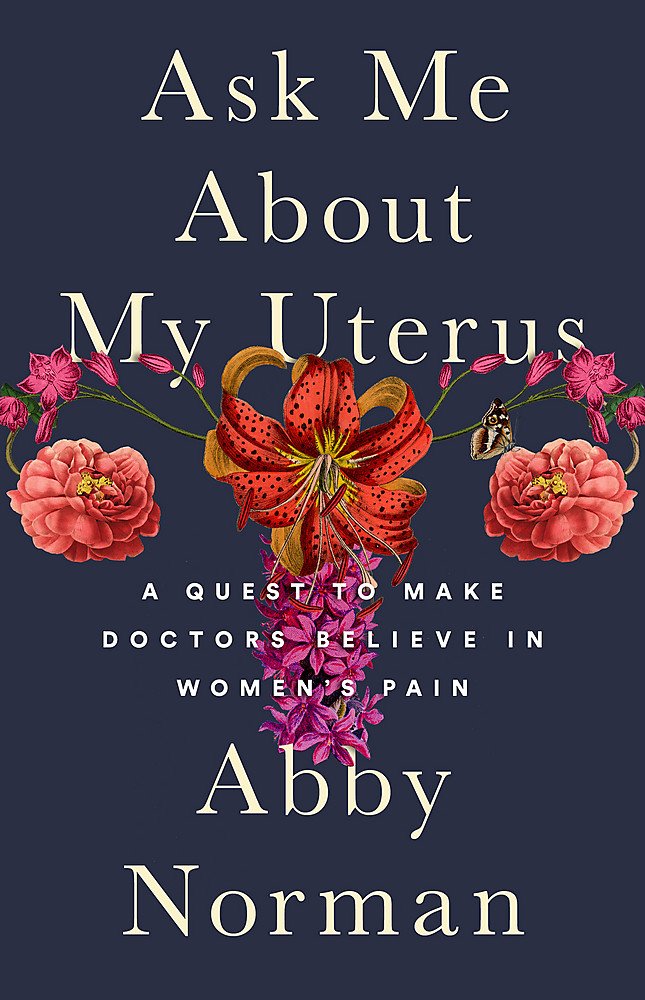
Ask Me About My Uterus: A Quest to Make Doctors Believe in Women's Pain : Norman, Abby: desertcart.co.uk: Books Review: Medical professionals, women and people who love them: read this book - A sadly necessary and hugely relatable book that all medical professionals should read. So should all women, because the kid of experience Abby Norman had is all too common. If you’ve ever suffered from an ailment that doctors just didn’t quite get, or been told that it’s “probably all in your head” only to discover later that not only was it not just in your head but very much all over your body, trying to kill you, then you will also feel understood when you read this book. Review: A Sufferer's Perspective - This book is the most honest account of what it means to have this condition from a sufferer's perspective that I have ever read. I felt this author has written about everything I, and probably many other women, have wanted to say over the years. Thank you for letting me know I am not alone.
| Best Sellers Rank | 1,377,955 in Books ( See Top 100 in Books ) 5,109 in Women's Biographies 6,321 in Medicine & Nursing 10,241 in Women's Health & Lifestyle |
| Customer reviews | 4.5 4.5 out of 5 stars (238) |
| Dimensions | 16.51 x 3.18 x 24.77 cm |
| ISBN-10 | 1568585810 |
| ISBN-13 | 978-1568585819 |
| Item weight | 476 g |
| Language | English |
| Print length | 320 pages |
| Publication date | 29 Mar. 2018 |
| Publisher | Nation Books |
S**R
Medical professionals, women and people who love them: read this book
A sadly necessary and hugely relatable book that all medical professionals should read. So should all women, because the kid of experience Abby Norman had is all too common. If you’ve ever suffered from an ailment that doctors just didn’t quite get, or been told that it’s “probably all in your head” only to discover later that not only was it not just in your head but very much all over your body, trying to kill you, then you will also feel understood when you read this book.
E**S
A Sufferer's Perspective
This book is the most honest account of what it means to have this condition from a sufferer's perspective that I have ever read. I felt this author has written about everything I, and probably many other women, have wanted to say over the years. Thank you for letting me know I am not alone.
D**N
A Dreadful Pain That Isn't Believed.
No man can possibly understand what women go through trying to convince some doctors, not all, that they are unwell and suffering agonising pain, and need help. This is a searing condemnation of what is all too common. Pain is a subjective experience. What is bearable for one person is agony for another. Our pain thresholds differ markedly. Abbey has obviously suffered high levels of pain that has resulted in her becoming an expert on the subject of her excellent book. Norman's mother was anorexic. She bought little food therefore for the family. The family was dysfunctional. Abbey somehow managed to get a place at a prestigious liberal arts college near New York. At the age of 16 she legally divorced her parents. During her second year at college she became ill, so ill it ended her studies. She was diagnosed with endometriois, an agonising illness that is still not fully understood. In brief, tissue from the uterus begins to grow in the ovaries and fallopian tubes. causing extreme pain. Doctors tend not to listen to those with the condition. Instead they seek other reasons for the problem. A frequent diagnosis is a psychological problem. Like many others she found it extremely hard to find a doctor who would accept her on Medicaid. Debt collectors threatened her while she was seeking help. Abbey writes a convincing account of pain. At times what she is going through is unbearable. This is a revealing and candid account of suffering. Those who criticise the NHS should read this book in order to understand what it is like to need medical help in a country like the US where treatment depends entirely on money.
J**A
Highly recommend this book for anyone going through chronic pain! I found myself in tears relating to this book! Seriously amazing read!
K**T
I feel so deeply for Abby Norman after reading this, and for all sufferers of endometriosis, a disease I really didn't know much about before this book. Norman is the kind of narrator who you want for a friend -- insightful and patient and forgiving -- and reading her heartbreaking story, you just want to scoop her up and make her a bowl of soup and pay her medical bills for her. (When she says in her acknowledgements that she loves and forgives her parents, I was like, "You can't do that girl! I'm not ready to forgive them after reading this! You really take her side.) I ended up skipping over many of the passages about Freud and the historical medical treatment of women (the first deep dive was enough for me), because the really interesting story in this book is the story of the present: how even today, in 2018, in an era of scientific enlightenment and comparative equality, female patients can be incredibly, punitively marginalized, in ways that literally ruin their lives. This is true for diseases beyond endometriosis, as several great recent books on other illnesses illustrate ("Sick" by Porochista Khakpour/Lyme disease and "Through the Shadowlands" by Julie Rehmeyer/chronic fatigue syndrome). They're all very different books, but together they begin to illuminate the scale of the problem. If you get sick, you better hope you have the good fortune to get a disease that doctors take seriously, and that scientists have raised serious research dollars for. Ideas one: Sarah Lawrence college should offer Abby Norman a three-year gig as a visiting writer, and give her the opportunity to complete her degree while she's there. Idea two: Porochista Khakpour and Abby Norman should meet and discuss the intersection of trauma and illness and co-write something about it. They come to trauma and illness quite differently, but in both their narratives, the two themes are weaved together. It's hard to read this book and not wonder, could the abuse Norman experienced as a child have led to more broken body? It's heartbreaking that after overcoming her horrendous childhood that she was visited with another, different sort of trauma.
R**L
An incredible portrayal of life with Endometriosis, and a well researched understanding of how the hell we got here.
J**.
“Hi, I’m Abby Norman. I am not a doctor — but I might have been.” That is not how Abby begins her book — that introduction does not show up until Chapter 7, when she uses it for a presentation she is making to an endometriosis conference — but it should begin any discussion of Abby Norman’s book, because you need to understand that Abby has a brilliant mind that should have been in use for the medical benefit of humanity. Instead she has spent her entire adult life — and she is not yet thirty — fighting the medical establishment to prove that she is not a hypochondriac, nor a hysteric, nor a fanciful delusional woman who likes to read medical descriptions online. She is a young woman who is very sick, and would like doctors to fix her. Or if they can’t fix her, correctly diagnose her condition. Or if they cannot diagnose her, at least shut up and listen to what she has to say about her own symptoms, and what she’s learned about the disease that’s killing her. Ask Me About My Uterus (AMAMU) is not precisely a page-turner, but it drew me in and got me hooked. I bought Abby’s book in hardcover, so to save weight I did not bring it on a trip. At the airport, I bought the electronic version for iBooks, because I didn’t want to wait three days to finish it. This will not be a comfortable read for many men, and some women. Abby’s descriptions of her conditions and treatments are graphic (albeit smoothed with self-deprecating humor) and concern the “icky parts” of a woman’s system. [Suggestion for men who get uncomfortable hearing about “women’s problem” — get over yourselves. Half the people on the planet are female, so learn what most of them go through on a monthly basis. If you’re heterosexual, your partner could use some support. If you’re gay, your mother or female friends need occasional empathy. If you’re an orphaned monk in a remote monastery, get off the Internet before I tattle to your abbot.] Many people, when they get close to the end of their life, feel a need to leave a legacy, or a remembrance, or some token that they made a difference in this world. Abby Norman is a woman in her 20s who is learning as much about the disease of endometriosis as she can so that she can leave behind something that others can build on; so that she can help advance knowledge about a “woman’s disease” that has been noted but mostly ignored for centuries simply because it is a “woman’s disease” (although, it turns out, it actually isn’t; it’s just more rare and manifests differently in males—see Chapter 6). AMAMU follows different tracks and timelines, switching between the personal and the clinical. The Prologue is almost a teaser, as Abby tells us about a very bad day when she was in college, with physical symptoms she had never experienced before and didn’t understand. From there she takes us through the history of medicine (spoiler: a lot of things we think we know about the human body were not actually researched as well as we’ve been lead to believe); through her personal history (God, if You’re reading this, a child who has been through what Abby lived through when she was growing up should not have had to endure what she encountered as an adult — just a comment from a customer); into her determination that she has endometriosis, and her struggle with the medical establishment to get them to take action. Abby is dying. Of course, everyone is dying, but Abby is going a little bit faster some days than most of us are. Is her book self-pitying? No, although she mentions days she feels sorry for herself. Is her book sad? How could a book about a brilliant young woman who is condemned to soul-crushing pain and loss of career and collection agencies hounding her for hospital bills she will never, ever be able to pay… how could a book like that NOT be sad? And yet it isn’t. I hesitate to use the word “inspiring,” because it’s gotten trite, but “informative” would be an understatement. Ask Me About My Uterus has made me glad that people like Abby Norman are in the world.
M**N
Overall, I really enjoyed this book. I have endometriosis and can relate to so much of Abby’s story. Having doctors that don’t take me seriously, debilitating pain, and so on. I did find some parts of this book a little slow and after I switched to the Audible version about 3/4 through, I wish I would have listened to the entire thing rather than read it. Thank you, Abby, for writing a book that speaks what us endo fighters can relate to.
ترست بايلوت
منذ يوم واحد
منذ 3 أيام