

Desert Online General Trading LLC
Dubai, United Arab Emirates
Desert Online General Trading LLC
Dubai, United Arab Emirates



⚡ Power precision meets smart charging — never settle for less!
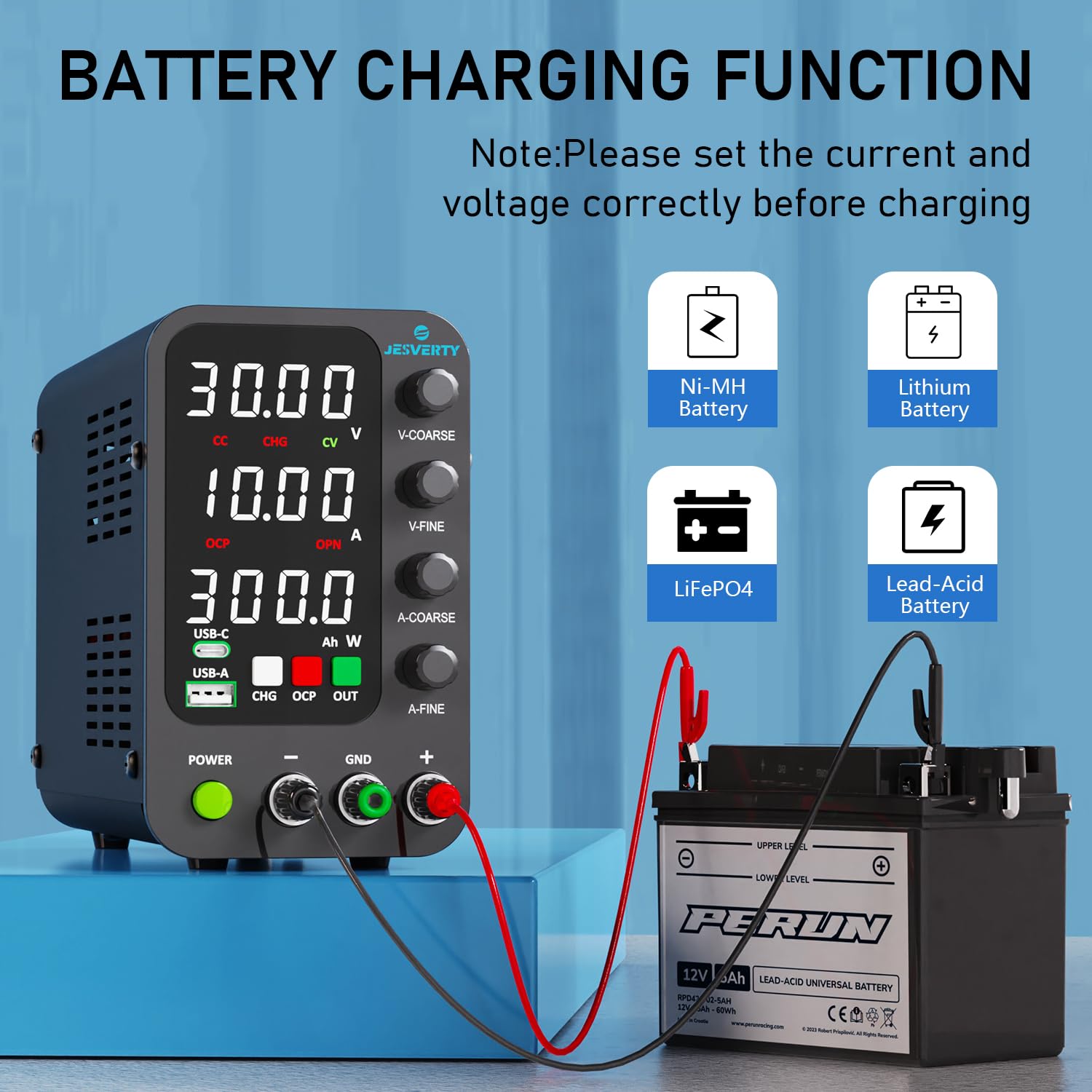
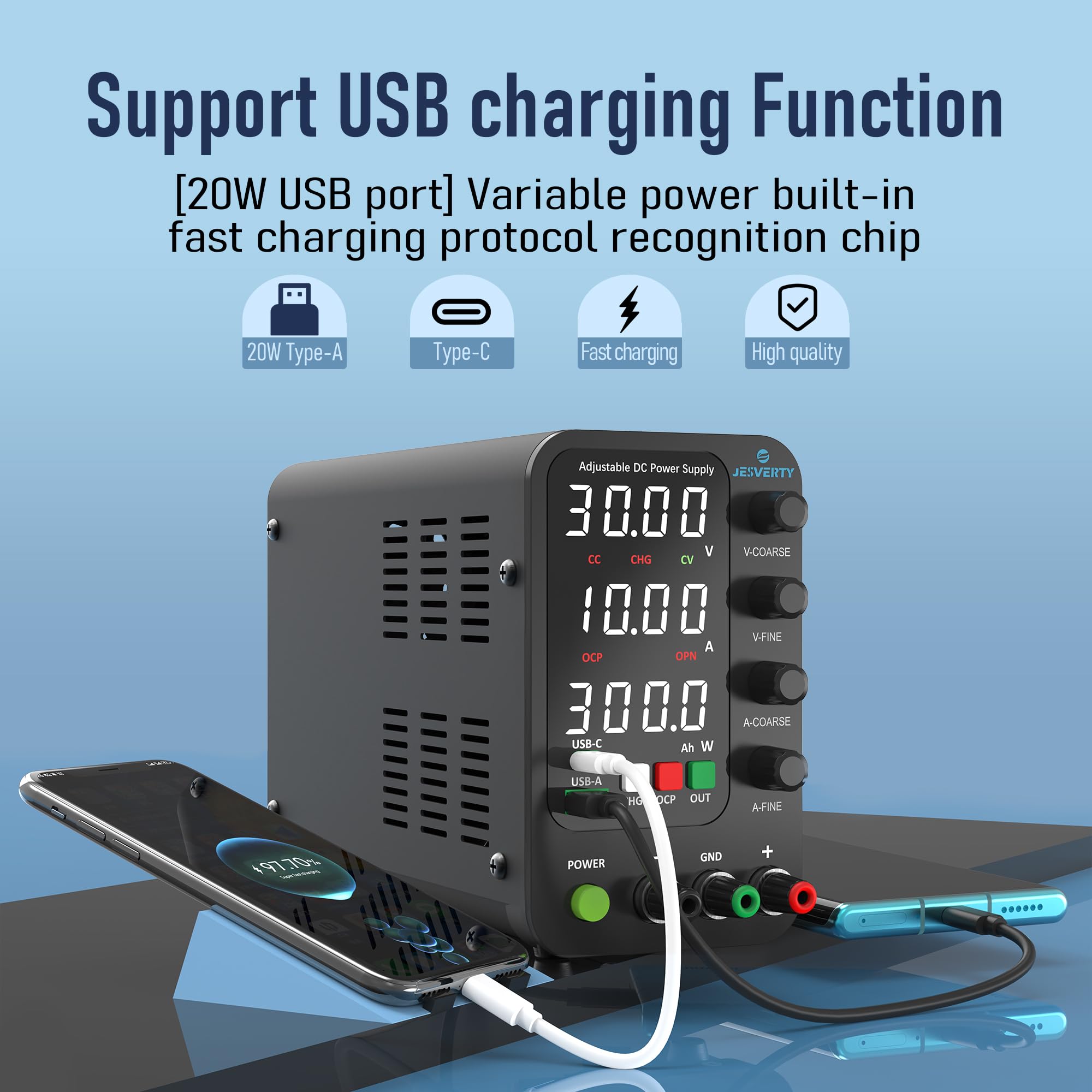
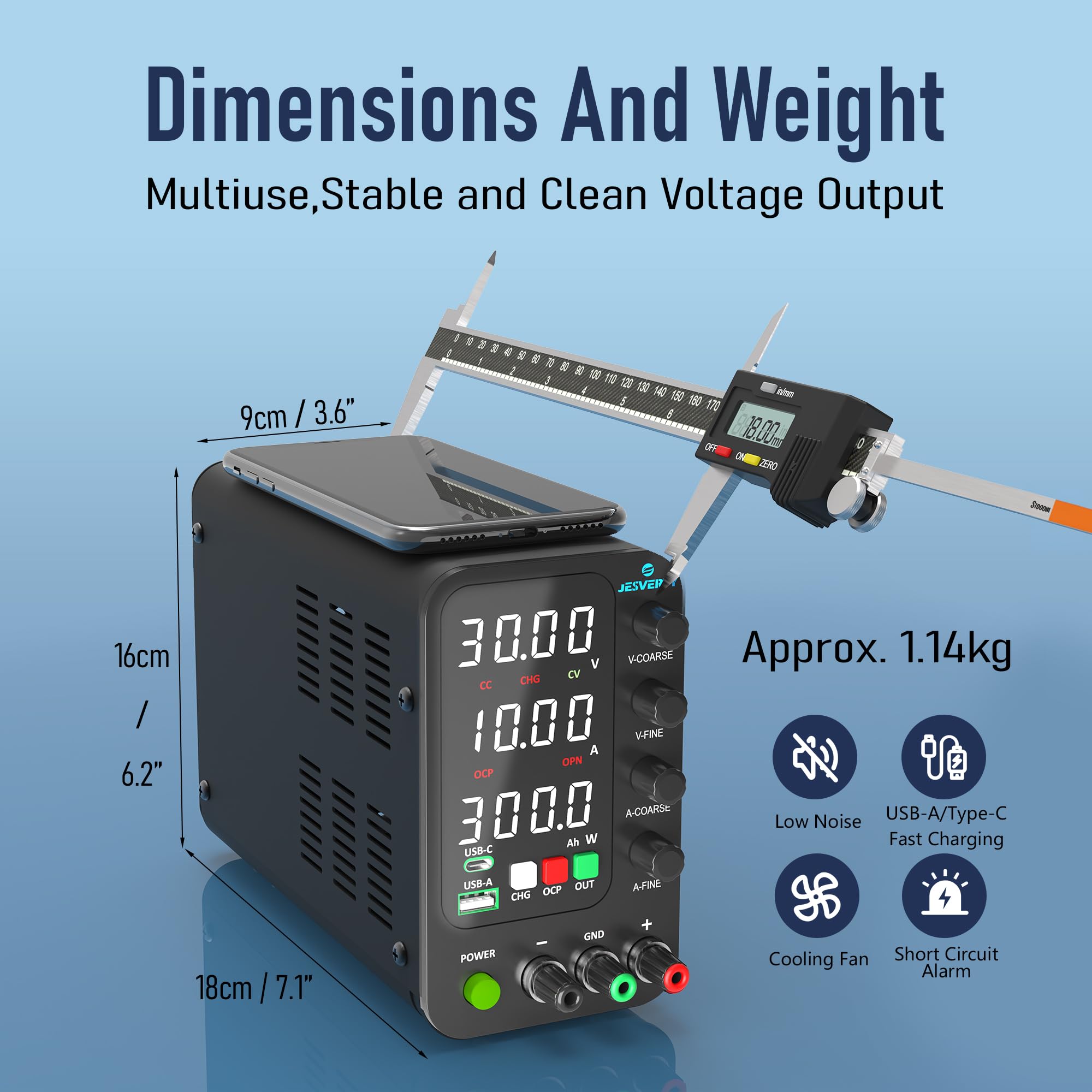
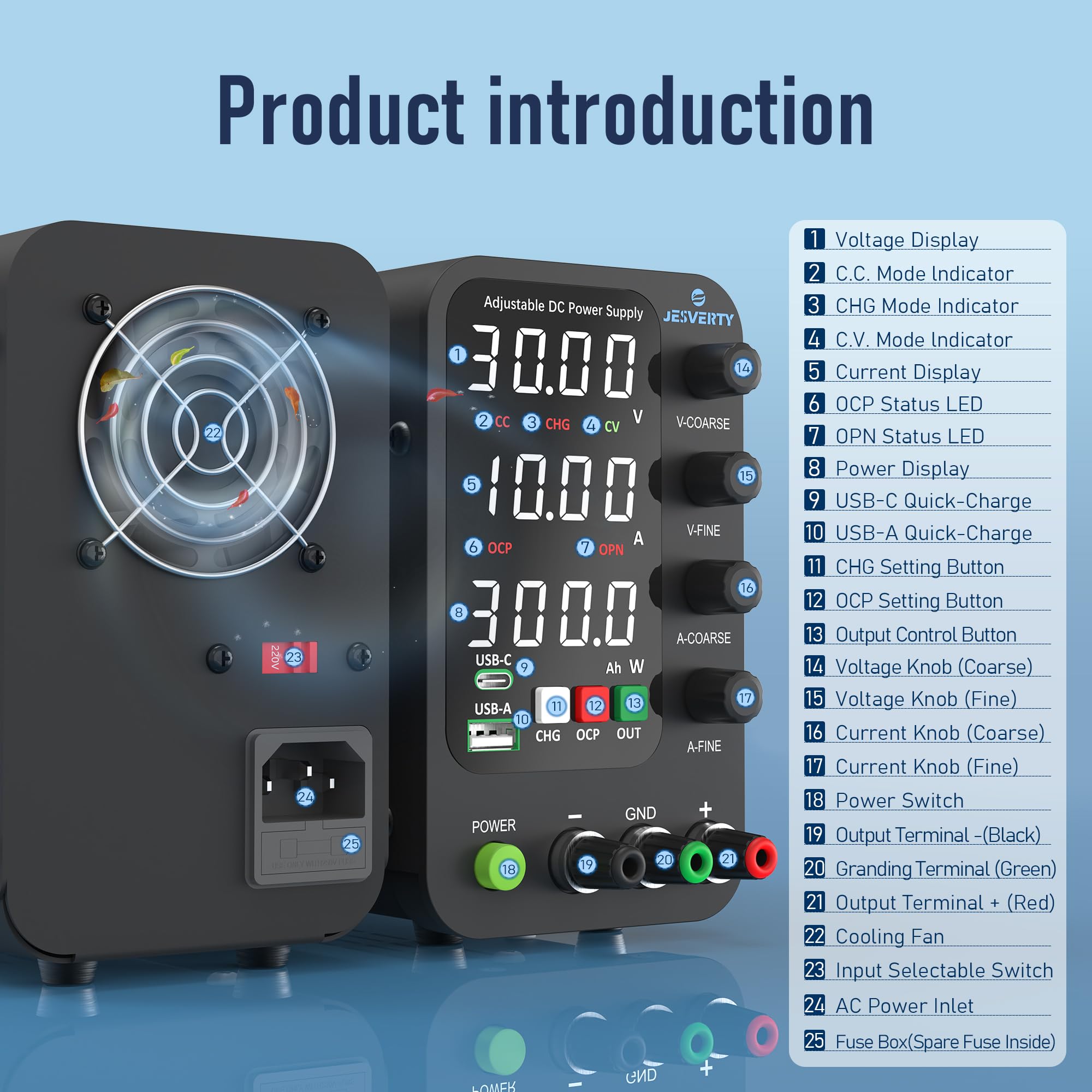
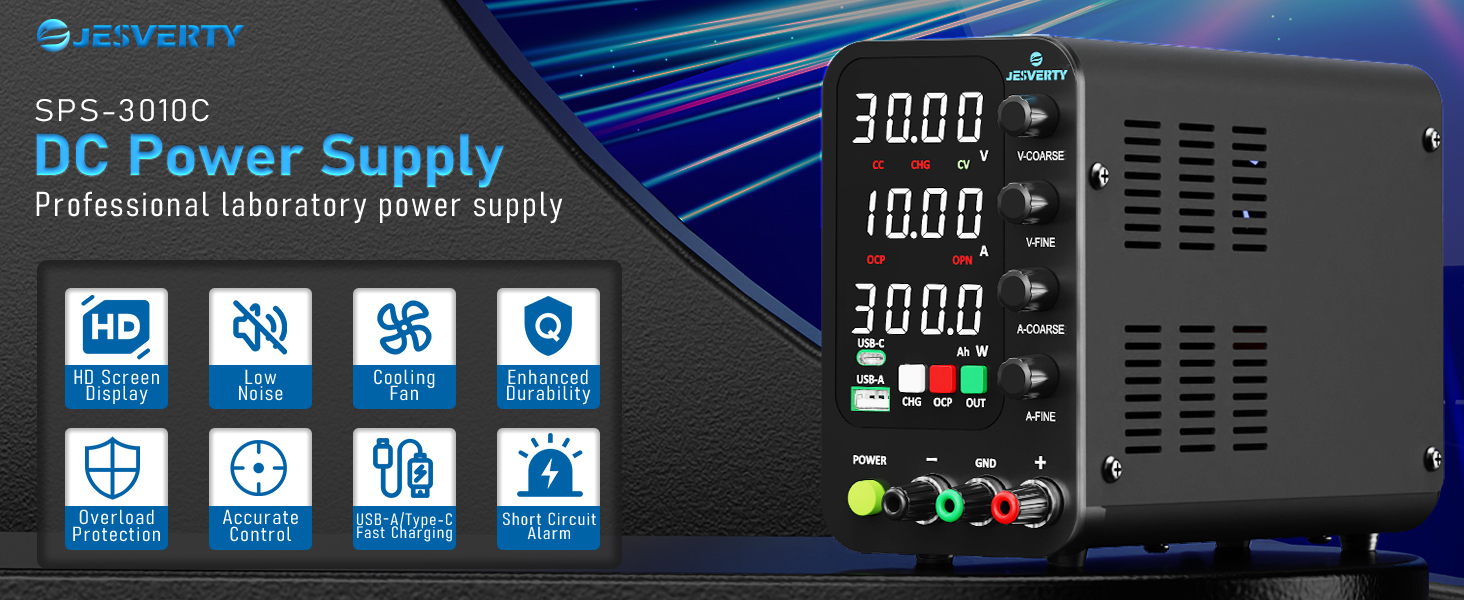
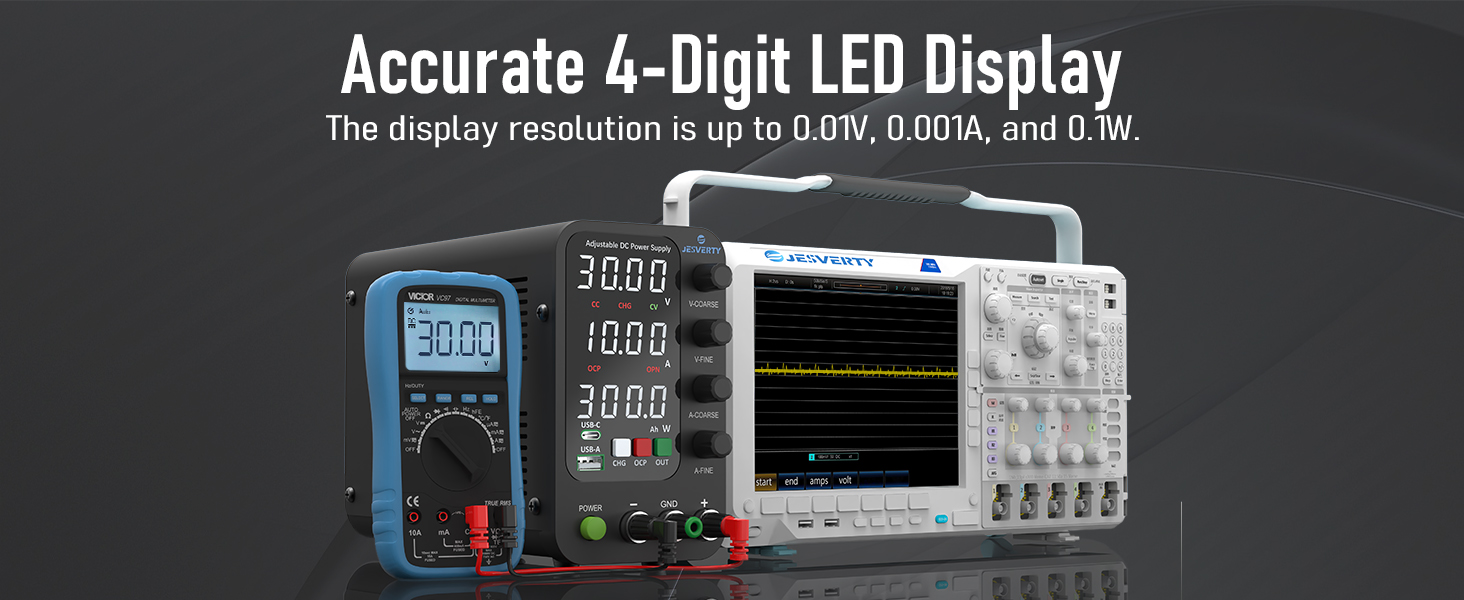
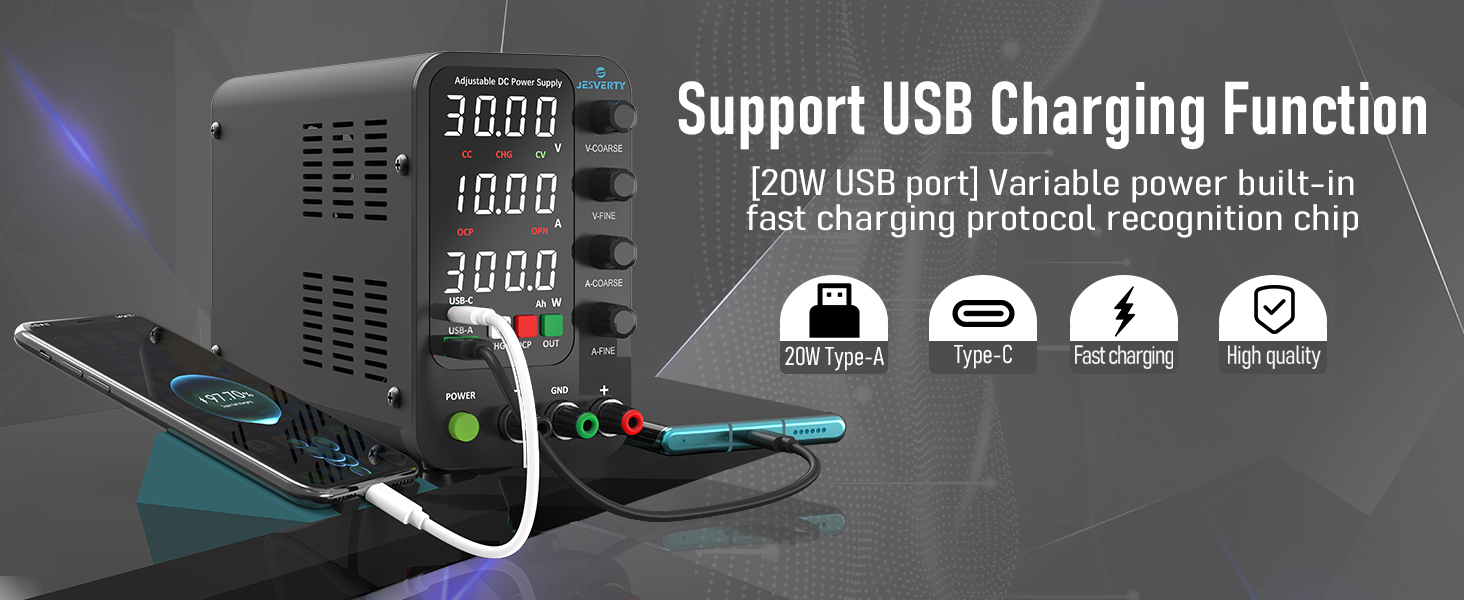
The Jesverty SPS-3010C is a compact, high-precision DC bench power supply offering 0-32V and 0-10A output with ultra-fine encoder knob adjustments. It features dual 20W USB-A and USB-C quick-charge ports, intelligent battery charging with auto-stop, and multiple safety protections, making it an essential tool for professionals and makers seeking efficient, reliable power solutions.


B**E
Great Moderate Capacity Power Supply!
I purchased this radio to power ham &GMRS for bench programming and testing, as well as other miscellaneous electronic projects I tend to get involved with. I have found it to be a great size for this purpose, both physically and capacity wise.I have found the power supply very easy to use, it is simple to set voltage 0-30VDC and maximum amperage up to 10A. There are also USB & USB-C ports (fixed capacity) for quick & easy charging of other devices. Additionally, this power supply has a ‘charge’ function for various chemistry of storage batteries—simply set your voltage, engage the charge feature, and the power supply will auto sense the battery chemistry and optimized charge rate. Very nice!Overall the build quality is very good. The display is easy to read, dial controls are easy to operate & reliable, push button switches click with consistent positive tactile feedback. You will occasionally at higher capacity demand hear the cooling fan ramp up but overall the unit is very quiet and unobtrusive. Spot checking the display meters against a known accurate high end digital multimeter shows we are typically within +/- .01 unit accuracy on both meters as well as calculated wattage.My only criticism of the power supply/Charger is the quality of the included power leads. Super light weight and just feel second rate. I bought what I feel to be a better quality set here on Amazon and am much happier with them. Overall in my opinion this is a great product for any electronic hobbyist.
J**A
A Lot Of Power Supply For The Money
This is an excellent single channel power supply with a lot of features. I love the bright digital readout. I use it to work from home frequently. I showed it to people at work and they want to buy a bunch for our lab. I didn't realize it came with a USB charger in it. I end up using that all the time to keep my DMM charged. The OCP works well. The voltage seems very quiet and stable. The controls are very intuitive. I didn't have to read the manual to get it to work.
D**N
Very nice but poorly documented.
For the price, this is a great general purpose power supply for electronic projects and many other applications. The displayed numbers are generally within 1% or +/- 1, whichever is greater. The displayed current when the power supply is in constant current mode can be inaccurate. In the sample I received, at low currents, the current it limits to is about 2mA less than the limit displayed. Strangely, at currents above 15mA, when the the supply is in CC mode, the current value displayed is the value of the current limit and not the measured current which is actually 2mA lower.The manual fails to explain a few features of the power supply. Turning the voltage knob changes the blinking voltage digit. To get a voltage digit to blink, you have to momentarily depress the voltage knob. The digit will blink for 3 seconds after it has been selected or changed. These rules make unintended voltage changes less likely. The current knob works the same way for setting currents. Voltage and current changes can be made at any time and are well behaved. I had a power supply that occasionally generated large voltage transients when being adjusted but this one doesn't do that. The documentation mentions Over Voltage Protection but doesn't say anything about its operation. If you press and hold the Voltage adjust knob for 3 seconds, it shows you that the OVP is enabled and set to 33V. You can't disable it or change the voltage and the OVP light is always on. This is not a very useful feature since the only way the output can get to 33V is by being driven by an external power source. When the over voltage is detected, the supply disables the output and the OVP indicator blinks but the supply can't do anything to reduce the output voltage. The Over Current Protection can be enabled and disabled and the threshold is separate from the CC mode current setting. It can be set by tapping the current knob to get to the digits of the current display after the long press of the knob that takes you to the place in the UI where you can turn OCP on and off. The description and manual also tell you how to enable and disable OPN but they don't say what OPN is. It appears to control the state of the output when the unit is first powered up. When enabled, the output will be enabled after power up and, when disabled, the output is disabled after power up. When enabled, you can put the supply on a timer or a smart plug and have it power something with the same settings it had when it was powered off, when it gets power.Here are some technical details about the supply that may not interest most readers. There are two general types of power supplies: switching and linear. Although the description doesn't say it, this is a switching power supply and that comes with some pros and cons. The pros are lighter weight, higher efficiency and low cost. The cons are more electrical noise on the output and poor transient response. The implementation of this supply does a good job minimizing the cons but they're still present. At high load currents, noise from internal switching results in very brief 50mV spikes in the output voltage. The spikes are smaller at lower output currents and probably won't cause problems in most applications. 10A transients in load current result in 300mV jumps in the output voltage. I have attached scope captures of the noise and the voltage transient.The output has 2000uF of capacitance fed through a current measuring shut by a switching power supply with 3300uF of output capacitor in parallel with a 660 Ohm resistor. Note that turn on voltage ramp will be limited by the current limit and the 2000uF output capacitor in some configurations. Note also that there is no additional circuitry to disconnect the load from the power supply. When the output is turned off by the user or a protection feature, the switching power supply is simply disabled. Thus, if there is no load when the output gets disabled, the output voltage decays like a 660 Ohm resistor in parallel with a 5300uF capacitor over many seconds. The large output capacitance can be a little dangerous if you're not careful when using the current limit feature. For example, you can use the power supply to light an LED by setting the output voltage to a voltage higher than the LED's required voltage and setting the current limit to the current you want to drive the LED at. This will work fine if you connect the LED with the power supply disabled and then enable it. However, if you set the voltage much higher than the LED's working voltage, enable the supply and then connect the LED, the output capacitance will be charged to the high voltage before the LED is connected and will discharge through the LED when it gets connected; the constant current feature can't limit the resulting current surge. This could damage the LED.
R**N
Love this thing - accurate, good performance - bonus Watts output!
At first, I did not know whether I'd be happy with setting each voltage digit separately, or with powering the unit with yet another switch for enabling power to the banana jacks.Well, setting the voltage is fast enough, and monitoring current and wattage has been a breeze, thanks to the quite accurate wattage display. (Volts x Amps = watts). Anyhow, the 2nd switch to enable power has already saved me once.I've used it primarily to power 24V 3D printer hot ends outside of the printer to address clogs or the inevitable blob of filament encasing the hot end from a print gone horribly wrong. The hot end is powered at 24V while monitoring the temp with the thermocouple connected to my DVM. Once it reached the target temp of 300C, it's easy to dial back the voltage to 12-14V, as needed, to hold the hot end at the desired temp. It's also used to power the onboard systems of my giant scale RC aircraft when working on the bench during setup, rather than using the batteries.A really good buy, and nicely made. Recommended.
ترست بايلوت
منذ يومين
منذ يوم واحد
منذ 5 أيام
منذ شهر