قم بتنزيل التطبيق


معلومات عنا
حقوق الطبع والنشر © 2024 Desertcart Holdings Limited
قم بتنزيل التطبيق
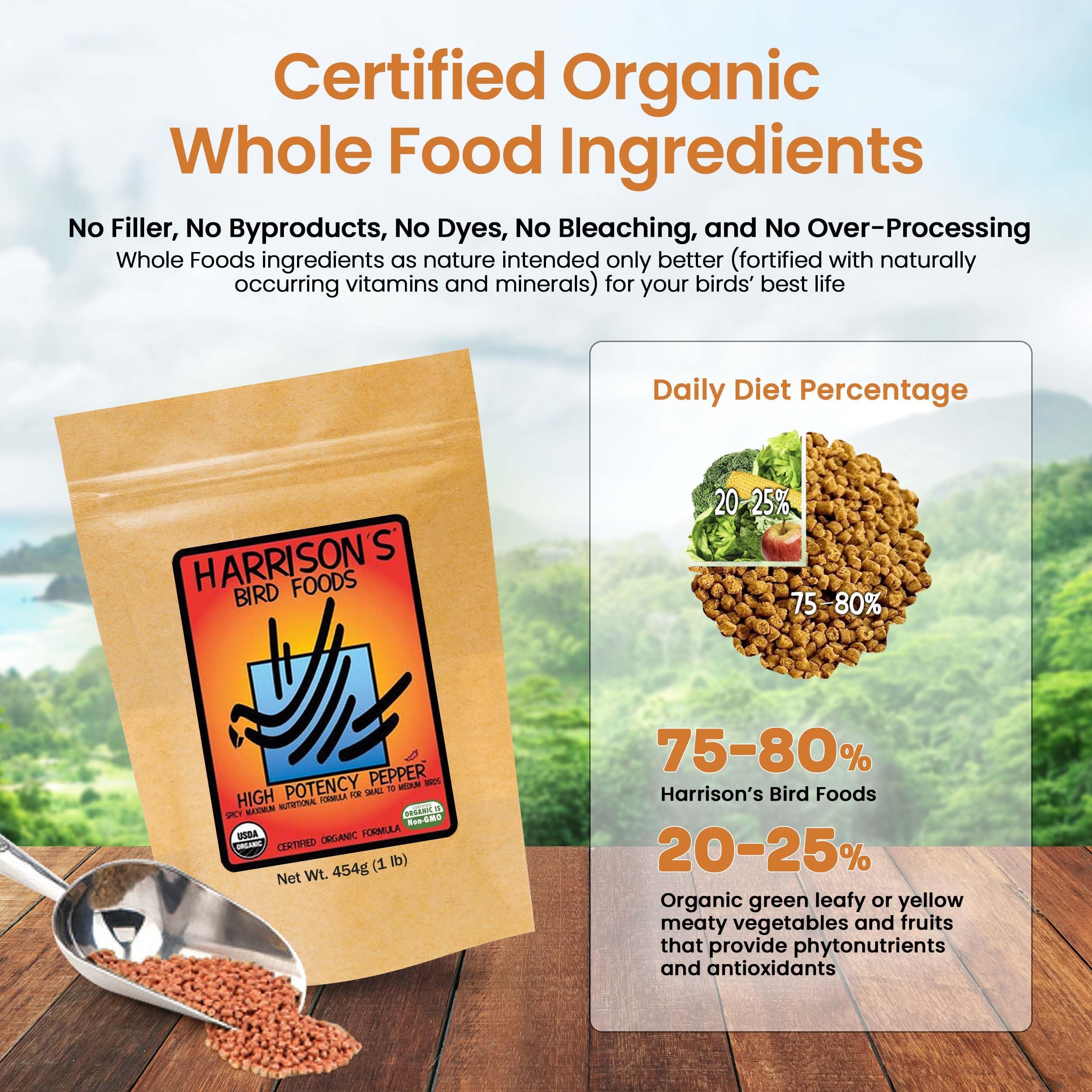
🦜 Elevate Your Bird’s Health with Every Peck — Don’t Let Your Feathered Friend Miss Out!
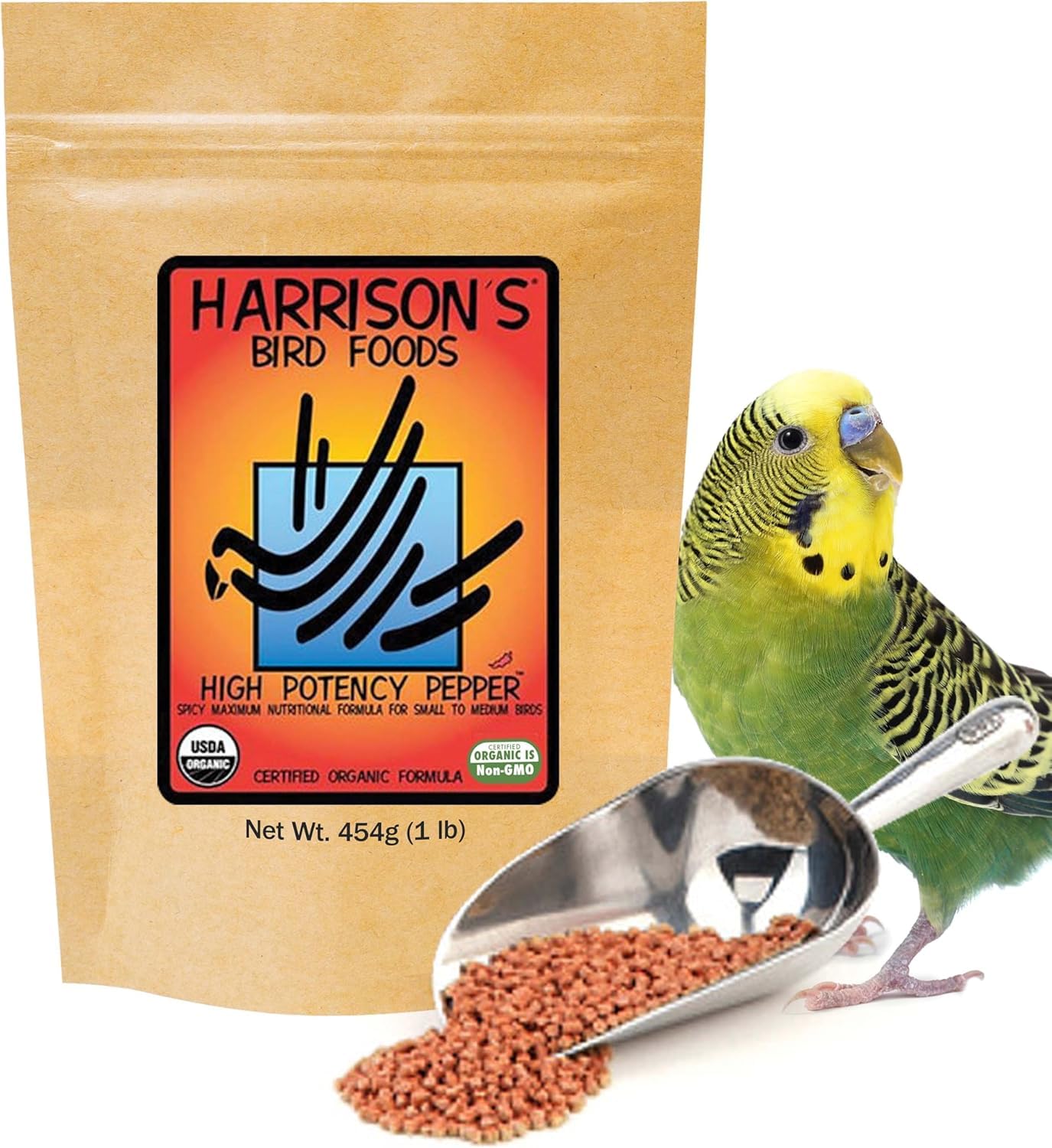
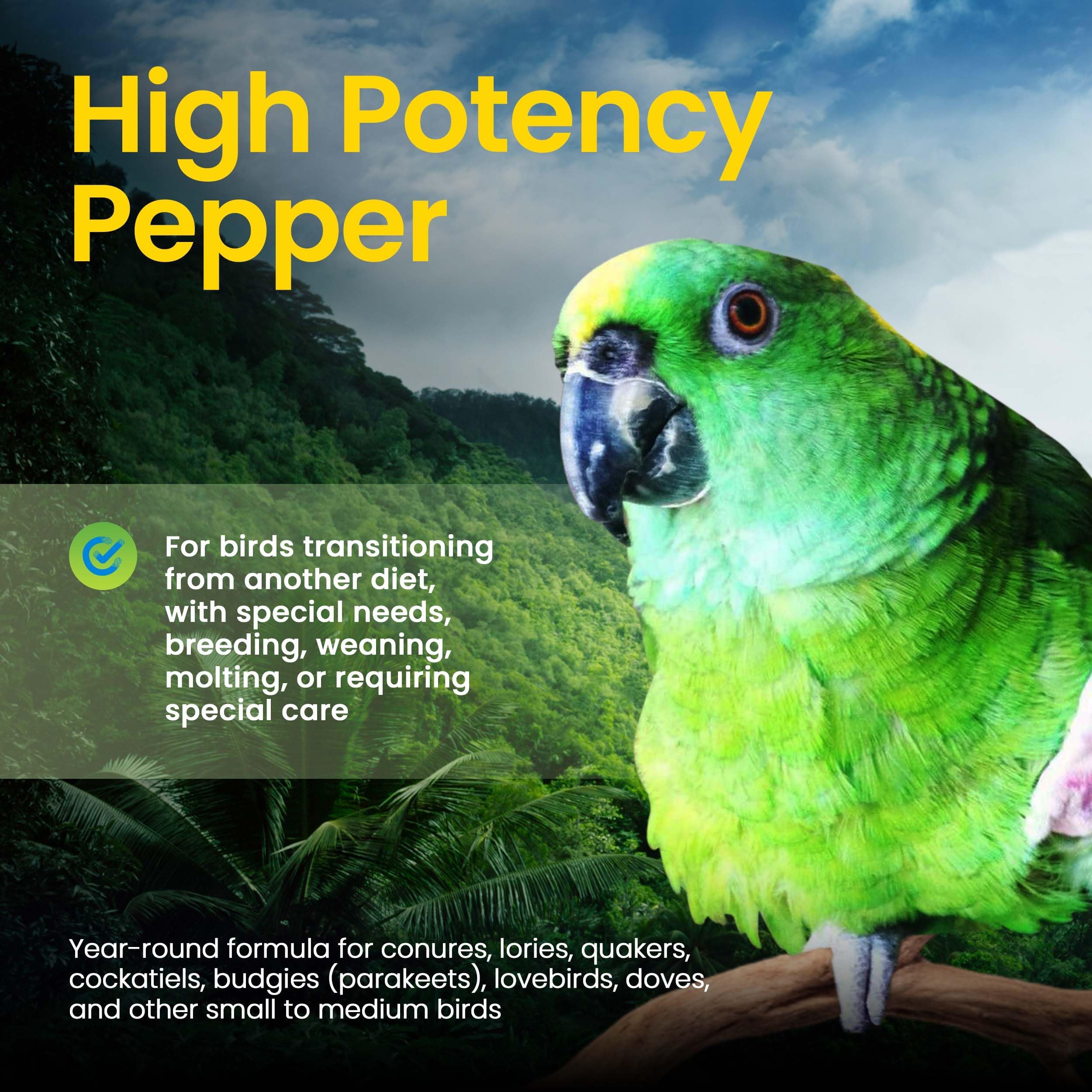
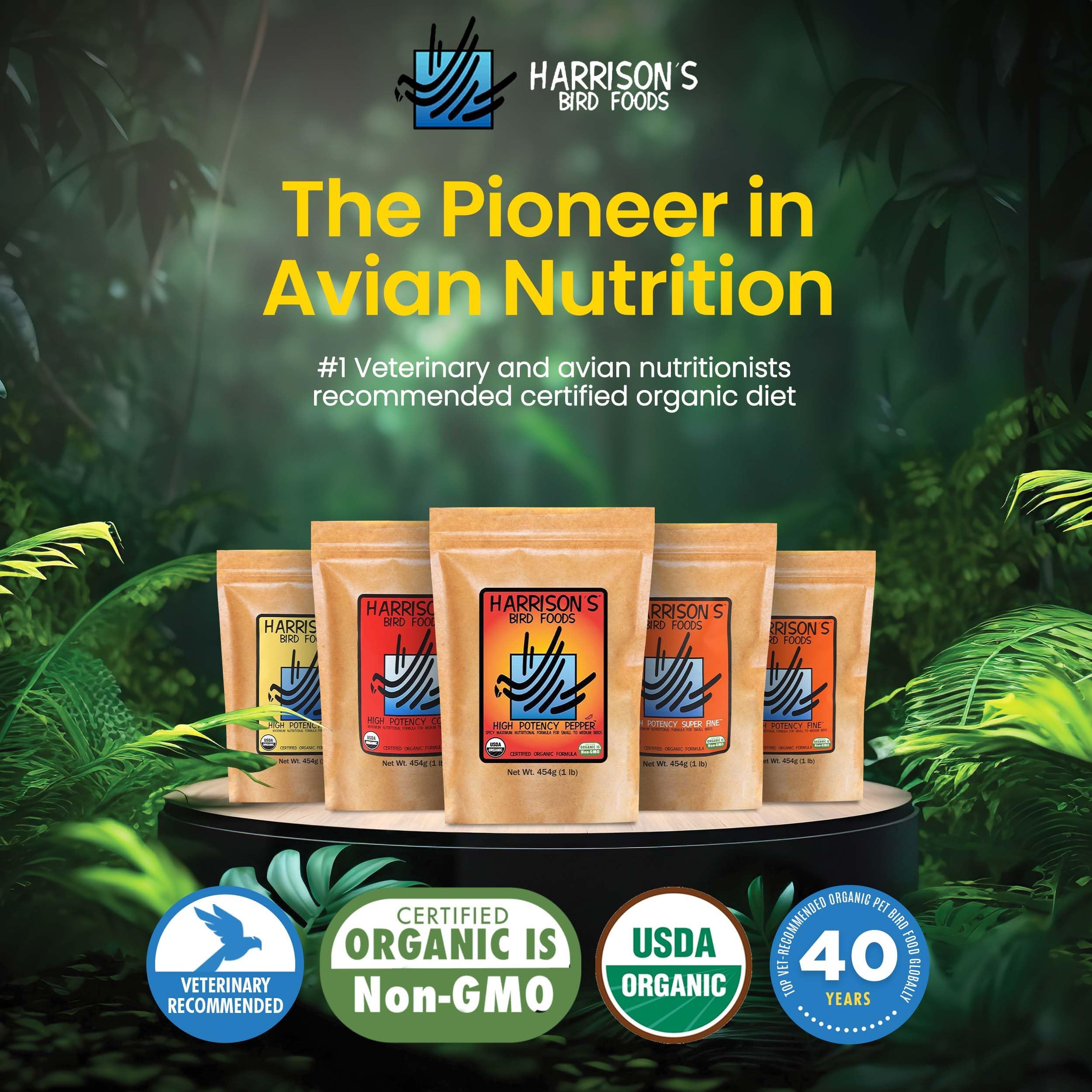
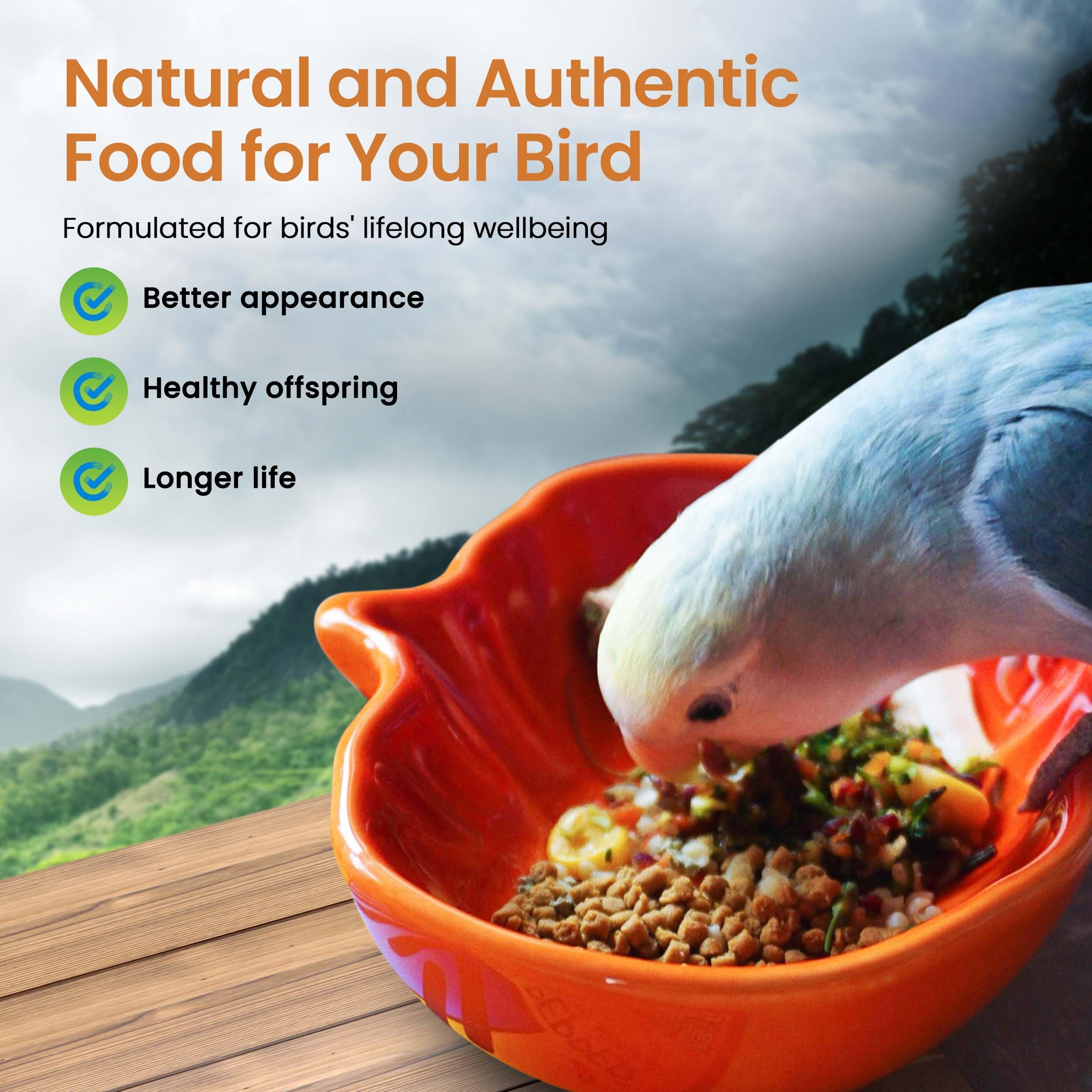
Harrison's Bird Foods High Potency Pepper is a vet-developed, certified organic, non-GMO pellet formula designed specifically for small to medium birds. With 20% minimum protein and 12% fat, it delivers maximum nutrition for all life stages, supporting recovery, molting, breeding, and overall vitality. Trusted by thousands, this premium bird food ensures your pet enjoys a nutrient-dense, toxin-free diet that promotes longevity and wellness.


| ASIN | B08LL9F8TS |
| ASIN | B08LL9F8TS |
| Age Range Description | All Life Stages |
| Best Sellers Rank | #2,015 in Pet Supplies ( See Top 100 in Pet Supplies ) #23 in Bird Food |
| Brand Name | Harrison's Bird Foods |
| Customer Reviews | 4.7 4.7 out of 5 stars (8,005) |
| Date First Available | October 21, 2020 |
| Date First Available | October 21, 2020 |
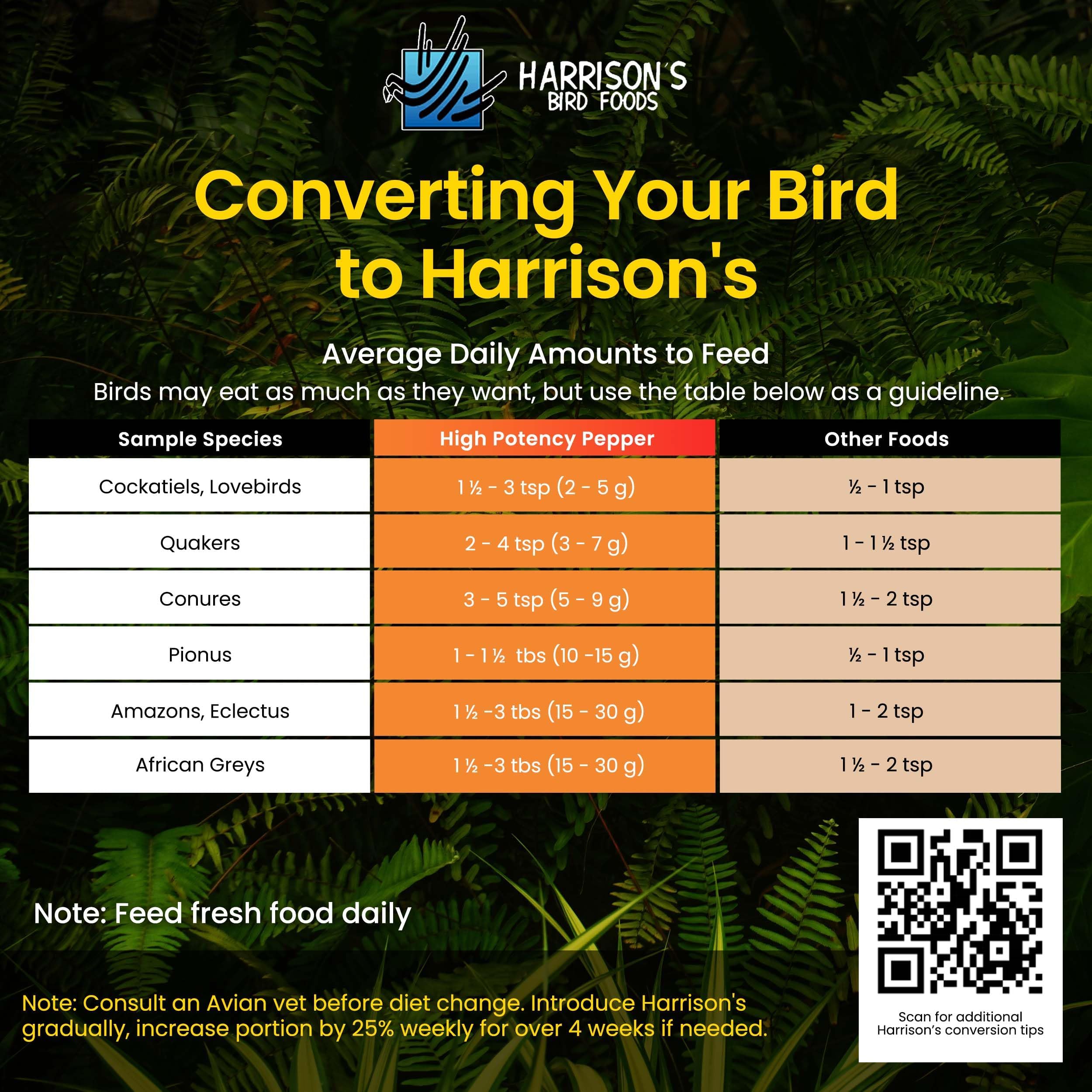
| Directions | Use High Potency Formula for bird conversion for at least 6 months for all birds, for special needs birds such as molting, overweight, underweight, particularly active, housed in a cold climate, recovering from an illness or affected by liver or kidney disease, for breeding birds, and for at least 6-9 months after weaning weaning birds. Ensure the bird is fed with certified organic, human-grade, w… |
| Item Package Dimensions L x W x H | 10.08 x 6.89 x 2.68 inches |
| Item Weight | 10 Grams |
| Item model number | Zie omschrijving |
| Item model number | Zie omschrijving |
| Manufacturer | Harrison's Bird Foods |
| Manufacturer | Harrison's Bird Foods |
| Number of Items | 1 |
| Package Dimensions | 10.08 x 6.89 x 2.68 inches; 0.35 ounces |
| Size | 1 Pound (Pack of 1) |
| Specific Uses for Product | Food |
| Target Audience Keyword | birds, small to medium pet birds parrots |
T**S
Probably helped save my budgie's life!!
UPDATE: If you select the 5lb. bag in Super Fine size, you'll actually receive the larger Fine size. The image shows the Fine, but the size selection says Super Fine. There doesn't appear to be a way to order Super Fine in a more economical 5lb. bag (and it turns out that the company doesn't even offer it!), and I'm really annoyed at not having the food for my birds that I expected to have. One of my six budgies (aka parakeets) was recently sick with a fungal infection for over a month, which causes a lot of weight loss. Although I hadn't had much luck with offering my flock trial amounts now and then of friends' Harrisons' pellets in the Adult Lifetime Fine variety, I figured it was worth the expense to try to get my sick guy to eat some of the High Potency blend, with the extra calories and nutrition, as it could be a factor in his ability to survive the illness and treatment, and I was willing to try just about anything. I got this extra-small pellet size because it's close to the size of millet grains, and started by mixing a little in with the crushed Nutri-berries and with the fruity Zupreem pellets (x-small) he was already eating a bit of, but he didn't seem to be going for it. After a few days I started offering the Harrison's in its own dish alongside the others, and before I knew it, he was frequently choosing it over even his favorite Nutri-berries! So I switched fully to the Harrison's for his pellets and removed the Zupreem at that point. Now, he's fully recovered, and I'm so thrilled! I hadn't had much hope my sweet little guy would make it, and I strongly suspect that these pellets, along with a very warm, clean environment and lots of rest, were instrumental. Several of the other birds have eaten some of the Harrison's too now after seeing him enjoy it. Woohoo! I've just ordered the 5-lb. bag, and plan to do the 6-month regimen with the whole flock, after which I can hopefully transition them to the Adult Lifetime blend. This brand is on the expensive side, but the quality of the organic ingredients and the reduction of waste makes it worth the cost, and probably even less expensive than a cheaper diet in the long term when you factor in vet bills! If your birds won't eat it, try a smaller size; try mixing it with their favorite foods; try leaving a dish of it in the cage in their favorite spot at all times, and only offering their other food for a shorter time morning and evening. I think once you get them to try it, they realize it's good and want to eat it.
G**V
Outstanding Pellet Food
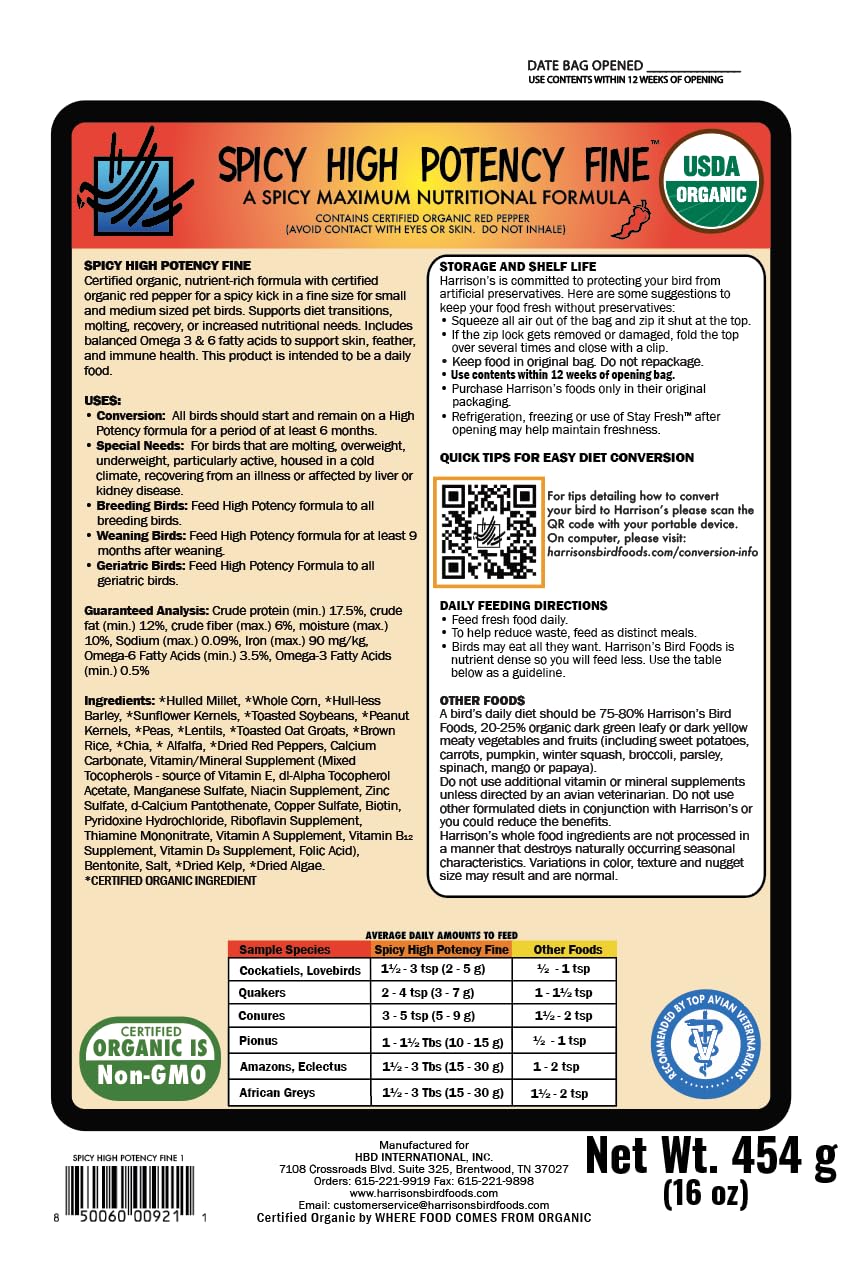
This is one of the best foods you can buy for your domesticated bird. The ingredients are very high quality, certified organic, and very healthy for your bird. I must confess that I do mix this food with Roudybush, another high quality pellet food. I could not be happier with Harrisions than I am - it simply exceeds all of my expectations. Converting your bird to a pellet diet from a seed diet can be somewhat difficult but if you have patience and are consistent it will pay off, and your bird will be healthier. I highly recommend this product for any domesticated bird. Below is the list of ingredients for the Fine - I hope this review helps you to decide if this this product is for you. If you find this product is too costly, and it is not cheap, do check out Roudybush as well, it is cheaper, but is generally considered not quite as good as this diet and it is not organic, but I do feed my birds both of these foods. Also please note this is the 'high potency' forumula, there is also a daily diet that is a bit of a different recepie but Harrison's recommends if you are changing from another food to Harrision's that you use the High Potency for at least the first six months. Ingredients: *Ground Hulled White Millet (Proso), *Ground Shelled Sunflower Seeds, *Ground Hulless Barley, *Ground Yellow Corn, *Ground Soybeans, *Ground Shelled Peanuts, *Ground Rice, *Ground Green Peas, *Ground Lentils, *Ground Toasted Oat Groats, Chia Seed, *Ground Alfalfa, Calcium Carbonate, Montmorillonite Clay, Spirulina, Ground Dried Sea Kelp, Vitamin E Supplement, Sea Salt, Vitamin A Supplement, Vitamin D3 Supplement, Niacin Supplement, Vitamin B12 Supplement, Riboflavin Supplement, d-Calcium Pantothenate, Pyridoxine Hydrochloride, d-Biotin, Thiamine Mononitrate and Sodium Selenite. *CERTIFIED ORGANIC INGREDIENT Guaranteed Analysis Crude Protein 20.0% min Crude Fat 12.0% min Crude Fiber 5.0% max Moisture 10.0% max I wanted to include here a recipe for a fresh diet that a breeder I highly respect gave me just to offer some advice to keep our pet birds healthier - it is not at all related this the product I have reviewed here but it could very well give you some great ideas to get fresh fruits and vegetables into your bird. All domestic birds, especially parrots, lovebirds, parrotlets, parakeets, canaries, finches, conures, etc, should have fresh fruit and vegetables and they can present a challenge to get them to eat them. Gives this recipe a try Here's a recipe that I make and it took some time for them to get used to it, but now my lovebirds and my parrotlets both eat this when provided. I give it in the morning and remove uneaten food in the evening. 1 apple cored and chopped 1/2 Cup chopped raw broccoli 1 Chopped bell pepper seed included 2 shredded carrots 1/2 Cup chopped greens (bok choy, mustard greens, kale and/or chard) 1/4 Cup frozen corn (can be eliminated if you put slices of raw corn on the cob in treat holders/clips in your cage - all my birds LOVE it and I have had 100% success getting them to eat this) 1/4 Cup frozen peas 1/2 Cup cooked rice (brown or GABA brown rice) 1/2 Cup cooked dried beans (they will need to be soaked overnight for 8 hours) A handful of blueberries, chopped cherries and chopped seedless grapes Mix all ingredients together in a large bowl. Place ingredients in an ice cube tray and freeze. Remove frozen cubes and place in plastic bags to store in freezer. Then you can take out the perfect portion on a daily basis . They say 1 cube per bird but you may bind that 1 cube will work well for a pair of birds of if smaller birds, even more. Instead of an ice cube tray I use slider freezer bags and press them flat after I fill them with enough of the mixture and this way I can easily break off appropriate sized pieces. This recipe is variable and you can switch out or add/delete ingredients that you have on hand or what you know your birds already like. This recipe is in ADDITION to their regular diet of pellets and seeds and not a substitute.
L**O
Harrison's is the best bird food.
I have been feeding my Grey parrot Harrison's for the 33 years I've owned him. It is an organic pelleted food that is easy to feed. It has kept my companion in tip top shape, he doesn't look his age and I can be sure he'll have many more years. Grey parrots can live for up to 60 years, so, because of Harrison's Bird food he'll be around for a long while. I supplement his food with fresh vegetables according Harrison's recommendations. Harrison's is manufactured in the US from all organic locally sourced seed and grain, so it's availability and price is not affected by shortages that could be caused by tariffs. If you have a companion bird, I highly recommend that you feed him or her Harrison's. Your bird will be healthy from a well rounded diet.
K**E
Great quality, but my bird is very opinionated
I was hoping to get my 14-year-old sun conure to start eating this along with his regular diet. I followed the instructions for gradually incorporating it, but he refused to cooperate. Apparently, sun conures never outgrow the toddler phase. My bird strategically nudged this out of his food dish and onto the floor. The good news is that at least my dogs enjoyed it. The food itself seems like great quality, and I wouldn’t hesitate to recommend it for birds that are less picky than mine.
E**.
Good Quality Parrot Food
My macaw loves it! She is very selective of what she eats and got used to her new food quickly.
M**A
Harrison bird food
Yes Harrison Bird food is the best food for your birds. It took a long time to receive the Harrison package though didn’t understand why waited since Dec. 2025 till now
C**O
Me lo recomendó la veterinaria. Mi loro es ya muy mayor y necesita vigilar la alimentación. Probé varias marcas y esta es la que más le gusta y parece que le sienta muy bien.
A**D
My Parrots loved it
W**W
The quality of Harrisons's is well understood. The fact that our yellow sided green cheek conure loves it is a big plus- a real relief that she is eating nutritious food. Without complaint. I can recommend this product.
S**.
2nd purchase. Good product but sadly seller send me a fast expiry date product. May 2022
J**)
Bien reçu, mais ce n'est pas l'article que j'attendais ; c'était de la nourriture en petit cube qui était commandé et nous avons reçu de la nourriture en poudre...??? Donc,ce n'est pas vraiment la même chose. Je suis un peu déçu,car j'aimerais être informé si l'article est en stock ou pas. Donc à revoir......
ترست بايلوت
منذ أسبوع
منذ 3 أسابيع