Some deliveries may take a little longer than usual due to regional shipping conditions.

قم بتنزيل التطبيق


معلومات عنا
حقوق الطبع والنشر © 2024 Desertcart Holdings Limited
قم بتنزيل التطبيق
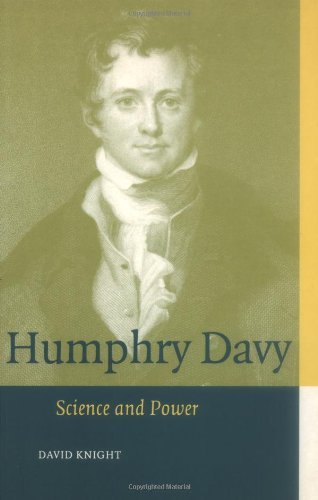
Humphry Davy: Science and Power (Cambridge Science Biographies) - Kindle edition by Knight, David. Download it once and read it on your Kindle device, PC, phones or tablets. Use features like bookmarks, note taking and highlighting while reading Humphry Davy: Science and Power (Cambridge Science Biographies). Review: Chemist, poet, angler - the life of Humphry Davy, the first great popularizer of science - Today we bemoan the gap between the so-called "two cultures," the sciences and the humanities, and the common inability of those involved in one to communicate with the other. If any historical person shows the ability to bridge that gap, it was Humphry Davy. Davy was both a first rate chemist and a reasonably good poet largely because, when he lived, the specializations that dominate the intellectual scene today were just beginning to develop. This biography by David Knight shows all sides of the man, combining his ground-breaking work in chemistry with many of Davy's prose and poetic writings. Sir Humphry Davy was the wunderkind of early 19th century science. From very modest beginnings in Cornwall, he became the first great popularizer of science, a tradition that is alive (and much needed) today. Tickets to his entertaining chemistry lectures were in such demand that ticket scalpers made money on him! Among other major chemical achievements, he isolated potassium and sodium and showed that chlorine was an element, not a compound. He also named these elements and the names have lasted the test of time (potassium from potash, sodium from soda, chlorine from the Greek for "pale green"). His experiments with nitrous oxide, often on himself for extended periods of time, paved the way for the use of this gas in surgery. (The book is great for showing how dangerous early chemistry experiments could be.) Davy saved thousands of lives both during and after his life by inventing the safety lamp for use in coal mines, thus making explosions far less common. His fame as discoverer and speaker led this commoner by birth to be knighted and become President of the Royal Society in 1820. Yet there was much more to the man. He wrote poetry his whole life, was close friends with Coleridge, and was clearly a member of what we now call the Romantic Movement. He viewed nature not as a machine but as a glorious manifold created by God for us to enjoy and explore. His poetry is sometimes an unusual combination of science, personal issues and a passionate love of nature. God was not for Davy the great watch maker as for William Paley; He was much more like the great artist of the universe. The chemist is in effect analyzing the painting and poetry is as fitting a response to nature as chemical analysis. The combination of Davy's passion for science and his superb speaking skills inspired his assistant, young Michael Faraday. But Davy's passion and romantic optimism changed when he became President of the Royal Society. He was hyper-sensitive to criticism and the position put him in the middle of some vicious and highly emotional disagreements. His ideas often did not work for which he was strongly criticized. Largely because of his bad health and partly as a result of the anxiety caused by the position, he gave up the Presidency in 1827 and died in 1829 in many ways a bitter man. But his romantic side never gave up. One of his last two books, which Knight spends an entire chapter on, was Salmonia, a book about his favorite pastime, fishing, and the metaphysical joys of angling. Knight's biography is a fine piece of work and gives the reader a full account of this fascinating founder of chemistry. Yet I have a few issues with the book that kept me from giving it five stars. First is the lack of illustrations. Except for the portrait of Davy in the frontispiece, there is not a single image or diagram in the book. This is a significant drawback since so much of the book talks about the apparatuses that Davy used, the buildings in which he worked, and his many well-placed friends, patrons, protégés and enemies. Surely there were images available. It would have been extremely helpful to see what Knight is talking about and it would have helped put more context into the explanation of Davy's activities. Another less acute problem is a relatively large number of small typographical errors, for example. "then" instead of "them." These are easy to read over but at times catch the reader up when following the flow of thought. A third issue (which may be much more personal to me) is that the text could use a few more transitions. There were times (not many) when the content of certain paragraphs seemed somewhat disorganized. In that sense a few parts of the book could be more smoothly written. But none of this should detract from the fact that this is a fine piece of work about one of the most important people in the history of science who is often ignored today. The criticisms of Davy based on some of his personality traits and because of jealousy served to denigrate him in the popular imagination at the end of his life and after his death. He deserves a biography that puts him back into the place in the history of science that he deserves. Knight's biography does that and I recommend the book.
| ASIN | B003EV5PPM |
| Accessibility | Learn more |
| Best Sellers Rank | #2,006 in History of Engineering & Technology #4,287 in History of Technology #5,339 in Scientist Biographies |
| Customer Reviews | 4.0 4.0 out of 5 stars (1) |
| Edition | Revised ed. |
| Enhanced typesetting | Not Enabled |
| File size | 2.5 MB |
| ISBN-13 | 978-1139105101 |
| Language | English |
| Page Flip | Not Enabled |
| Print length | 236 pages |
| Publication date | February 5, 1998 |
| Publisher | Cambridge University Press |
| Word Wise | Not Enabled |
| X-Ray | Not Enabled |
D**N
Chemist, poet, angler - the life of Humphry Davy, the first great popularizer of science
Today we bemoan the gap between the so-called "two cultures," the sciences and the humanities, and the common inability of those involved in one to communicate with the other. If any historical person shows the ability to bridge that gap, it was Humphry Davy. Davy was both a first rate chemist and a reasonably good poet largely because, when he lived, the specializations that dominate the intellectual scene today were just beginning to develop. This biography by David Knight shows all sides of the man, combining his ground-breaking work in chemistry with many of Davy's prose and poetic writings. Sir Humphry Davy was the wunderkind of early 19th century science. From very modest beginnings in Cornwall, he became the first great popularizer of science, a tradition that is alive (and much needed) today. Tickets to his entertaining chemistry lectures were in such demand that ticket scalpers made money on him! Among other major chemical achievements, he isolated potassium and sodium and showed that chlorine was an element, not a compound. He also named these elements and the names have lasted the test of time (potassium from potash, sodium from soda, chlorine from the Greek for "pale green"). His experiments with nitrous oxide, often on himself for extended periods of time, paved the way for the use of this gas in surgery. (The book is great for showing how dangerous early chemistry experiments could be.) Davy saved thousands of lives both during and after his life by inventing the safety lamp for use in coal mines, thus making explosions far less common. His fame as discoverer and speaker led this commoner by birth to be knighted and become President of the Royal Society in 1820. Yet there was much more to the man. He wrote poetry his whole life, was close friends with Coleridge, and was clearly a member of what we now call the Romantic Movement. He viewed nature not as a machine but as a glorious manifold created by God for us to enjoy and explore. His poetry is sometimes an unusual combination of science, personal issues and a passionate love of nature. God was not for Davy the great watch maker as for William Paley; He was much more like the great artist of the universe. The chemist is in effect analyzing the painting and poetry is as fitting a response to nature as chemical analysis. The combination of Davy's passion for science and his superb speaking skills inspired his assistant, young Michael Faraday. But Davy's passion and romantic optimism changed when he became President of the Royal Society. He was hyper-sensitive to criticism and the position put him in the middle of some vicious and highly emotional disagreements. His ideas often did not work for which he was strongly criticized. Largely because of his bad health and partly as a result of the anxiety caused by the position, he gave up the Presidency in 1827 and died in 1829 in many ways a bitter man. But his romantic side never gave up. One of his last two books, which Knight spends an entire chapter on, was Salmonia, a book about his favorite pastime, fishing, and the metaphysical joys of angling. Knight's biography is a fine piece of work and gives the reader a full account of this fascinating founder of chemistry. Yet I have a few issues with the book that kept me from giving it five stars. First is the lack of illustrations. Except for the portrait of Davy in the frontispiece, there is not a single image or diagram in the book. This is a significant drawback since so much of the book talks about the apparatuses that Davy used, the buildings in which he worked, and his many well-placed friends, patrons, protégés and enemies. Surely there were images available. It would have been extremely helpful to see what Knight is talking about and it would have helped put more context into the explanation of Davy's activities. Another less acute problem is a relatively large number of small typographical errors, for example. "then" instead of "them." These are easy to read over but at times catch the reader up when following the flow of thought. A third issue (which may be much more personal to me) is that the text could use a few more transitions. There were times (not many) when the content of certain paragraphs seemed somewhat disorganized. In that sense a few parts of the book could be more smoothly written. But none of this should detract from the fact that this is a fine piece of work about one of the most important people in the history of science who is often ignored today. The criticisms of Davy based on some of his personality traits and because of jealousy served to denigrate him in the popular imagination at the end of his life and after his death. He deserves a biography that puts him back into the place in the history of science that he deserves. Knight's biography does that and I recommend the book.
ترست بايلوت
منذ أسبوعين
منذ أسبوعين