
DOWNLOAD THE APP


Customer Services
Copyright © 2025 Desertcart Holdings Limited
DOWNLOAD THE APP

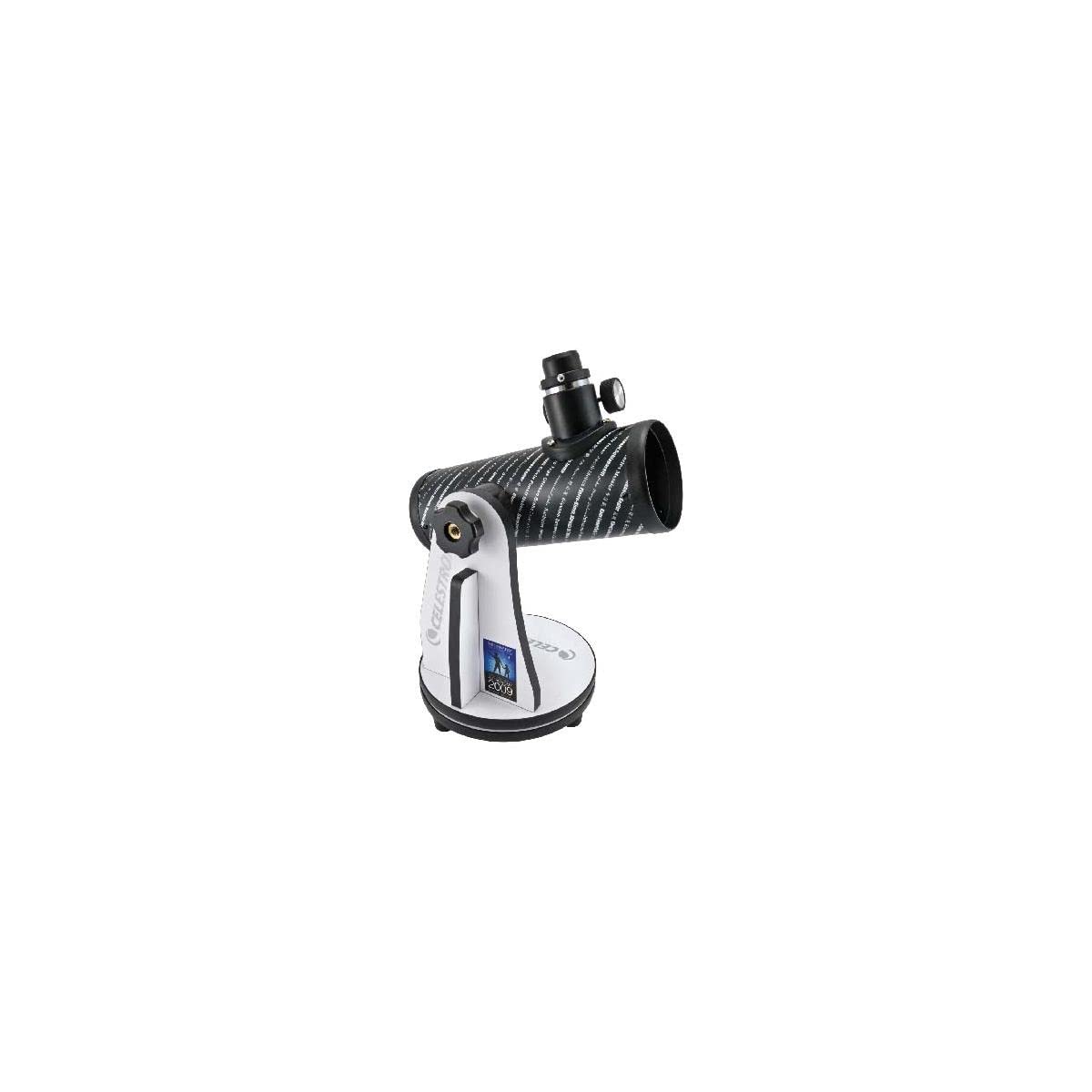
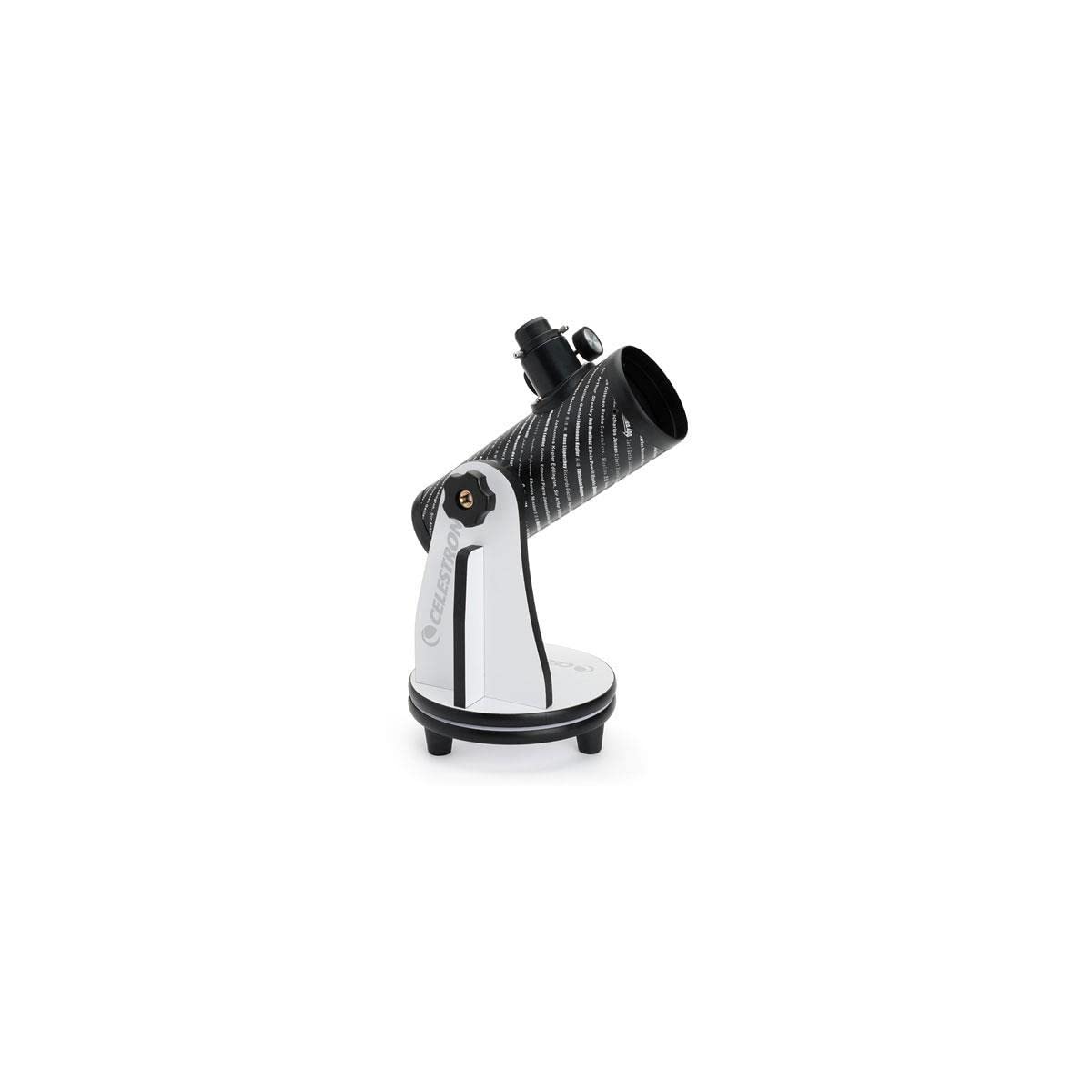





🔭 Discover the universe without the bulk—your cosmic journey starts here!
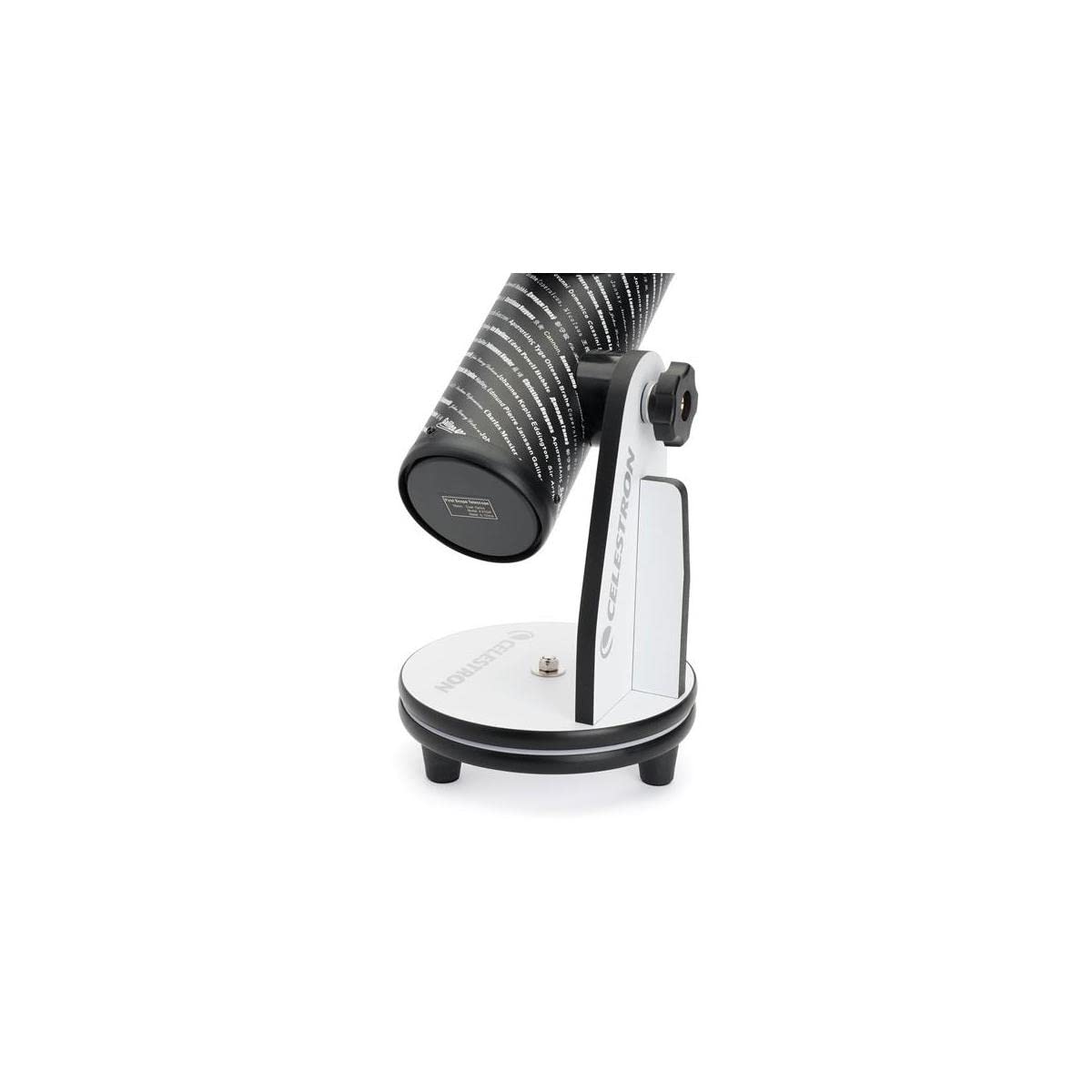
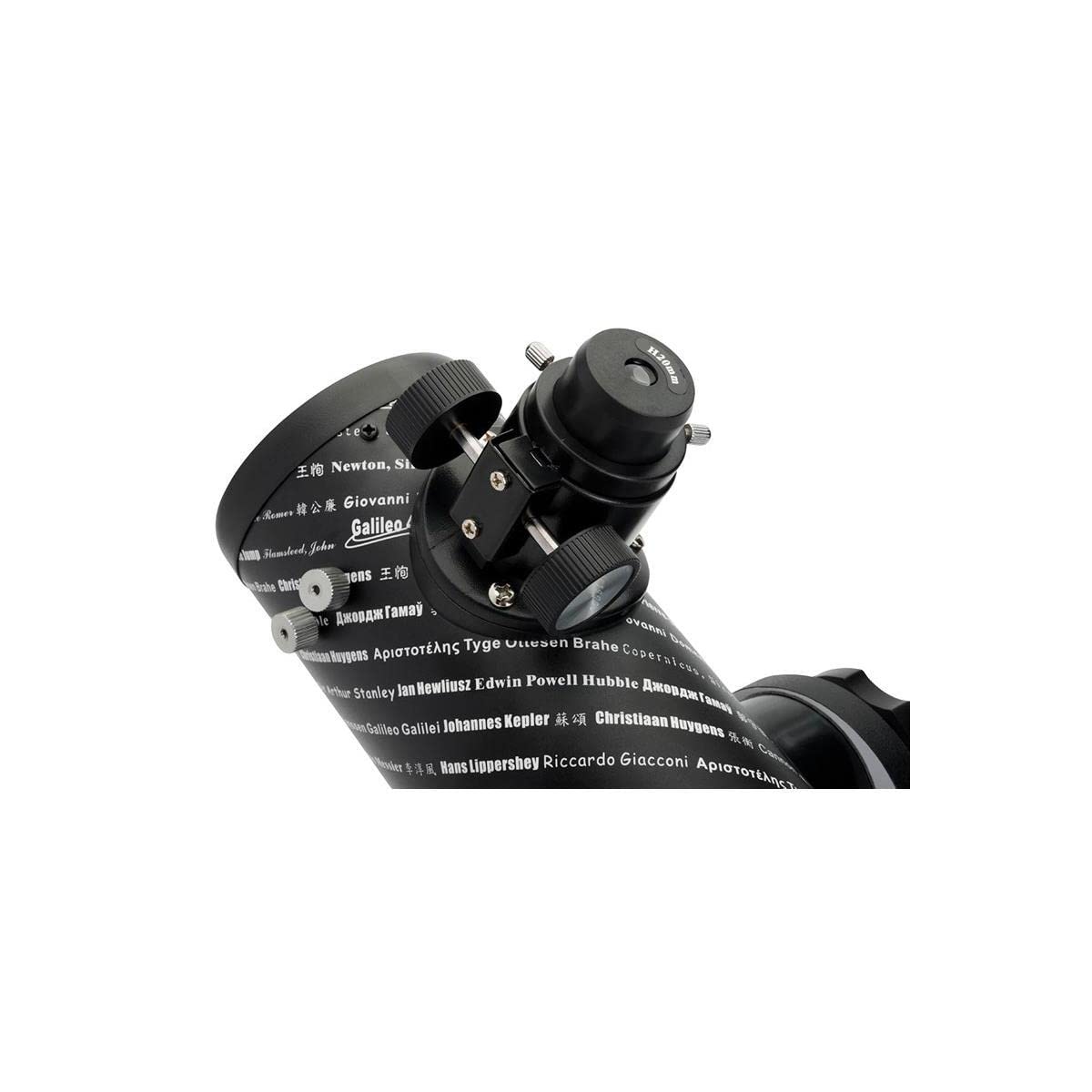
The Celestron 76 mm FirstScope is a stylish, entry-level Dobsonian reflector telescope featuring a 76mm aperture and manual focus. Its lightweight, portable tabletop design makes it easy to transport and set up, while the included 15x and 75x eyepieces provide versatile magnification options. Honoring astronomy pioneers with engraved names, this telescope offers an accessible, hands-on way to explore the night sky, ideal for beginners and millennial professionals seeking a blend of science, style, and convenience.


| ASIN | B001UQ6E4Y |
| Aperture Modes | Under 80mm |
| Best Sellers Rank | 76,198 in Electronics & Photo ( See Top 100 in Electronics & Photo ) 241 in Telescopes |
| Brand | Celestron |
| Colour | Black |
| Country of Origin | China |
| Customer Reviews | 4.1 4.1 out of 5 stars (1,393) |
| Date First Available | 29 April 2009 |
| Focus type | Manual Focus |
| Guaranteed software updates until | unknown |
| Included components | 1 x Firstscope optical tube and mount, 1 x 20mm (15 power) eyepiece, 1 x 4mm (75 power) eyepiece |
| Item Weight | 3.7 Pounds |
| Item model number | 21024 |
| Max Focal Length | 300 Millimeters |
| Min Focal Length | 300 Millimeters |
| Model year | 2010 |
| Objective Lens Diameter | 76 Millimetres |
| Optical Tube Diameter | 76 Millimetres |
| Package Dimensions L x W x H | 44.9 x 32.1 x 25.3 centimetres |
| Package Weight | 2.21 Kilograms |
| Part number | 21024-CGL |
| Product Dimensions L x W x H | 22.9 x 22.9 x 40.6 centimetres |
| Size | FirstScope Tabletop Telescope |
| Style | FirstScope |
| Telescope Mount Description | Altazimuth Mount |
R**K
Impressive little telescope.
If you're not too ambitious, its a wonderful little gadget. Its small, its neat, its simple, and it looks good, just the sort of thing you would actually use, unless you want to turn your house into an observatory. Its portable, so you can easily take it out into the garden and stick it on a table. Try carrying a normal telescope with a tripod about. You just wouldn't. It'll finish up in the garage collecting dust. The Dobsonian movement is surprisingly simple, but effective. The telescope has an f4 aperture, so it produces bright images. Thats important. But most of all, the engine room as it were is the eyepiece. I immediately bought a Celestron barlow lens - very nice lens - which means I can get much better magnification from the longer focus eyepiece, and any lens down to about 10mm. The 4mm lens is a very small lens to look through especially if you're wearing glasses. Longer focus lenses have wider apertures, and therefore are more comfortable to use. All in all a very worthwhile telescope system. All thats missing, is a clear night sky!
D**N
Great starter scope
This is not a powerful telescope, nor does it have particularly good optics. If you want a scope like that, expect to pay hundreds of pounds. However, if you're just looking for a cheap entry-level scope, this one is damn near perfect. It's a great introduction to telescopes, because despite its diminutive size it's a fully-functioning reflector. It comes with two eyepieces which provide 15x and 75x magnification respectively. These fit into a focus mount which can take other, higher quality lenses, should you want to invest later on. It attaches to a stirdy Dobsonion mount, and you can attach a finderscope to the side, should you choose to buy one separately. At 75x magnification, Jupiter appears as a tiny milky-coloured disc accompanied by four pinprick-sized moons. Even in heavily light-polluted skies, I can see two dark bands on the planet's surface. The scope is particularly good for looking at the moon. Considering what you get for the price (£34.00 when I bought it), this scope deserves five stars.
G**M
Good first telescope, adult help needed for younger children
We bought this for our 7 year old daughter. I was initially put off by some of the bad reviews on here, but I really am rather confused by those now we've got it. We've had this since daughter's birthday in April so it's only now with the onset of winter that we've been able to get much use out of it before her bedtime. As other reviewers have said, it is pretty easy to set up ; we have a little stool for daughter and use a taller one for me. Now that clear, cold winter skies are here with their complement of interesting constellations, we're getting quite a lot of use out of it. It's been used tonight to see the Orion Nebula and 3 of Jupiter's four Galilean moons and we've previously used it to look at Mars and the galaxy in Andromeda. To find objects in the sky, I always start with the supplied 20mm eye piece, which has a fairly wide field of view. Even then, it does take a little bit of practice to find things smaller than the moon. Like most telescopes, tilting the scope towards the ground does make whatever you're looking at go up. That also takes a bit of getting used to. Star-finding is a bit of an art - we're so used to the lovely wide field of view which two eyes give us that a first look through a telescope feels a bit like trying to see the entire inside of a house through a letterbox. If you're after suggestions of things to see and how to navigate to interesting things in the sky, one bright star at a time, I'd recommend this simple book 'Signpost to the Stars' http://www.amazon.co.uk/Signpost-The-Stars-George-Philip/dp/0540002143. I have had it since I was little myself and it's served me well. But back to the telescope. Once you've got a star or planet, you can lock the vertical tilt, though there isn't a way to lock the base to stop it going from side to side. At that point, you can swap in the 4mm eyepiece for a close up view, though be careful not to move it all while you do that or jerk it once you look through it. The main shortcoming of this scope is the supplied eyepieces. We've already invested in a Barlow lens which improves the magnification of the 20mm lens quite a lot and leads to a better quality view - we don't really use the 4mm at all. I have seen what other reviewers said about investing in better quality eyepieces and I think we will probably do that soon too. The eyepieces themselves are not awful but they do have a fair amount of chromatic abberation. It would also be nice if there was finer control on the focusing, but those are the only things which have caused me to give four stars instead of five. The pictures on the box could cause misleading expectations - Jupiter is definitely not going to look as good as that - in fact, I think that picture is a famous NASA shot from the Voyager space probe. On the other hand, the Moon looks much better in the scope than the picture on the box and using it at half moon when shadows are best picks out some amazing details. At full moon it is almost too bright and a moon filter might help. Finally, I'd say that if you've bought this for a child and they're below age 9 or 10, you will need to help them locate objects in the night sky or even do it for them. I recommend finding stuff first, lining the scope up, swapping eyepieces if needed and focusing before getting younger children outside. They will get bored (and cold) if they wait outside while you do all the above, especially at first while you're still getting used to finding things too. Even an exciting view in the scope will not be enthused about if your dearest is frozen. I would recommend this scope - as with all telescopes, it will take a bit of investment in time to get the best out of it.
M**Y
Nice simple scope - a few quality control issues
Great little starter scope for the moon and near solar system object. Compact size. Good price. Focus is a little fussy but ok. SADLY HOWEVER on opening the box (on Christmas Day) it looked a return / someone hated there under payed job of putting scopes together. The mounting bracket from the hinge / tube was missing a bolt and the remainder was lose. Optics were misaligned. Thankfully it’s a fairly simple piece of kit and easily remedied with a little fettling and now my 6 yr old girl & I can stare happily into the mind crushing expanse of space.
C**R
Great telescope!!!!!!!!!!!!!!!!
After gazing at the stars for months with binoculars I was looking to invest in a scope, I was looking for something portable, affordable and most importantly something that produces nice views. After looking at tons and tons of scopes I decided to buy the one I kept looking at over and over again and I must say that was a great decision. The eyepeices are great, even the 4mm one, I have seen 2 cloud bands on jupiter and its moons, crators on the earths moon and even the rings of saturn...and there are so many more things to see. This is great value for money and is not a child scope for those who claim it is....it is a finely manafactured peice of modern technology that should belong to anyone with astronomy as a hobby. I strongly recommend you buy the accesory kit aswell!!!!!!!!! So in conclusion don't listen to all these people who criticize this scope (I listened to them and that is why it took me 2 months to decide on a scope) go with what suits you and your needs, if you think this is the one for you then buy it, its not that expensive anyway!!!!!!!!! Clear skies to all!!!
F**P
I see right now that it's listed at $25.00. That's a steal. This product is great for people just starting out. Easy to use. Very sturdy base. Just look down the barrel toward your target just a little below it. Then, swivel back and forth, raise a little, swivel again, etc, and you will find it pretty quickly. The lenses that come with it are adequate to see detailed looks at the moon, Jupiter's moons (won't see Jupiter's bands)and can see the easy nebulae and double stars. I haven't tried it yet on Saturn's rings, although I suspect the rings would be difficult to see if you weren't in pristine conditions. You could order this for $25.00 and stop. If you wanted to upgrade to Plossl lenses, (I did), I would recomend a 20-25 mm which makes finding objects a total snap. I would also recommend a 12.5 mm and maybe a 6 mm. I tried a 4 mm plossl to try and see Jupiter's bands and the telescope simply could not focus enough to use it. I had the same experience trying Barlow lenses. Simply couldn't focus except with the 20 mm. I read somewhere that Celestron had a certain Barlow of their own that would work on this telescope, but don't order any other ones just for this telescope, because it probably won't work. A neighbor who was moving gave me his deceased father in law's Celestron 60 EQ Refractor. I tried the 12.5 Plossl and could see Saturn's rings clearly with it. I doubt you could see that with the FirstScope, although, like I said, I haven't tried it on Saturn yet. The plossls sure came in handy on that free scope. Not sure it's worth the money or not to get plossls just for the firstscope, although they do make the viewing experience significantly better with clearer views and much bigger lense holes to look through. The ones that come with it aren't bad, though. They are adequate. For the price, you can't beat this scope. It's very portable and lightweight also. Great for taking on trips to places with no light pollution. Would easily fit in a carry on bag for an airline. I highly recommend it. Update: I determined that the secondary mirror collimation was a little off. The directions online show you to align it with your eyeball (looking through eyepiece holder with no eyepiece. However, that doesn't get it perfect, and if you want to see Saturn's rings or the bands of Jupiter, it needs to be perfect. I used a collimation cap that came with another telescope and I got it aligned perfectly. A huge improvement. It's really hard to find a collimation cap to buy though. I only see laser collimaters for sale, and they are much too expensive if this is the only Reflector Scope you own.
L**K
Good value as an intro to astronomy for young children. Well packed and not too big for storage.
J**E
So, I'm an adult and I bought this for myself. I just can't afford to buy a "regular" telescope but I wanted one so badly that after a long agonizing comparison of the "cheap" telescopes, I decided on this one. It took me a moment to figure out how to see anything but that's because I was testing indoors and I finally realized I was too close to what I was looking at to actually make anything else (or quite possibly I was focusing on the white ceiling)! No matter, straight out of the box this was easy to figure out even without instructions. There is 1 sheet of minimal instructions included however you can download the manual from the Celestron website (and to save you some aggravation, I'm including the link in this review): [...] I haven't tested it outdoors yet and I will likely update this review after I have done so however, this is a great price for a starter telescope, especially if it is intended for a younger person (child) or a complete novice (like me). It comes with 2 lenses for magnification however there is a very affordable add-on pack that can also be purchased. This thing is lightweight and sturdy and made for a table top. I don't have a table to use outside so I'll be improvising but a patio table would work perfectly. From what I can see this is a great choice for a first telescope. This telescope can be used to look at terrestrial (land) objects or wildlife, like birds. If you look into the scope from behind it, the image will appear upside down (this is unimportant when looking at extra-terrestrial objects, ie. stars, moon, planets) however if you stand to the side but in front of the telescope and look into it, you will be able to see things "right side up". Indoor storage: If you have a shelf space, that's great. Since this is a table top model rather than a floor model, you'll need somewhere to store it. The scope can be flipped up to minimize the space it will take up, it's about 7.5"x7.5" in terms of width and depth and I have yet to figure out where to store mine but if you have room on a bookshelf, that would be the perfect space.
Z**0
This is one awesome telescope! I bought it for 4.5k inr, and I've had great fun! It's really difficult to get photos from it, but it provides amazing clarity when seen with eye. Craters on the moon are very nicely visible. I can see some sort of colour on Jupiter, but you shouldn't expect to see the banding. 4 Galiean moons are visible as well. Saturn and it's rings are visible as well. While you can see planets through it, you should keep your expectations low. Planets are really far after all. Jun-Aug are the best if you want to see Jupiter and Saturn. Moon is best seen 2-3 days after no moon day. The "Hassle free packaging" is not needed. It costs around 1.5k extra, and my telescope arrived just fine with the normal packaging.
G**T
Good for kids
Trustpilot
5 days ago
1 month ago