
Buy anything from 5,000+ international stores. One checkout price. No surprise fees. Join 2M+ shoppers on Desertcart.
Desertcart purchases this item on your behalf and handles shipping, customs, and support to OMAN.
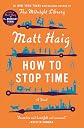
From the #1 New York Times bestselling author of The Midnight Library, “a quirky romcom dusted with philosophical observations….A delightfully witty…poignant novel.” ( The Washington Post ) Soon to be a TV series starring Benedict Cumberbatch How many lifetimes does it take to learn how to live? Tom Hazard has a dangerous secret. He may look like an ordinary 41-year-old history teacher, but he's been alive for centuries. From Elizabethan England to Jazz-Age Paris, from New York to the South Seas, Tom has seen it all. As long as he keeps changing his identity he can keep one step ahead of his past - and stay alive. The only thing he must not do is fall in love . . . Review: A very thought-proving read - 4.5 stars How to Stop Time is a thought-provoking read. Matt Haig envisions a world where a small group of individuals age at a much slower pace than the average human. While the main character, Tom Hazard, looks 41, he is actually centuries old. To avoid being institutionalized or treated as a medical research subject, Tom has moved around his entire life staying nowhere more than 8-10 years. When the book opens, Tom has decided to return to London and teach history at a local low-income high school. He is tired of constantly being on the move and wants to have an ordinary life. As his quest for a normal life unfolds, we are taken back and forth in time to learn about the many places and people Tom has experienced over his long and storied life. I loved the history aspects of the story. In his lengthy life, Tom met Shakespeare, F. Scott Fitzgerald, Captain Cook and many others, and their encounters were so much fun to read about. Haig focuses on relationships and their importance in people’s lives. He also observes that humans are bound to repeat the mistakes of the past, a sentiment that addresses what the United States is experiencing right now. I don’t generally quote books in my reviews, but I felt that the following statement completely encapsulates what we are going through right now: “The lesson is that ignorance and superstition are things that can rise up, inside almost anyone, at any moment. And what starts as a doubt in a mind can swiftly become an act in the world.” His recognition that humans are bound to repeat the mistakes of the past is a sobering and timely statement. I enjoyed How to Stop Time. Occasionally, I was ready for it to move along a little faster but overall it was a very entertaining read. Review: Sci-Fi meets History, with a poetic flourish - This was a fairly easy read for me, and one that I absolutely devoured in a day. And it's kind-of funny, I told my son while I was reading it that I saw this in my head as a movie. Rarely do I picture things being acted out when I'm reading them. I don't normally see characters or places as I'm going along. But with this book, I could SEE everything so clearly. I could perfectly visualize Tom walking down a street in London, and seeing the present day chip shops etc but also seeing what it was like in the past bleeding through and causing him to lose his breath. Being taken aback by realizing he's standing in front of the spot that was once his home, and is now a pet shop. In the beginning of the book, Tom talks about how he's not like a vampire stuck perpetually in his youth. He is aging. He will die. He CAN die. He's not immortal. But the story is reminiscent, at least to me, of some of the better vampire fiction I've read in the past. Even more so, it reminded me of the television show New Amsterdam starring Nikolaj Coster-Waldau (of Game of Thrones fame), which only aired for 8 episodes but I LOVED. The whole idea of living for an extremely long amount of time, watching people come and go, places evolve, loves lost and the whole gamut of issues that would arise if you had lived for over 400 years...and knew you were going to live for about 900...are fascinating and this book merely touches on them, and with a flourish that is at times almost poetic. I think my favorite sections of the book involved the people in the past that Tom interacted with, and then how he tried to weave some of his knowledge into the school lessons he was teaching. I'm a giant Shakespeare nerd, so the section in which he works for Shakespeare was wonderful. Was it historically accurate? I haven't the foggiest, and don't even care a whole lot...it was just entertaining to me! And having drinks with Fitzgerald?!? So lovely, and in my head Fitz was totally Hiddles. (If you haven't watched Midnight in Paris, you need to!!) Yes, there is a bit of a love story...but it wasn't sappy or overwhelmingly emotional. I feel like the real love story here involved Tom and Life in general. The book really was all about Tom figuring out how he wanted to live all of these years that he's been given. Did he want to just go through the paces and saunter along in a fog? Or did he want to open himself up to new and exciting possibilities, and put himself out there again? A quick and enjoyable book. Science-Fiction with some historical aspects. I enjoyed the author's writing style, which has an almost poetic flourish. I definitely recommend it!


| Best Sellers Rank | #4,319 in Books ( See Top 100 in Books ) #26 in Time Travel Fiction #49 in Science Fiction Crime & Mystery #412 in Literary Fiction (Books) |
| Customer Reviews | 4.3 out of 5 stars 35,289 Reviews |
C**)
A very thought-proving read
4.5 stars How to Stop Time is a thought-provoking read. Matt Haig envisions a world where a small group of individuals age at a much slower pace than the average human. While the main character, Tom Hazard, looks 41, he is actually centuries old. To avoid being institutionalized or treated as a medical research subject, Tom has moved around his entire life staying nowhere more than 8-10 years. When the book opens, Tom has decided to return to London and teach history at a local low-income high school. He is tired of constantly being on the move and wants to have an ordinary life. As his quest for a normal life unfolds, we are taken back and forth in time to learn about the many places and people Tom has experienced over his long and storied life. I loved the history aspects of the story. In his lengthy life, Tom met Shakespeare, F. Scott Fitzgerald, Captain Cook and many others, and their encounters were so much fun to read about. Haig focuses on relationships and their importance in people’s lives. He also observes that humans are bound to repeat the mistakes of the past, a sentiment that addresses what the United States is experiencing right now. I don’t generally quote books in my reviews, but I felt that the following statement completely encapsulates what we are going through right now: “The lesson is that ignorance and superstition are things that can rise up, inside almost anyone, at any moment. And what starts as a doubt in a mind can swiftly become an act in the world.” His recognition that humans are bound to repeat the mistakes of the past is a sobering and timely statement. I enjoyed How to Stop Time. Occasionally, I was ready for it to move along a little faster but overall it was a very entertaining read.
T**A
Sci-Fi meets History, with a poetic flourish
This was a fairly easy read for me, and one that I absolutely devoured in a day. And it's kind-of funny, I told my son while I was reading it that I saw this in my head as a movie. Rarely do I picture things being acted out when I'm reading them. I don't normally see characters or places as I'm going along. But with this book, I could SEE everything so clearly. I could perfectly visualize Tom walking down a street in London, and seeing the present day chip shops etc but also seeing what it was like in the past bleeding through and causing him to lose his breath. Being taken aback by realizing he's standing in front of the spot that was once his home, and is now a pet shop. In the beginning of the book, Tom talks about how he's not like a vampire stuck perpetually in his youth. He is aging. He will die. He CAN die. He's not immortal. But the story is reminiscent, at least to me, of some of the better vampire fiction I've read in the past. Even more so, it reminded me of the television show New Amsterdam starring Nikolaj Coster-Waldau (of Game of Thrones fame), which only aired for 8 episodes but I LOVED. The whole idea of living for an extremely long amount of time, watching people come and go, places evolve, loves lost and the whole gamut of issues that would arise if you had lived for over 400 years...and knew you were going to live for about 900...are fascinating and this book merely touches on them, and with a flourish that is at times almost poetic. I think my favorite sections of the book involved the people in the past that Tom interacted with, and then how he tried to weave some of his knowledge into the school lessons he was teaching. I'm a giant Shakespeare nerd, so the section in which he works for Shakespeare was wonderful. Was it historically accurate? I haven't the foggiest, and don't even care a whole lot...it was just entertaining to me! And having drinks with Fitzgerald?!? So lovely, and in my head Fitz was totally Hiddles. (If you haven't watched Midnight in Paris, you need to!!) Yes, there is a bit of a love story...but it wasn't sappy or overwhelmingly emotional. I feel like the real love story here involved Tom and Life in general. The book really was all about Tom figuring out how he wanted to live all of these years that he's been given. Did he want to just go through the paces and saunter along in a fog? Or did he want to open himself up to new and exciting possibilities, and put himself out there again? A quick and enjoyable book. Science-Fiction with some historical aspects. I enjoyed the author's writing style, which has an almost poetic flourish. I definitely recommend it!
M**N
Recommend
It is a good read. I liked it but not as much as the midnight library or the humans.
J**S
Some brilliant spots
At first, I was put off by the plot and the writing, which seemed to me to move, sometimes lurch, from turgid to brilliant. But the novel grew on me. The Washington Post noted that the book has ‘observational philosophy.’ Having finished, I’m not sure whether the term is meant as praise or insult. There are many observations, some interesting, some deep, some neither. My reading was crippled by the notion of the Albatross Society, which seemed like a weak pretext for control of Tom’s life. If he had been an ordinary guy, stumbling through the centuries, I could have believed he would fall for Hendrick’s very thin rationale, but he’s a thinker. I would have liked hints of skepticism … logic, more than the angst we did see … earlier in the book, some sense that a con game was being played. Tom’s credulity reduces tension, weakens the plot, and makes the reveal (Marion and Tom’s supposed letter) seem to be a device, rather than a natural extension of the story. Tom happens through the centuries meeting and conversing with an unusually large number of famous people through happenstance rather than planning. Shakespeare dispairs in his ale, Scott Fitzgerald and Zelda bicker over cocktails, Captain Cook, and so on. The book has elements of a fable, in which such encounters would work fine, but its overall modernity makes them seem calculated. We could have lost Fitzgerald and Zelda without affecting the story line, for instance. Reading the novel reminded me that a novelist’s decision about what to write defines both challenges and opportunities. If you need to pass through several centuries, first person-narration is almost mandatory if you’re not going to adopt omniscient narrator, which is out of fashion. Haig picks first person and occasionally struggles with its limitations. He frequently ascribes motivation to others where he could guess it, perhaps, but not know it. (“She nods, knowing it is a lie,” when in Tom’s point of view.) This and other technique issues took me out of the story from time to time. Also, there’s the issue of narration vs. dialog: If you live for 400 years, what voice do you speak in? For Tom as narrator, Haig sensibly chose modern English, but he needed dialog, which he wrote in what he guessed was language of the time. As Rose is dying, we get “"Her breath was a weak draught. (narration in 16th-C English) ‘You will.’ ‘Oh, Rose.’ I needed to keep saying her name and for her to keep hearing it. I needed her to keep being a living reality. (narration Mod E) We are time’s subjects, and time bids be gone (maybe 16th C) . . . She asked me to sing to her. ‘Anything in your heart.’ ‘My heart is sad.’ ‘Sing sadly, then’ (credibly 16th C). I was going to grab my lute (‘grab’ = ModE) … " I read this passage as I travelled on Amtrak over a badly-maintained road bed. The jerkiness of the train seemed like the language here. Haig had little choice … dialog adds depth, and the dialog needed to be in 400 years ago English. Haig simplified it, but the 21st C narration grated. That said, the concluding line of the section was beautiful: "And she died and I lived and a hole opened up, dark and bottomless, and I fell down and kept falling for centuries."
B**I
My favorite book ever!
This is currently my favorite book I have ever read. This book is historical fiction with a gentle touch of sci-fi, and just enough romance woven throughout it's pages, enough to make you feel something but not enough to make it feel like a true romance novel (which is a huge plus for me - I do not like strictly romance novels but I enjoy some romance along the way if it helps build the story). My favorite thing about this book is the witty, relatable, poetic writing style, with a fresh story from a quirky perspective. This book is witty, poetic, relatable and truly captivating. I could not put this book down. The character development was done very well, the story was very captivating, and the insights from the main character make you really stop and think about your own life and things you probably have never thought about. SPOILER FREE - The only reason I did not rate this book 5 stars is in regard to the end. The end was satisfying and I wouldn't say it was bad, but it certainly felt very rushed, forced, and a bit of a stretch even within the realm of the reality within the universe of the book. The ending was wrapped up within about 30 pages, so to me the book felt like it went from a really good pace to 500 miles an hour in the last 30 pages, and while it did wrap up pretty much everything you want it to wrap up, it does so in such a quick way that is feels like whiplash. This book still remains my favorite story I've ever read, despite there being other books I have rated 5 stars, but with the very rushed ending I just couldn't give it the perfect score as much as I so badly wanted to. Overall this book is AMAZING and my favorite read so far. I highly recommend it!!
M**K
Thank You, Mr. Haig
I am a retired professor and a lifelong avid reader -- typically 2-5 books per week recently. I stumbled upon The Midnight Library, which I found so uplifting. How to Stop Time is the fourth novel I have read by Matt Haig. I've pre-ordered his novel coming out this spring: The Midnight Train. In the meantime, I have ordered his four earliest novels, which I have yet to read. Each novel I have read -- The Midnight Train, The Life Impossible, Being Human, How to Stop Time -- has been imaginative, engaging, humorous, inspiring, and memorable!
J**W
A Timeless Story About a Timeless Man
Matt Haig’s ‘How to Stop Time’ might just be the best dramatic sci-fi novel I’ve read in years. While the premise alone warranted interest on my part, it was Haig’s brilliantly executed dialogue that won me over. From beginning to end, the British author capably immerses readers into a bevy of settings and times by way of the characters’ voices, smoothing out otherwise jarring transitions. Additionally, the balance between descriptions and narrative is spot on, providing the story with a subtle sense of momentum throughout. Grief-stricken over the loss of his first love, protagonist Tom Hazard has only one reason to live: his open-ended search for his long-lost daughter. But after four-hundred years of aimlessly sleep-walking through life, a chance encounter with a mysterious co-worker suddenly reawakens his heart, igniting thoughts and feelings that he hasn’t felt in centuries. What follows is a captivating ‘Forrest Gump-esque’ story that finds Hazard taking the scenic route down memory lane, revisiting his chance encounters with everyone from Shakespear to F. Scott Fitzgerald while attempting to find a way to rejoin life. Haig succeeds in taking everything there is to love about the ‘man cursed with quasi-immortality’ premise and detaches it from trope and conception—despite the similar premise, this is thankfully NOT a vampire novel—distilling an ever-intriguing concept to its emotional core. This is essentially a story about a haunted man attempting to find some semblance meaning in his life. It’s heavy stuff, but Haig manages to infuse his narrative with just enough hope and humor to keep things from ever feeling dire. If I had one critique, it would be the third act, as things come to a head (and ultimately resolve) within only a matter of pages. That being said, the novel is an otherwise ‘slow burn’ that ultimately rewards readers with a satisfying conclusion, both answering the ever-important question of ‘what next?’ while also leaving the door open for a possible sequel. From premise to execution, Matt Haig’s ‘How to Stop Time’ is a success on all fronts—a stunningly refreshing piece of fiction that might just be the author’s best work to date. A Four-and-a-Half star book—highly recommended!
K**R
A brilliant love story from the most amazing viewpoint
I have a fondness for stories dealing with time travel or immortality, so reading this was a no-brainer on my part. I'm glad i did; this is a fresh take on the genre and a very well written book. Tom was born in France in the late 1500's and is still alive today. He's not alone in his "affliction," and he shares what he sometimes feels is his curse with others who have formed a society for their own protection. The poignant points made by the author show that living seemingly forever is not as simple as not dying but finding a way to go on as all the people you love do. The idea of living throughout history and having first-hand knowledge of what the rest of us can only read about in history books lends for an amazing story. Tom suffers through one tragedy after another, showing us that life is terrible and spectacular all at once and that none of us were ever meant to live it alone. I am anxious to see if this will be translated well to the movie screen, which I hope it will. This is written well enough that I will be looking forward to reading more from this author. Hopefully, his talents only get better with time.
C**G
His life lasts through centuries
“People you love never die” (original quotation) Content: Tom Hazard is a history teacher in London and he likes what he does. But what seems to be a normal life, for him does not mean normality at all, because he was born on the third of March 1581, which means that now he is 437 years old. Not that he is immortal, it is only that he is aging very, very slow. In 1890, a doctor had called this condition “anageria”, his lifelong mentor Hendrich calls people like them (and there are more) albatrosses, or just albas. The problem for people like Tom is that they have to change identity, places to live, before their neighbors are wondering and become suspicious. In 1603 he fell in love with Rose, they got married in 1607 and as she got older, the difference between him and her was even more visible. The 17th century was an especially dangerous period for people being somehow different, but also in our modern times, for Tom there seems to be no place to just live a normal life – but, what if? … what if he falls in love again? … This story is much more than “fantasy” and definitely not “science fiction”. It is more a travel through time and centuries, with vivid descriptions of the Shakespearian London and Paris in the “Golden Twenties”. But it is not about time-travelling, as Tom cannot go back into the past. Written in the 1st person and in chapters, the story is set in nowadays London and Tom thinks and speaks about his life in form of many flashbacks, each chapter heading defines time and location. Based on his experiences during more than 400 years, Tom now is ruled by the situation, by the time, by his fears that have grown from the risk of discovery of his special condition and above all he feels his loneliness. Based on his experiences he never wants to fall in love again. Some of his fears and concerns are given rise by Hendrich, who is much older than Tom and who is the Head of the Albatross Organization, who helps Albas with new identities. But Tom during the complete story is and remains a really loveable, often struggeling main character. The story is enjoyable and entertaining to read, with exciting turns. For readers who like historical fiction and plots in different time settings.
S**Z
MUY BUEN LIBRO
Esta novela me llamó la atención por el título (todo lo que tiene que ver con el tiempo me mueve mucho, para bien y para no tan bien), además ya había leído otra novela del autor, por lo que supuse que esta me gustaría. Y sí. ✨🤩 Fue un libro propuesto para el BookClub 📕 pero definitivamente el estilo y los temas del autor, me gustan mucho. En resumen, esta historia va de un hombre de 400 años de edad que vive y existe a través del tiempo, se mueve cuidando no revelar su verdadera identidad pues tiene esta condición de "envejecer" de una forma muy distinta, a su ritmo. En el libro te cuenta de sus múltiples vidas, de las personas célebres a quienes conoce como Shakespeare o Fitzgerald, de su primer amor, y hasta de un segundo amor a quien conoce en el presente, porque a sus 400 años decide ser maestro de historia. La aventura va de contar todas sus "vidas" y la incansable búqueda de Marion (su hija perdida en el tiempo). El protagonista vive con "miedo", huyendo de sí mismo, de cuidar que no descubran su condición, y evita crear vínculos y disfrutar el aquí y ahora. Porque ya vio a su gran amor morir, a su familia y a personas a las que quiso y admiró. Porque saber que las personas a su alrededor son temporales, es doloroso. ❤️🩹 Te lleva a preguntarte si vale la pena preocuparse por los demás y por el futuro, o por qué creemos que los otros están tan al pendiente de cómo vivimos o de lo que hacemos, o si un segundo de amor y conexión real vale la pena comparado con toda una vida de esconderse y huir de tu pasado, de quien eres, de tus sentimientos o de la realidad. Pasamos mucho tiempo pensando en lo que será o podría ser, en vez de enfocarnos en el presente, que es el único lugar en el que estamos viviendo y del cuál podemos tener certeza. 🤍 Love is where you find the meaning. 🫶🏻
�**�
A love story across ages❣️
A hugely enjoyable read,its a captivating book you will not be able to put down.A love story across the ages and for the ages about a man lost in time, the woman who could save him, and the lifetimes it can take to learn how to live...Nothing can beat this astounding love story that lasts 400 years...Matt Haig takes on this challenge with gusto in How to Stop Time.This novel is a bighearted, wildly original story about losing and finding yourself, the inevitability of change, and how with enough time to learn, we just might find happiness, Matt has been gifted with a rare ability, which is to make even the ridiculously far fetched seem so believable. The story is about Tom Hazard who has a dangerous secret. He may look like an ordinary 41year old, but owing to a rare condition, he’s been alive for centuries.For every 13 or 14 human years, he ages one year. But far from bringing him godlike pleasure, his condition places him at a mournful distance from the rest of humanity, doomed to see everyone he loves age and die.Tom Hazard serves as an excellent guide to the most recent 400-odd years of human history.Haig writes with a great deal of panache, and it’s clear that he’s having a lot of fun with his story.Tom has lived history performing with Shakespeare, exploring the high seas with Captain Cook, and sharing cocktails with Fitzgerald. Now, he just wants an ordinary life.So Tom moves back his to London, his old home, to become a high school history teacher,the perfect job for someone who has witnessed the city’s history first hand. Better yet, a captivating French teacher at his school seems fascinated by him. But the Albatross Society, the secretive group which protects people like Tom, has one rule: Never fall in love. As painful memories of his past and the erratic behavior of the Society’s watchful leader threaten to derail his new life and romance, the one thing he can’t have just happens to be the one thing that might save him. Tom will have to decide once and for all whether to remain stuck in the past, or finally begin living in the present.The idea of a character who lives for centuries, finding himself in the right place at the right time to interact with significant historical figures, has been used to examine the notion of time itself and our relationship to it, the fear of ageing, of death and, occasionally, the problems associated with not dying at all. the most interesting element of the book, however, is the philosophical one that Tom asks of himself: What is the point of living when you have no one to live for? As his loneliness continues, only the possibility of a relationship with another teacher and his search for his daughter keep him going, and when it seems that both will end in failure it’s easy to understand why he, to employ one of Haig’s earlier titles, might run out of reasons to stay alive.How to Stop Time is a worthy addition to the time travel canon,hugely entertaining,quietly funny and,at its best moments, contemplative and brooding.
A**E
Read it through and immediately read it again....it;s that good!
Tender and true, a truly unique book, this is one of the finest insights to the human condition you will ever read. It is love story, reflection on life and the living of it, thriller and family saga, all in one. The characters leap off the page - even the emotionally damaged dog - and the central character. Tom Hazard, is someone who will live in the memory for a long time. For Tom was born 439 years ago, having a condition that means he ages very slowly. He has to change his identity and home every eight years so no-one recognises that he is not ageing and changing like everyone around him and that he is special, different, unusual; a lonely, long and detached life that is destroying his soul. So he decides to stop the madness, and be ordinary. He becomes a role he is best suited for - a history teacher. But in Tower Hamlets, where he meets a French teacher and life becomes even more complex. This is a book you want to read quickly because it is so gripping and absorbing, yet delicate, moving, delightful....but also a book you want to read slowly because it is so heartfelt and populated with such true and human characters.The answer is to read on to the last page, go away for a quick blub....and then start again at the beginning. . This is Matt Haig;s gift. To bring the world to the individual, see the sublime in the sensible, the immortal in the everyday.Oh, this is such a wonderful book! Buy it, read it, learn wisdom, tell the world. I eagerly await the film to be made by SunnyMarch, and the insight and wisdom Benedict Cumberbatch will uniquely bring to this unique book as Tom.. ,
Z**A
Loved it
I went on a binge and read all of his books because the first one got me in. I wasn’t disappointed. This man has a way that’s easy to read while being very insightful and enlightening. I simply didn’t want it to end! This story has everything I love in a good read. Great characters, interesting setting, fantastic story line, unpredictable. And his insights into people are worthy of a book on their own. He never waffles on, in fact there’s some, actually many, one sentence lines that are so amazing I had to stop and let them sink in for quite some time so I wouldn’t loose their intense meaning, their simplistic beauty. He’s a very clever writer and now up there on my favourites list.
Trustpilot
2 months ago
1 month ago