
Buy anything from 5,000+ international stores. One checkout price. No surprise fees. Join 2M+ shoppers on Desertcart.
Desertcart purchases this item on your behalf and handles shipping, customs, and support to OMAN.
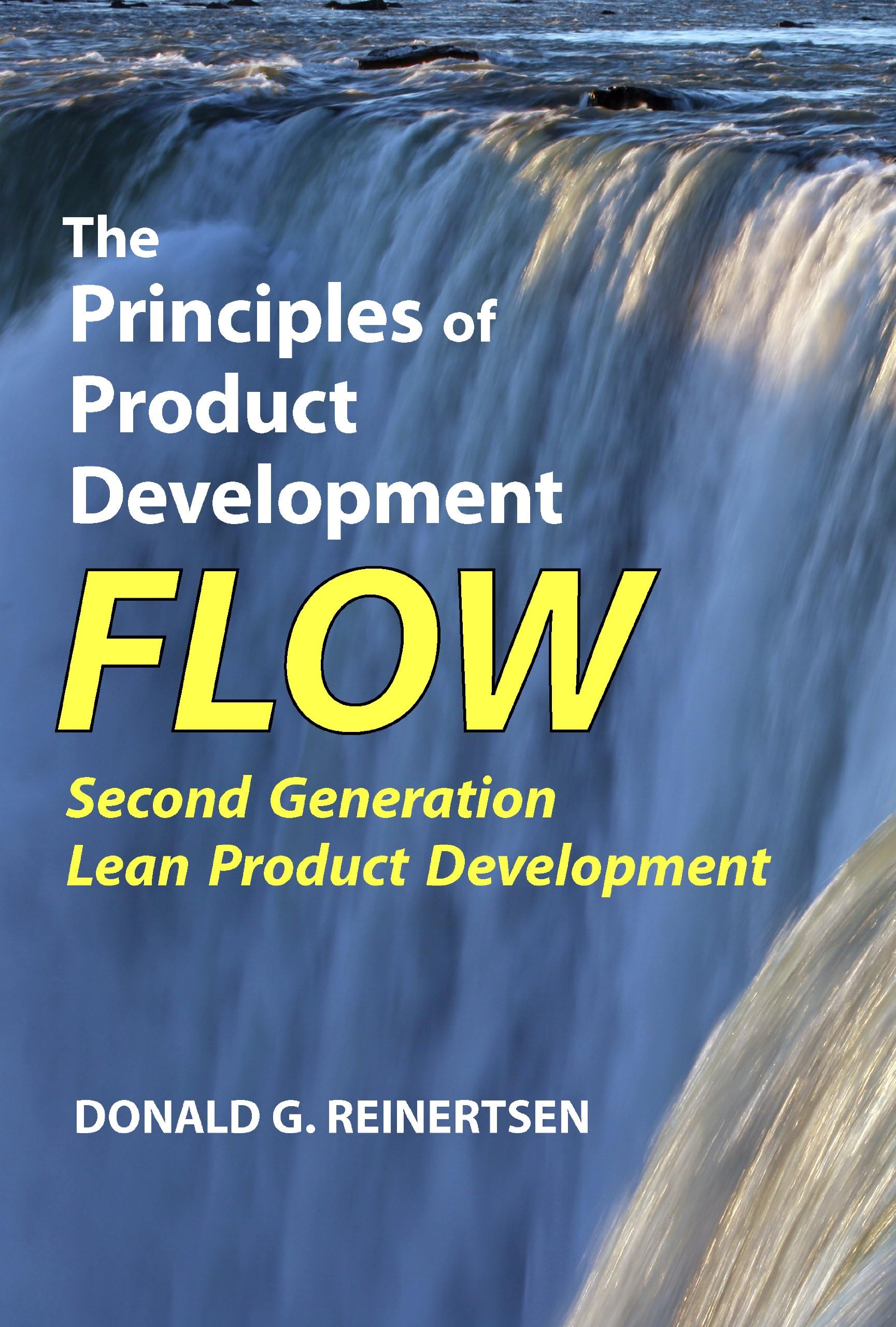
"...the dominant paradigm for managing product development is wrong. Not just a little wrong, but wrong to its very core." So begins Reinertsen in his meticulous examination of today's product development practices. He carefully explains why invisible and unmanaged queues are the underlying root cause of poor product development performance. He shows why these queues form and how they undermine the speed, quality, and efficiency in product development. Then, he provides a roadmap for changing this. The book provides a well-organized set of 175 underlying principles in eight major areas. He shows you practical methods to: Improve economic decisions Manage queues Reduce batch size Apply WIP constraints Accelerate feedback Manage flows in the presence of variability Decentralize control The Principles of Product Development Flow will forever change the way you think about product development. Review: Audacious and Pathbreaking - Donald Reinertsen's latest book on new product development aspires to making a global and historical impact. He systematically applies the theory and best practices of lean manufacturing, economics, queuing theory, statistics, web communications, operating systems, control engineering and military science to the new product development process. He summarizes these insights in 8 themes and 175 principles. Examples and graphs illustrate the concepts. This is a dense book. The target audience of marketing MBA's, industrial engineers, project and general managers will be challenged. It requires some familiarity with lean manufacturing, economics and operations research. The principles are illustrated but not obvious. The quality, lean manufacturing, Toyota Production System, theory of constraints and technical sources are briefly referenced. The rationale for existing (stage-gate) best practices is not explained. Limits and trade-offs are not discussed. Nonetheless, this is an audacious and path breaking book. Product development practitioners can learn and apply the principles of this book. Economics trumps simple versions of quality paradigms. Expected net lifetime value is king. Marginal cost/benefit analysis rules. Global optimums outweigh local ones. Proxy measures undermine optimal economic decision-making. Decisions matter, precision does not. Priority features/competitive advantages matter most. Economic rules of thumb allow decentralized decisions. Cost of delay is managed through an explicit value of time. Queuing theory manages delays. Project and task cycle times drive the cost of delay. Long queues increase defects, variability and risks. Misplaced high efficiency and utilization goals lead to delays, increased costs and disastrous momentum. Communications links between adjacent processes matter more than bottleneck capacity. Simple views that delays, variability, inventory or waste are evil or have infinite cost lead to bad decisions. Queues are everywhere in product development. Measure variability with a payoff function. It can be negative or positive. Testing generates information value. Statistics based steps reduce variation, such as smaller tasks and time horizons. Counterbalance and design reuse offset variability. Economic priorities, faster iterations and early high risk actions minimize the impact of variability. Smaller task batch sizes reduce variability and cycle time, accelerate feedback, improve engagement and reduce risk and overhead. Large batches increase costs, delay progress and may spin out of control. Optimum batch sizes are small and can be found through trial and error. Combine features in separately developed and tested modules. Smaller batches are more beneficial than capacity increases. Large batches impact every step of product development. Detailed planning and control of tasks is costly. It is more effective to control the work in process between major functions. As with TPS or Theory of Constraints, managing the flow of released product from stage to stage improves final results. Many scheduling, prioritization, resource and recovery strategies can minimize task WIP. A blended generalist/specialist staff skills profile offers flexible capacity. The flow of activities through product development can be managed. Use forecasts and share information between adjacent stages. Use cadence to set routine start/stop times. Synchronize tasks so that dependent events flow smoothly. Sequence tasks and change priorities based upon risk and incremental economic value added. Build in flexible paths and spare resources. Develop rapid feedback systems. Employ early warning systems and value at risk triggers to escalate reviews. Align activities through training, incentives and templates. Adjust decisively when required. Use frequent communication to build teams and short queues to build urgency. Employ flow metrics. Decentralize decision making to speed the flow and avoid management bottlenecks. Provide high level structure in the form of rough-cut plans, rules of thumb, intentions, templates and sequences. The principles in this book can be applied to any operations or development process. The value added is limited only by the time invested. Review: Reviewing as I read along, love it so far - I got this book on 2014/06/17 and I've read into Chapter 3. Chapter 1 is somewhat different from the other chapters in that rather than being a series of principles, it provides an overall view of practice orthodoxy and how many of these closely held beliefs are based on secondary or proxy variables. The chapter continues with an overview of several examples and then summarizes and discusses where things are going in the rest of the book as well as the layout. The first chapter is great. I did expect it to end a bit sooner than it did (I was thinking in terms of self-referential, small batch sizes), but I'm not sure a shorter chapter would have been better. The second chapter introduces the approach for the rest of the book as well as the model underpinning the principles. The approach works for me. I imagine myself reading this book, going back and creating queue cards for each of the principles, then periodically looking up individual ones and refreshing my memory. It seems like a book I can keep going back to and reading just because I want 5 minutes of good reading. For some context, I'm a software developer. I learned about the Theory of Constraints (ToC) before I really learned software development processes in depth. When I did being the software process journey, it was under the OO umbrella, so incremental and iterative, feedback, etc. This learning, however, I've recently realized (by first reading Kanban and now this book) was heavily influenced by the ToC. At the beginning of this century, I jumped on the XP and Scrum bandwagons, even working with a few of the original signatories on the manifesto for agile development. ToC came up a number of times while coaching. Moving from ToC to thinking in terms of Kanban isn't much of a leap to me. However, since I was applying things I learned and internalized, things that seem obvious to me are often not obvious to my customers or even my colleagues (yes, sometimes I'm wrong, but often I'm not). For example, at many, many places I've been, companies claim they are practicing continuous integration or even continuous delivery, but then their builds are broken (red) 80+ % of the time. This is a huge cost to productivity, morale, feedback, etc. This is one example of many such examples that, in in the context of ToC are obvious bottlenecks, which cause queueing. If I look with lean glasses, many of these are worthy of stopping the line, but people march on, building up queues of work to be committed, which lead to more broken builds, integration problems, demoralization, etc. However, what seems obvious to me doesn't seem obvious to others. More importantly, many people don't even see that there's a problem at all! They think, for example, when developers complain about being blocked due to the build being broken, it's just developers complaining about a minor glitch, but it is more typically a systemic problem. This books presents a model based on economics. One thing that I observed myself observing about the book was that I thought it might be over emphasizing one dimension, cost of delay, or one approach, economics. However, "all models are wrong, some are valuable." While I had this observation, I didn't find anything wrong about the conclusions, and in fact find my self thinking "yes and," so I've kept reading. So while this model may be wrong in some ways (I'm not aware of any), I clearly see immediate and near-term value for me with its use. What this model does is allow me to speak to upper management, and maybe middle management using a language they are likely to appreciate. I'm able to justify things like slack using economic models, so that I might be better able to communicate with them. So rather than talking about the flexibility and agility that well under 100% utilization might offer, instead I can discuss the cost of delivery related to high utilization (lack of slack). My primary failing up until now is not being able to explain what seems intuitive to me in a way that bridges the communication gap. This model seems to give me another way to both think about it and communicate it. I have not finished reading the book, but in the the spirit of small batch sizes, this is my first delivery. I'll be making updates as I read the book. I am already confident that I'll finish this book and that I can recommend it to people. It'll have to really work hard to go under a 5 star review. Finally (so far): my impression so far reading the book is that it seems well researched, brings together a number of disciplines in a non-trivial manner and seems to come form someone who legitimately has many good years of experience, not just the same 1 year of experience repeated over and over.
| Best Sellers Rank | #565,928 in Books ( See Top 100 in Books ) #55 in Product Management #94 in Industrial Management & Leadership #3,213 in Business Management (Books) |
| Customer Reviews | 4.6 out of 5 stars 515 Reviews |
T**.
Audacious and Pathbreaking
Donald Reinertsen's latest book on new product development aspires to making a global and historical impact. He systematically applies the theory and best practices of lean manufacturing, economics, queuing theory, statistics, web communications, operating systems, control engineering and military science to the new product development process. He summarizes these insights in 8 themes and 175 principles. Examples and graphs illustrate the concepts. This is a dense book. The target audience of marketing MBA's, industrial engineers, project and general managers will be challenged. It requires some familiarity with lean manufacturing, economics and operations research. The principles are illustrated but not obvious. The quality, lean manufacturing, Toyota Production System, theory of constraints and technical sources are briefly referenced. The rationale for existing (stage-gate) best practices is not explained. Limits and trade-offs are not discussed. Nonetheless, this is an audacious and path breaking book. Product development practitioners can learn and apply the principles of this book. Economics trumps simple versions of quality paradigms. Expected net lifetime value is king. Marginal cost/benefit analysis rules. Global optimums outweigh local ones. Proxy measures undermine optimal economic decision-making. Decisions matter, precision does not. Priority features/competitive advantages matter most. Economic rules of thumb allow decentralized decisions. Cost of delay is managed through an explicit value of time. Queuing theory manages delays. Project and task cycle times drive the cost of delay. Long queues increase defects, variability and risks. Misplaced high efficiency and utilization goals lead to delays, increased costs and disastrous momentum. Communications links between adjacent processes matter more than bottleneck capacity. Simple views that delays, variability, inventory or waste are evil or have infinite cost lead to bad decisions. Queues are everywhere in product development. Measure variability with a payoff function. It can be negative or positive. Testing generates information value. Statistics based steps reduce variation, such as smaller tasks and time horizons. Counterbalance and design reuse offset variability. Economic priorities, faster iterations and early high risk actions minimize the impact of variability. Smaller task batch sizes reduce variability and cycle time, accelerate feedback, improve engagement and reduce risk and overhead. Large batches increase costs, delay progress and may spin out of control. Optimum batch sizes are small and can be found through trial and error. Combine features in separately developed and tested modules. Smaller batches are more beneficial than capacity increases. Large batches impact every step of product development. Detailed planning and control of tasks is costly. It is more effective to control the work in process between major functions. As with TPS or Theory of Constraints, managing the flow of released product from stage to stage improves final results. Many scheduling, prioritization, resource and recovery strategies can minimize task WIP. A blended generalist/specialist staff skills profile offers flexible capacity. The flow of activities through product development can be managed. Use forecasts and share information between adjacent stages. Use cadence to set routine start/stop times. Synchronize tasks so that dependent events flow smoothly. Sequence tasks and change priorities based upon risk and incremental economic value added. Build in flexible paths and spare resources. Develop rapid feedback systems. Employ early warning systems and value at risk triggers to escalate reviews. Align activities through training, incentives and templates. Adjust decisively when required. Use frequent communication to build teams and short queues to build urgency. Employ flow metrics. Decentralize decision making to speed the flow and avoid management bottlenecks. Provide high level structure in the form of rough-cut plans, rules of thumb, intentions, templates and sequences. The principles in this book can be applied to any operations or development process. The value added is limited only by the time invested.
B**T
Reviewing as I read along, love it so far
I got this book on 2014/06/17 and I've read into Chapter 3. Chapter 1 is somewhat different from the other chapters in that rather than being a series of principles, it provides an overall view of practice orthodoxy and how many of these closely held beliefs are based on secondary or proxy variables. The chapter continues with an overview of several examples and then summarizes and discusses where things are going in the rest of the book as well as the layout. The first chapter is great. I did expect it to end a bit sooner than it did (I was thinking in terms of self-referential, small batch sizes), but I'm not sure a shorter chapter would have been better. The second chapter introduces the approach for the rest of the book as well as the model underpinning the principles. The approach works for me. I imagine myself reading this book, going back and creating queue cards for each of the principles, then periodically looking up individual ones and refreshing my memory. It seems like a book I can keep going back to and reading just because I want 5 minutes of good reading. For some context, I'm a software developer. I learned about the Theory of Constraints (ToC) before I really learned software development processes in depth. When I did being the software process journey, it was under the OO umbrella, so incremental and iterative, feedback, etc. This learning, however, I've recently realized (by first reading Kanban and now this book) was heavily influenced by the ToC. At the beginning of this century, I jumped on the XP and Scrum bandwagons, even working with a few of the original signatories on the manifesto for agile development. ToC came up a number of times while coaching. Moving from ToC to thinking in terms of Kanban isn't much of a leap to me. However, since I was applying things I learned and internalized, things that seem obvious to me are often not obvious to my customers or even my colleagues (yes, sometimes I'm wrong, but often I'm not). For example, at many, many places I've been, companies claim they are practicing continuous integration or even continuous delivery, but then their builds are broken (red) 80+ % of the time. This is a huge cost to productivity, morale, feedback, etc. This is one example of many such examples that, in in the context of ToC are obvious bottlenecks, which cause queueing. If I look with lean glasses, many of these are worthy of stopping the line, but people march on, building up queues of work to be committed, which lead to more broken builds, integration problems, demoralization, etc. However, what seems obvious to me doesn't seem obvious to others. More importantly, many people don't even see that there's a problem at all! They think, for example, when developers complain about being blocked due to the build being broken, it's just developers complaining about a minor glitch, but it is more typically a systemic problem. This books presents a model based on economics. One thing that I observed myself observing about the book was that I thought it might be over emphasizing one dimension, cost of delay, or one approach, economics. However, "all models are wrong, some are valuable." While I had this observation, I didn't find anything wrong about the conclusions, and in fact find my self thinking "yes and," so I've kept reading. So while this model may be wrong in some ways (I'm not aware of any), I clearly see immediate and near-term value for me with its use. What this model does is allow me to speak to upper management, and maybe middle management using a language they are likely to appreciate. I'm able to justify things like slack using economic models, so that I might be better able to communicate with them. So rather than talking about the flexibility and agility that well under 100% utilization might offer, instead I can discuss the cost of delivery related to high utilization (lack of slack). My primary failing up until now is not being able to explain what seems intuitive to me in a way that bridges the communication gap. This model seems to give me another way to both think about it and communicate it. I have not finished reading the book, but in the the spirit of small batch sizes, this is my first delivery. I'll be making updates as I read the book. I am already confident that I'll finish this book and that I can recommend it to people. It'll have to really work hard to go under a 5 star review. Finally (so far): my impression so far reading the book is that it seems well researched, brings together a number of disciplines in a non-trivial manner and seems to come form someone who legitimately has many good years of experience, not just the same 1 year of experience repeated over and over.
T**T
Impressive comprehensive "rule" book for designing your product development flow.
It is a comprehensive set of "rules" to consider when designing your Product development flow, and to many there are true surprises and eye openers. It is mostly - as I see it - the same rules and ideas (and a few additions) as in the famous "Managing the Design Factory" book, but here it is organized more like a rules book with a long list of rules to go through and check for. It is a tough book to read from end to end (not sure that it is actually the intention). However the first 2-3 chapters which are more "normal" will alone justify purchasing this great book. (I did like the managing the design factory better though, because it was easier to read I think).
C**N
A must read for technical managers
It's an amazing book. Any great manager should master the concept of this book and implement them. You will look highly competent in no time!
T**E
A breath of fresh air
This book is a refreshing read. Product developers have normalized and internalized bad practices for so long that it's often impossible to see why we so often fail. Too many fundamentally bad ideas have become so ingrained that we often forget to examine them. Things like phase gated project management and 'full utilization of resources' are taken for granted as much as the air we breath. When things do go wrong managers usually try and "fix" things by doing the same things but with more intensity Reinertsen clears this away and looks at the product development cycle from holistic perspective. When you approach the problem from a Total Lifecycle Profits perspective some forms of apparent 'waste' are really not. Implementing two options in parallel knowing you will throwing one away may very well be less wasteful then implementing just your preferred option - only to discover too late that it won't work. His focus on queues and queuing theory is critically important. All processes and business have queues but too often we don't think of them that way. It's just the pile of work we need to get done - which is completely different from a queue right? Looking for hidden queues and treating them properly is the key to improving many processes. I particularly enjoyed his discussion of efficient 'resource utilization'. A road network that is 100% utilized is gridlocked. A computer server with a pinned CPU and full memory is clogged and overloaded. A FedEx truck packed with every cubic inch of space is impossible to unload efficiently. Why then do managers assume that an employee with 'only' 90% of their 'capacity' spoken for is in desperate need of another project? Reinertsen cuts through this nonsense. This is a new form of Scientific Management. Most previous attempts have treated people like clockwork parts in a machine. Differences were seen as a problem to be eliminated. If everything and everyone were the same then Efficiency would be achieved! All re-work was seen as inherently bad and a sign of a flawed process. Instead, by focusing on flow Reinertsen shows that in many cases variability is the key to adding value. With small batch sizes, parallel queues and fast feedback re-work can actually result in much better products and higher profits. This book doesn't not provide a capital P Process that a business can implement as a magic wand. Instead it provides a set of tools and a way of thinking that can guide each organization to discover how to achieve flow in their own domain. I highly recommend this book to executives, managers, product developers and "in the weed" workers. It's applicable across a wide variety of industries. While the details of developing new furniture or the next great cloud application are going to be very different the principles and tools are the same.
M**E
Challenges Orthodox Thinking On Every Side
I won't repeat what others have said except that this new standard on lean product and software development challenges orthodox thinking on every side and is required reading. It's fairly technical and not an easy read but well worth the effort. For the traditionalist, add to cart if you want to learn: - Why prioritizing work "on the basis of project profitability measures like return on investment (ROI)" is a mistake - Why we should manage queues instead of timelines - Why "trying to estimate the amount of work in queue" is a waste of time - Why our focus on efficiency, capacity utilization, and preventing and correcting deviations from the plan "are fundamentally wrong" - Why "systematic top-down design of the entire system" is risky - Why bottom-up estimating is flawed - Why reducing defects may be costing us money - Why we should "watch the work product, not the worker" - Why rewarding specialization is a bad idea - Why centralizing control in project management offices and information systems is dangerous - Why a bad decision made rapidly "is far better" than the right decision made late and "one of the biggest mistakes a leader could make is to stifle initiative" - Why communicating failures is more important than communicating successes For the Agilist, add to cart if you want to learn: - Why command-and-control is essential to prevent misalignment, local optimization, chaos, even disaster - Why traditional conformance to a plan and strong change control and risk management is sometimes preferable to adaptive management - Why the economies of scale from centralized, shared resources are sometimes preferable to dedicated teams - Why clear roles and boundaries are sometimes preferable to swarming "the way five-year-olds approach soccer" - Why predictable behavior is more important than shared values for building trust and teamwork - Why even professionals should have synchronized coffee breaks And the list goes on and on and on. My favorite sections are Reducing Batch Size, which I use in my Agile courses, The Human Side of Feedback, and Achieving Decentralized Control, on "what we can learn from military doctrine." Mind-expanding! Bonus: the author includes his email address and promptly responds to inquiries.
F**R
"quite simply the most advanced product development book you can buy"
If you've ever wondered why agile or lean development techniques work, The Principles of Product Development Flow: Second Generation Lean Product Development by Donald G. Reinertsen is the book for you. It's quite simply the most advanced product development book you can buy. For those who hunger for a rigorous approach to managing product development, Donald Reinertsen's book is epic. Myths are busted on practically every page, even myths that are associated with lean/agile. For example, take the lean dictum of working in small batches. I push this technique quite often, because traditional product development tends to work in batches that are much too large. Yet it's not correct to say that batch sizes should be as small as possible. Reinertsen explains how to calculate the optimal batch size from an economic point of view, math and all. It's wonderful to have an author take these sorts of questions seriously, instead of issuing yet another polemic. The book is structured as a series of principles, logically laid out and briefly discussed - 175 in all. It moves at a rapid clip, each argument backed up with the relevant math and equations: marginal profit, Little's law, Markov processes, probability theory, you name it. This is not for the faint of heart. The use of economic theory to justify decisions is a recurring theme of the book. Its goal is to help us recognize that every artifact of our product development process is really just a proxy variable. Everything: schedules, efficiency, throughput, even quality. In order to trade them off against each other, we have to convert their impact into economic terms. They are all proxies for our real goal, maximizing an economic variable like profit or revenue. Therefore, in order to maximize the true productivity (aka profitability) of our development efforts, we need to understand the relationships between these proxy variables. [...]
K**R
Fundamental insight into why DevOps works
Instead of anecdotes and compelling stories, this book focuses on product development as an example of systematic processes we can model and improve. By viewing development as queues and feedback systems, models from control theory and recommendations can be applied to our work processes. By casting our metrics as economic values, the book keeps our focus on value rather than theoretical ideals. If you want to take your decisions out of the realm of personality and into a world where we actually change the variables that increase the value of your work, this book is worth reading. Beyond the value of the specific techniques, it's organization into specific principles lends itself to small conversations that can help create alignment in you teams. I can't wait to begin those conversations with my peers.
D**A
pós graduação em forma de livro
Livro denso, que desafia o leitor e que deve ficar na cabeceira para consultas. Os princípios são atuais e baseados em cenários complexos onde o conhecimento de gestão vindo da manufatura é insuficiente. Acredito que vou ler o livro mais algumas vezes devido a riqueza de ensinamentos
C**N
Indispensable pour les chefs de produits et développeurs
Ce livre explique de manière très précise et concrète les différents phénomènes qui s'applique aux équipes de développement de produits. Indispensable si c'est votre métier. Il a la particularité de proposer une approche basée sur des théories largement utilisées dans d'autres domaines : files d'attentes, réseaux... J'utilise un certain nombre des mesures proposées dans ce livre depuis plusieurs années, et l'impact est visible.
D**T
Revolutionary Thoughts on Product Development Management in Bite-size chunks
I am humbled by the wealth of intellectual thought and pragmatic guidance contained in this easily accessible book by Mr. Reinertsen. His language and layout choices have made it easy even for a Neanderthal such as me to grasp the depth of his thought. He combines academic rigour with simple advice on how to apply the theories in a workplace. In one book he exorcises the superstitions that have led to manufacturing management methods being mis-applied to the very different realm of product development 175 principles to establish or boost the flow of product development by focussing decision-making on economic benefit. Each principle is defined in clear language and then practical examples are used to demonstrate how to apply in your workplace. As an engineering manager and director, this book has become a guiding light that I return to on a regular basis to mine the gems that Mr. Reinertsen has gathered together. If you are involved in the management of Product Development teams, this book should be bought, devoured and absorbed into your DNA. Anything less is irresponsible.
J**T
Understand Economic Impact of (not-)FLOW at work
für mich... Mind blowing! Es ist keine leichte Kost... aber wenn man mit Kanban arbeitet und verstehen will, warum Metrics zu erfassen sind... dann Pflicht-Lektüre! Together, they form a stack: Kanban → visualizes work. FLOW (Framework) → measures flow of value.
R**O
Uno dei migliori libri sul product management
Non è un libro semplice, per quanto l'autore si sia sforzato di ridurre al minimo i dettagli matematici. Fatta questa premessa, si tratta di uno dei migliori libri sull'argomento. L'autore offre una serie di principi ispirati a diverse discipline (dalla matematica, alla statistica, dal lean thinking, alla teoria delle cose, alla strategia militare) e applicati allo sviluppo di prodotti, grazie ai quali mette in discussione il pensiero "ortodosso" e offre nuove prospettive.
Trustpilot
2 weeks ago
2 weeks ago