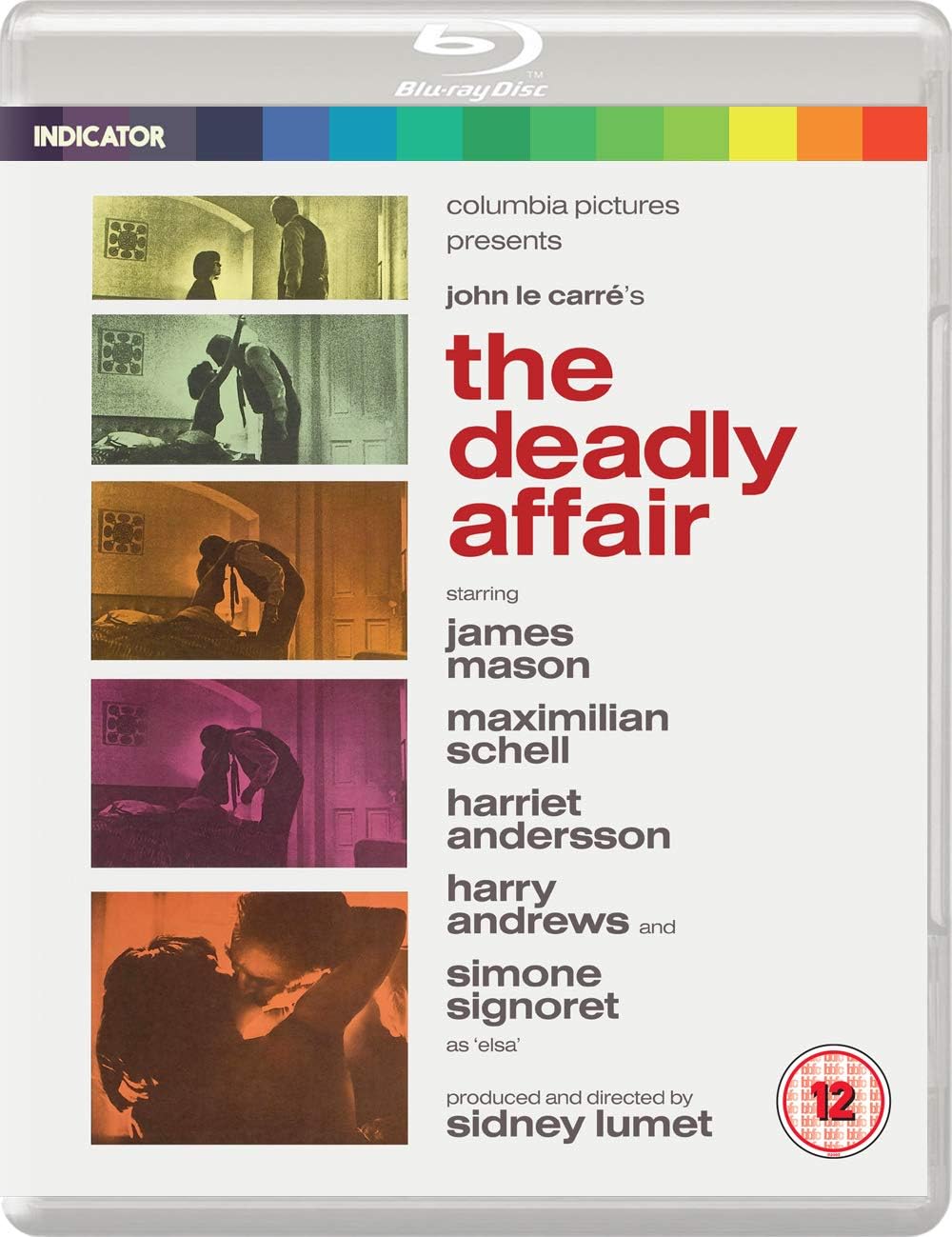
The Deadly Affair (Standard Edition)
Product ID: 199864879
Details
- Genrethriller
- FormatBlu-ray PAL
- ContributorHarriet James
- LanguageEnglish
- Runtime1 hour and 47
Desertcart purchases this item on your behalf and handles shipping, customs, and support to OMAN.
NOTICE: The disk has English audio. Review: THE DEADLY AFFAIR [1966 / 2017] [Blu-ray + DVD] - THE DEADLY AFFAIR [1966 / 2017] [Blu-ray + DVD] The Deadly Affair . . . is A Dark Affair! A Daring Affair! A Double Affair! A Dangerous Affair! A Top-Notch Adult Thriller! Absolutely Brilliant! Based on John le Carré's first novel, “Call for the Dead” which introduced spymaster George Smiley. ‘THE DEADLY AFFAIR’ sees an ageing British secret agent Charles Dobbs [James Mason] set out to uncover the truth behind a government employee's apparent suicide. Eschewing the glamour of the era’s James Bond thrillers, Sidney Lumet's chilling and intelligent take on the spy drama presents a palpable and darkly sinister picture of Cold War intrigue. The exemplary cast also includes Maximilian Schell, Harriet Andersson, Harry Andrews, Roy Kinnear and Lynn Redgrave. FILM FACT: 1968 BAFTA® Awards: Nominated: Best British Actor for James mason. Nominated: Best British Cinematography (Colour) for Freddie Young. Nominated: Best British Film for Director Sidney Lumet. Nominated: Best British Screenplay for Paul Dehn. Nominated: Best Foreign Actress for Simone Signoret. Cast: James Mason, Simone Signoret, Maximilian Schell, Harriet Andersson, Harry Andrews, Kenneth Haigh, Roy Kinnear, Max Adrian, Lynn Redgrave, Robert Flemyng, Leslie Sands, Corin Redgrave, Sheraton Blount (uncredited), Michael Brennan (uncredited), Murray Brown (uncredited), Michael Bryant (uncredited), Maria Charles (uncredited), John Dimech (uncredited), William Dysart (uncredited), Paul Hardwick (uncredited), Janet Hargreaves (uncredited), Peter Harrison (uncredited), Kenneth Ives (uncredited), Roger Jones (uncredited), Charles Kay (uncredited), Judy Keirn (uncredited), Gertan Klauber (uncredited), Margaret Lacey (uncredited), Stanley Lebor (uncredited), Rosemary Lord (uncredited), Petra Markham (uncredited), June Murphy (uncredited), David Quilter (uncredited), Robert Rowland (uncredited), Terence Sewards (uncredited), Denis Shaw (uncredited), Julian Sherrier (uncredited), Paul Starr (uncredited), Richard Steele (uncredited), Jonathan Wales (uncredited), Amanda Walker (uncredited), David Warner (uncredited), Timothy West (uncredited), Les White (uncredited), and Frank Williams (uncredited) Director: Sidney Lumet Producers: Denis O'Dell and Sidney Lumet Screenplay: Paul Dehn (screenplay), John le Carré (novel), William Shakespeare (play) (uncredited) and Christopher Marlowe (play) (uncredited) Composer: Quincy Jones Cinematography: Frederick A. Young, OBE, B.S.C. (Director of Photography) Image Resolution: 1080p [Technicolor] Aspect Ratio: 1.85:1 Audio: English: 1.0 LPCM Mono Audio and English: 2.0 Dolby Digital Stereo Subtitles: English SDH Running Time: 106 minutes Region: All Regions Number of discs: 2 Studio: British Lion-Columbia (UK) / Columbia Pictures (US) / Indicator / Powerhouse Films Andrew’s Blu-ray Review: ‘THE DEADLY AFFAIR’ [1966] is directed by Sidney Lumet, based on a novel by John le Carré and starring luminaries like the brilliant actors James Mason, Maximilian Schell, Simone Signoret and Harriet Andersson, and watching the film was a totally mouth-watering prospect and I was more than a little surprised that it is not better known, as it is even better than the other famous spy theme subject, the 1974 spy novel “Tinker Tailor Soldier Spy” that was written by the British author John le Carré, which subsequently went onto critical acclaim with the 1979 TV miniseries based on the novel, ‘Tinker Tailor Soldier Spy,’ then in 2011 we had the film based on the novel, ‘Tinker Tailor Soldier Spy.’ ‘THE DEADLY AFFAIR’ is based on famed spy-novelist and actual MI6 employee John le Carré's first novel, “Call for the Dead.” The novel's protagonist is none other than the infamous George Smiley, a character featuring in many of John le Carré's most famous books, and funnily enough though, back in the mid-1960s George Smiley was not the near household name he is now, so in this film adaptation his name was changed to Charles Dobbs [James Mason]. When the film ‘THE DEADLY AFFAIR’ opens up we get a stylised series of still frames, showing lovers silhouetted against a background of alternating coloured titled sequences and lays the foundation for a very different style of spy film and intrigue we are introduced to. The audience could be forgiven for a expecting a stylized James Bond type film, beyond these vibrant opening credits, which is accompanied by a bossa nova composed theme music, that was composed by Quincy Jones, and the images we get to view is very deceptive and also very sensual; especially the scene from which they are lifted, turns out to be not what we expected. Cut up and denuded of any dialogue, stained aphrodisiac pink and blue, and it reminded me of the kind of liaison that you would expect to see in a 007 type film and of course there are no women-paramours at the far side of the freeze frames, no massage with mink gloves, no Aston Martin car and definitely no Martini. Instead, the setting of the film ‘THE DEADLY AFFAIR’ is a solemn and insensible London, patched of iconography and lived-in interiors, like the red Route Master buses, red BT Telephone Boxes, red Royal Mail pillar boxes and the Royal Shakespeare Company, and what Sidney Lumet describes in the special feature audio interview below, as the miserable London apartments, with their “specific kind of light.” Eschewing the glamour era of the James Bond films, Sidney Lumet’s chilling and intelligent take on the spy thriller genre and presents a darkly sinister picture of Cold War intrigue, but laced with nail-biting excitement. Those helping James Mason prove that spying is totally shabby, shoddy business includes Harry Andrews, Roy Kinnear, Simone Signoret, Maximilian Schell and Lynn Redgrave, who give their best performance so far. But with this 1966 espionage drama sees James Mason playing ageing British Secret Service agent Charles Dobbs, who has suddenly stumbled onto a spy ring and has to investigate the truth behind a government employee’s apparent suicide. ‘THE DEADLY AFFAIR’ film opens with Government security officer Charles Dobbs [James Mason] meeting Foreign Office civil servant Samuel Fennan [Robert Flemyng] about an anonymous tip that had been received, claiming that Samuel Fennan had been, and may still be, a practising Communist. This doesn't seem to bother Samuel Fennan, as it was a long time in the past and Charles Dobbs put his mind at ease about the situation. However, Charles Dobbs receives a call early the next morning to say that Samuel Fennan committed suicide and a note he made out prior to this claimed he couldn't live with the situation. Most seem to accept this as a clear cut case, but Charles Dobbs refuses to believe that Samuel Fennan took his own life after the fairly relaxed conversation they'd had the day before. So he decides to investigate, even though he is forced to step down from his position due to the situation. Running alongside this, Charles Dobbs also struggles with his relationship with his wife Ann Dobbs [Harriet Andersson] as he can no longer stand by and let her openly cheat on him as he had for the last year or two. ‘THE DEADLY AFFAIR’ is an early example of the 'anti-spy' film, where the sexy heroics of James Bond and the like are eschewed for a relatively slow-moving, grim and unglamorous world of deception and information gathering. I liked this approach and the plot is well constructed, with several juicy twists never getting so complicated to lose track of what was happening. The characters are fascinating too, with Samuel Fennan's wife, Elsa Fennan [Simone Signoret], being a particularly interesting nut for Dobbs to crack. For the most part it's her cracking Charles Dobbs though, as she's a dark and seemingly controlling character who's difficult to second guess. In the film ‘THE DEADLY AFFAIR’ there are an assortment of renowned world cinema stars like Simone Signoret, Harriet Andersson and Maximilian Schell, who was Austrian, but worked largely in the USA and who all deliver the goods and a couple of underrated British character actors include Harry Andrews and Roy Kinnear, who definitely steal the few scenes they appear in the film and especially Harry Andrews is in more than a few, as he plays Charles Dobbs’ assistant/partner on the case. You even get a brief cameo from Lynn Redgrave and Corin Redgrave in a fun, low-rate, theatre rehearsal scene. Speaking of fun, although much of the film ‘THE DEADLY AFFAIR’ is very dark and occasionally rather bleak, there is much humour to be found in the sharp dialogue and interplay between the characters to keep things from getting too grim. The unusual situation between Charles Dobbs and his wife provides added depth and conflict within his character too, preventing the film from getting coldly focussed on the murder case alone. Overall, ‘THE DEADLY AFFAIR’ is a highly enjoyable and keeps you guessing right up to the end spy film, and a thoroughly gripping and generally faithful John le Carré adaptation. James Mason makes a great Smiley, and is even very believable when provoked to uncharacteristic violence at the finale part of the film. But also does a first rate job as a man grasping desperately at a professional conundrum in order to ignore a personal one – only to discover it’s impossible. Blu-ray Image Quality – Powerhouse Films presents us the brilliant Blu-ray disc with a very atmospheric Technicolor 1080p image presentation and is helped even more with a very nice 1.85:1 aspect ratio viewing experience. The image quality shows a very pleasing layer of grain and the contrast which is impeccably layered. This is dual-layered Blu-ray disc. It is neither glossy nor pristinely sharp but shows Sidney Lumet's intentional dark, grey visuals and originally Sidney Lumet wanted to film in in black-and-white. Sidney Lumet described the film image as “colourless colour” and was using a process called “flashing” as described by Michael Brooke in the audio commentary. There are some splashes of red, like the phone boxes, roses etc., that tend to stand out really well with this HD image presentation. So all in all, the image is extremely accurate. It looks very clean, consistent and film-like. This Blu-ray offers a rewarding and authentic dour presentation in 1080p. Blu-ray Audio Quality – Powerhouse Films presents us with two audio presentations of 1.0 LPCM Mono Audio and 2.0 Dolby Digital Stereo. The audio is transferred via a linear 1.0 LPCM is authentically mono. There is modest depth in the infrequent effects. The film's music is notable for the score by Quincy Jones and a theme music “Who Needs Forever” is credited as being sung by Astrud Gilberto. It supports the film a gently jazzy, Bosa-Nova theme, which gives it a nice edge to the tension of the film, but to some critics they felt it slightly dates the film, but for me personally I feel it adds to the style and substance to this brilliant spy film genre. But overall it is a really very pleasant audio presentation that suits the style of the film set in 1960s era and there are no traces of any damage, background hiss or fluff to the sound presentation. Blu-ray Special Features and Extras: United Kingdom World Premiere on Blu-ray Limited Dual Format Edition of 3,000 copies 1080p High Definition Remaster Original 1.0 LPCM Mono Audio New English subtitles for the deaf and hard-of-hearing Audio commentary with Film Historians Michael Brooke and Johnny Mains: Here we are first introduced to Michael Brooke, who informs us that he is a film critic and a film historian and regularly writes articles regular for the publication Sight and Sound, which is a British monthly film magazine published by the British Film Institute. Next to introduce themselves is Johnny Mains, who informs us that he is an award winning editor, author, horror historian and also writes notes for DVD releases. They team up for a very nice and interesting running audio commentary for the film ‘THE DEADLY AFFAIR,’ which is so crammed with amazing information and of course their personal opinion, I had to keep on having to pause to make substantial notes. They inform us that the actor James Mason hated the title of the film, especially because it had the word “DEAD” in it. We are informed that this film had different titles in other countries like ‘Call Of The Dead,’ The Kiss of Danger,’ ‘MI5 Requires Protection,’ ‘The Spy of London,’ ‘The Spy Must Die’ and ‘The Suicide Case.’ They both talk about the specific colour process of the film and its look, and the director Sidney Lumet wanted to shoot the film in black-and-white, but Columbia Pictures always insisted that their films must always be filmed in colour and again for the cinematographer Frederick A. Young, OBE, B.S.C. (Director of Photography)to get the effect he wanted to achieve Frederick A. Young went about pre-exposing the colour film negative against a white card to give small controlled amount of light (known as "flashing" or "pre-fogging") in order to create a muted colour palette was first used in this film, and again the director Sidney Lumet called the result "colourless colour" and so it was a good compromise and everyone was happy with the results, and in the process when you got to see objects of the red colour it really stood out very predominately, but equally what was not successful is when seeing the red colour of blood, as it was not a success in the film image result. When you get to Chapter 3 at around 23:00 Michael Brooke and Johnny Mains warns us that hopefully you have viewed the film first before venturing with this audio commentary, as there is a very strong clue given away, especially with the actress Simone Signoret who without realising it, nearly gives the game away in revealing a hidden dark secret. When you get to Chapter 6 at around 55:00, you get to the scene where James Mason is in his hospital bed after getting a serious assault and is talking to Harry Andrews, and Michael Brooke and Johnny Mains mention at the side of his bed is the wooden cupboard and you just get a quick glimpse of a Penguin paperback book and is supposed to be James Mason’s own personal copy, which is entitled “There’s A Porpoise Close Behind Us” and is written by Noel Langley and it is a novel about London’s gay theatrical life in the 1930s and is extremely open about gay life in the theatre and Noel Langley was a successful novelist, playwright, screenwriter and director and was under contract to M-G-M and was one of the screenwriters for ‘The Wizard of Oz’ film. Noel Langley also did the screenplays for the following films ‘Scrooge’ [1951], ‘The Pickwick Papers’ [1952], ‘Ivanhoe’ [1952] and the Technicolor film ‘The Prisoner of Zenda’ [1952]. Michael Brooke and Johnny Mains give great praise with regards to the actor Harry Andrews who they feel gave his best performance so far for this film, because they feel he has a great face for his character and portrayal of a retired policeman. As we get near the end of this amazing audio commentary and the scene where James Mason finally meet the traitor spy, and who shoots Harry Andrews, we see how good the NHS plaster cast is for the 1960s that James Mason has, and they mention how strong it was to be used as a weapon against the spy traitor, and they warn us that the scene we witness has to be one of the most brutal ending to a person’s life, especially for a spy film and good ending where everything has been tied up with all the loose ends and false trails running throughout the film. As we finally get to the end of the film, where James Mason lands in Zurich and is greeted by his estranged wife, Michael Brooke and Johnny Mains comment on how they rate this Sidney Lumet film, and also comment that it is not a masterpiece, and a slightly underrated film especially with critics, but they feel it is still up there with the best spy film genre that have been released over the years, and I personally think it is a totally brilliant very subtle spy film that more people should get to view, that is very clever at keeping you guessing right up to the end of the final climax of the film, and Michael Brooke and Johnny Mains also say that this film generally gets passed over and has been over the years been released in several video format releases, and has been very poorly presented, whereas this INDICATOR Blu-ray release is I feel the best that has ever been released since the film was released. As the words “the end” appear on the screen, both Michael Brooke and Johnny Mains say, “well thank you all for you for listening to this audio commentary right to the end, and we have enjoyed doing it, and it is us both signing off.” Of all the fine extras that has been included on a Blu-ray disc, this is probably the most detailed, essential and fascinating audio commentary I have heard in a very long time and we want more of this type of very professional audio commentary. Special Feature: The Guardian Lecture with Sidney Lumet [89:00] Before the audio interview starts, we get the following information: This lecture was conducted by Derek Malcolm at the National Film Theatre, London in 1983. The following audio presentation exhibits a range of technical problems, which are to be expected from a recording of its age and type. Abrupt dropouts in the source recordings have been left intact. Its importance was a unique archival document makes its inclusion here essential. We hope you agree. While you hear the audio presentation, the film is being shown at the same time, like you viewed with the audio commentary. As the interview progresses, Sidney Lumet, who directed ‘THE DEADLY AFFIR’ barely gets a mention here, which would have been a welcome inclusion, whereas Derek Malcolm visits a number of key films from Sidney Lumet's illustrious film career, although a sizeable chunk of the interview is devoted to the film release of ‘Prince of the City.’ Sidney Lumet is considerate and detailed in his response to questions from the host interviewer Derek Malcolm and also the audience, and even helpfully repeats or summarises audience questions that I could not quite make out, as once again they don’t allow a microphone to be handed to each person who asks a question, despite the best efforts of the audience asking the questions. There is a lot of ground covered with this interview, especially when Sidney Lumet talks about the film industry in general, especially when a film is released in America in the first week, and if it does not make the required financial revenue, the film is kicked into the long grass and they feel it is not worth releasing the fil in Europe. At the time of the recording, Sidney Lumet talks about the state of America in the 1980s and feels total despair. It was very interesting to hear that Sidney Lumet counts the films ‘The Offence,’ ‘The Seagull’ and ‘The Wiz’ amongst his very favourite own films, but feels that the film ‘12 Angry Men’ believes is as close to perfect as a film can. All in all this was a really interesting audio track that is well worth to listen to. Special Feature: The National Film Theatre Lecture with James Mason [47:49] Before the audio interview starts, we get the following information: This archival audio recording was conducted by Leslie Hardcastle at the National Film Theatre in 1967, London. The following audio presentation exhibits a range of technical problems, which are to be expected from a recording of its age and type. Abrupt dropouts in the source recordings have been left intact. Its importance was a unique archival document makes its inclusion here essential. We hope you agree. While you hear the audio presentation, the film is being shown at the same time, like you viewed with the audio commentary. This audio recording of James Mason on the stage is interviewed in front of a very enthusiastic audience, where James Mason delivers a hugely entertaining and totally hilarious monologue on the journey from childhood to becoming a top billing actor, a profession he describes early on as "a bad lot." There are questions from Leslie Hardcastle and from the audience, all of which James Mason answers with a most engaging blend of honesty and good humour. James Mason describes what acting is all about and likens it to how children like to show off and play act in their own way, especially acting out their fantasies and that is basically what actors like to do, in not portraying real life, especially on the stage, but not so much in films. James Mason is asked what Director did he really like to work with and was also easy to work with and first on James Mason’s list is Carol Reed, who he really adored. The most stimulating director to work with was Stanley Kubrick. At Chapter 4 at around 41:44 we have a slight break from the interview, where Leslie Caron comes onto the stage to present James Mason with the Alexander Kordar Star Award and Leslie Caron despite being very shy, gives a very nice and eloquent little speech, and on receiving this award, also gives a nice little speech and also comments that he likes receiving presents. So just after that this audio presentation finishes. So to sum up, this audio presentation I would say that is definitely is all in all a really fascinating and totally interesting audio track, and I personally could have listened to James Mason so much longer, as he speaks very eloquent and is also very fascinating to listen to and I am sure he has lots of other anecdotes and especially funny stories he would of informed us if they had let the lecture go on much longer and is definitely a winner and well worth listening to. Special Feature: A Different Kind of Spy: Paul Dehn’s Deadly Affair [2017] [1080p] [1.78:1] [16:52] Here writer David Kipen [Author of “The Schreiber Theory”] discusses the life and work of screenwriter Paul Dehn, where David Kipen informs us that Paul Dehn’s uncle once said to him, “Always work three times as hard on the first paragraph of anything you write, then any other paragraph and then you should cut the first paragraph,” which David Kipen says, “which makes kind of interesting when you look at the beginning of Paul Dehn’s films, because obviously they have been laboured over and they work as well.” David Kipen also informs us that in World War Two Paul Dehn becomes an instructor of spies in a facility in Canada entitled CAMP X and the author Ian Fleming and the actor Christopher lee were some of his pupils and schools them in the delicate arts of espionage and counter espionage, and if trusted, he schools then in the art of assassination. Over time Paul Dehn felt very guilty, and eventually was recruited as an undercover war time British agent for a time. After the war Paul Dehn becomes a different kind of spy, by becoming a brilliant screenwriter of the best kind for the film industry. David Kipen then goes onto informs us of some of the brilliant screenplay he did for the following plethora of films, which includes ‘Seven Days to Noon’ [1950]; ‘Orders to Kill’ [1958]; ‘Goldfinger’ [1964]; ‘The Spy Who Came in from the Cold’ [1965]; ‘The Deadly Affair’ [1966]; ‘The Taming of the Shrew’ [1967]; ‘Beneath the Planet of the Apes’ [1970]; ‘Fragment of Fear’ [1970]; ‘Escape from the Planet of the Apes’ [1971]; ‘Conquest of the Planet of the Apes’ [1972]; ‘Battle for the Planet of the Apes’ [1973] and ‘Murder on the Orient Express’ [1974]. Paul Dehn sadly passed away on 30th September, 1976 and left a legacy of films that surely he was very proud of and gave us audiences brilliant scripts that made the films mentioned an enjoyable experience and also enjoyable was David Kipen who was a joy to hear his views on the screenwriter Paul Dehn. Special Feature: Take One and Move On [2017] [1080p] [1.78:1] [4:58] Here we have a brand New interview with camera operator Brian West on the film ‘THE DEADLY AFFAIR.’ Brian West informs us that he is very proud of the work he did on all his films he worked on, especially the film ‘THE DEADLY AFFAIR.’ Brian also was very impressed with the author John le Carré and admires all of his books, and has nearly read all of them, but especially the spy novels. Brian talks about the cinematographer Frederick A. Young, OBE, B.S.C. (Director of Photography), who wanted the film to look a certain style, by forcing the negative to look very grainy, and Sidney Lumet really loved the look of the image he viewed of the film ‘THE DEADLY AFFAIR’ and felt the overall shoot was really good experience. When you see the scene at the Victoria Bus Station in London where the actress Simone Signoret gets off the bus, Sidney Lumet put Brian and the camera on his lap in a wheelchair, and then Sidney Lumet wheeled Brian about for the tracing shots following the actors, and Brian says that Sidney Lumet was a very inventive director and Sidney Lumet really only liked to do once take and then likes to move onto the next shot, and all in all Brian really liked working with Sidney Lumet and especially on ‘THE DEADLY AFFAIR’ and also likes to now and again watch the film, which of course brings back many happy memories, especially with shooting the film and with working with the director Sidney Lumet. Despite this being a very short special feature, it was a joy to hear Brian talk about his time in the film industry and I could have listened to Brian a lot longer, as I bet he has loads of other very interesting stories relating to his work in the film industry. Special Feature: Lumet's London: The Locations of ‘THE DEADY AFFAIR’ [2017] [1080p] [1.78:1] [4:03] Here we get to explore the many different Central London locations of ‘THE DEADLY AFFAIR’ film, which are as follows: St James Park, SW1, that has Buckingham Palace in the background; Grosvenor Street, SW1; St George’s Square, Pimlico, SW1; Victoria Coach Station, SW1 and with Victoria Station left of the screen in the background; Trafalgar Square, WC2, where the bus is heading down Whitehall; Aldwych Theatre, WC2, which was the London home of the Royal Shakespeare Company 1958 – 1982; Vanbrugh Theatre, WC1, which is at the Royal Academy of Dramatic Art; Serpentine Restaurant, Hyde park, W2, which was demolished in 1990; Walmar House, Regent Street, W1 and was redeveloped in 2014. Next we move onto London locations in the Chelsea and Battersea areas, which are as follows: The Balloon Tavern, SW10, which is now the Lots Road Pub and Dining Room; Cremorne Road, SW10; Chelsea Harbour, SW10 and in the distance you can see the Battersea bridge; Lombard Road, Battersea, SW11, where you see them drive past Archer House and at the same time you see a small window video on the left of the screen what the area looks today; Lots Road Power Station, SW10. Next up on the London location areas is South West London, which are as follows: The Crescent Barnes, SW13, which is opposite Barnes Green, SW13; Barnes Methodist Church, SW13; Market Road, Richmond, TW9; Staines Road East, Sudbury, TW16, which is very near the Shepperton Studios and finally Sudbury-on-Thames Police Station, which was eventually decommissioned in 2010. Theatrical Trailer [1966] [480i] [1.33:1] [2:33] This is the original Theatrical Trailer for the film ‘THE DEADLY AFFAIR.’ For some unknown reason, you have an American doing the voice over and also it is only shown in the 1.33:1 aspect ratio. Special Feature: Image Gallery [2017] [1080p] Here we get to view 26 brilliant colour and black-and-white Original Promotional Material stills, including behind-the-scenes images, posters and even the album cover of Quincy Jones film score for the film ‘THE DEADLY AFFAIR.’ To view all the images, you have to use the right arrow button on your remote control to view the next images. BONUS: Limited edition exclusive 32-page booklet featuring a 2017 newly commissioned writing by Thirza Wakefield entitled KEEP THE HOME FIRES BURNING. Also a 2017 article entitled JUST MAKE IT MARVELLOUS, FREDDIE! By Gary Crowdus. Also included is JAMES MASON ON ‘THE DEADLY AFFAIR’ where Martha Deane interviews James Mason in 1967 for the broadcast programme on WOP Radio, New York and includes extracts and discussions on the film ‘THE DEADLY AFFAIR.’ The other article of interest is ‘THE DEADLY AFFAIR’ CRITICAL RESPONSE. Other sundries include ABOUT THE PRESENTATION; SPECIAL THANKS and ACKNOWLEDGEMENTS. You also get to view lots of black-and-white images from the film and also other rare publicity photos. Finally, ‘THE DEADLY AFFAIR’ [1966] overall is a very solid, entertaining spy thriller that is full of twists and turns and is typical of John le Carré's work. It's a little rough around the edges, but James mason certain makes the film worth watching for his sterling performance and to give the film its 1960s atmosphere we have the brilliant music score by Quincy Jones. This is another good find from the company Indicator and Powerhouse Films, who has released this exclusive United Kingdom Blu-ray disc. The exclusive booklet is as strong as ever too and shouldn't be ignored in favour of the video extras. Highly Recommended! Andrew C. Miller – Your Ultimate No.1 Film Aficionado Le Cinema Paradiso United Kingdom Review: A unique spy movie in many ways for its time - A strange but unique movie for its time - I bought the DVD because Sidney Lumet directed and I always find his work interesting (I still rate his prior UK film "The Hill" as one of the '60s "lost greats"). I had previously read the John le Carre novel on which it is based but not rated it much versus his later works, so was surprised to find the film adaptation was much better especially given it was made at a time when spy movies seemed all the rage. This is firstly because the film casts well (especially James Mason in the lead role, Harry Andrews as the retired curmudgeonly policeman he relies on and Roy Kinnear as the local criminal quickly out of his depth, but most importantly the excellent Simone Signoret as the cipher around whom the labyrinthine plot evolves). Secondly for its time (1966) the treatment of Mason's marriage of unequal ages with his younger wife (Swedish actress Harriet Andersson) showed a maturity that was not often seen depicted. Also on watching, the whole look and sombre feel seemed very different from the many Technicolour films of that era. On reading further I learnt that the highly regarded UK DoP Freddie Young applied for the first time a process of controlled pre-exposing of the film ("fogging") which was to be used later by many Hollywood cinematographers, in explaining this. In many ways then a fascinating film of its time.



| Contributor | Harriet Andersson, James Mason, Maximilian Schell, Sidney Lumet, Simone Signoret |
| Customer Reviews | 4.1 out of 5 stars 333 Reviews |
| Format | Blu-ray, PAL |
| Genre | thriller |
| Language | English |
| Manufacturer | Powerhouse Films |
| Number of discs | 1 |
| Runtime | 1 hour and 47 minutes |
A**R
THE DEADLY AFFAIR [1966 / 2017] [Blu-ray + DVD]
THE DEADLY AFFAIR [1966 / 2017] [Blu-ray + DVD] The Deadly Affair . . . is A Dark Affair! A Daring Affair! A Double Affair! A Dangerous Affair! A Top-Notch Adult Thriller! Absolutely Brilliant! Based on John le Carré's first novel, “Call for the Dead” which introduced spymaster George Smiley. ‘THE DEADLY AFFAIR’ sees an ageing British secret agent Charles Dobbs [James Mason] set out to uncover the truth behind a government employee's apparent suicide. Eschewing the glamour of the era’s James Bond thrillers, Sidney Lumet's chilling and intelligent take on the spy drama presents a palpable and darkly sinister picture of Cold War intrigue. The exemplary cast also includes Maximilian Schell, Harriet Andersson, Harry Andrews, Roy Kinnear and Lynn Redgrave. FILM FACT: 1968 BAFTA® Awards: Nominated: Best British Actor for James mason. Nominated: Best British Cinematography (Colour) for Freddie Young. Nominated: Best British Film for Director Sidney Lumet. Nominated: Best British Screenplay for Paul Dehn. Nominated: Best Foreign Actress for Simone Signoret. Cast: James Mason, Simone Signoret, Maximilian Schell, Harriet Andersson, Harry Andrews, Kenneth Haigh, Roy Kinnear, Max Adrian, Lynn Redgrave, Robert Flemyng, Leslie Sands, Corin Redgrave, Sheraton Blount (uncredited), Michael Brennan (uncredited), Murray Brown (uncredited), Michael Bryant (uncredited), Maria Charles (uncredited), John Dimech (uncredited), William Dysart (uncredited), Paul Hardwick (uncredited), Janet Hargreaves (uncredited), Peter Harrison (uncredited), Kenneth Ives (uncredited), Roger Jones (uncredited), Charles Kay (uncredited), Judy Keirn (uncredited), Gertan Klauber (uncredited), Margaret Lacey (uncredited), Stanley Lebor (uncredited), Rosemary Lord (uncredited), Petra Markham (uncredited), June Murphy (uncredited), David Quilter (uncredited), Robert Rowland (uncredited), Terence Sewards (uncredited), Denis Shaw (uncredited), Julian Sherrier (uncredited), Paul Starr (uncredited), Richard Steele (uncredited), Jonathan Wales (uncredited), Amanda Walker (uncredited), David Warner (uncredited), Timothy West (uncredited), Les White (uncredited), and Frank Williams (uncredited) Director: Sidney Lumet Producers: Denis O'Dell and Sidney Lumet Screenplay: Paul Dehn (screenplay), John le Carré (novel), William Shakespeare (play) (uncredited) and Christopher Marlowe (play) (uncredited) Composer: Quincy Jones Cinematography: Frederick A. Young, OBE, B.S.C. (Director of Photography) Image Resolution: 1080p [Technicolor] Aspect Ratio: 1.85:1 Audio: English: 1.0 LPCM Mono Audio and English: 2.0 Dolby Digital Stereo Subtitles: English SDH Running Time: 106 minutes Region: All Regions Number of discs: 2 Studio: British Lion-Columbia (UK) / Columbia Pictures (US) / Indicator / Powerhouse Films Andrew’s Blu-ray Review: ‘THE DEADLY AFFAIR’ [1966] is directed by Sidney Lumet, based on a novel by John le Carré and starring luminaries like the brilliant actors James Mason, Maximilian Schell, Simone Signoret and Harriet Andersson, and watching the film was a totally mouth-watering prospect and I was more than a little surprised that it is not better known, as it is even better than the other famous spy theme subject, the 1974 spy novel “Tinker Tailor Soldier Spy” that was written by the British author John le Carré, which subsequently went onto critical acclaim with the 1979 TV miniseries based on the novel, ‘Tinker Tailor Soldier Spy,’ then in 2011 we had the film based on the novel, ‘Tinker Tailor Soldier Spy.’ ‘THE DEADLY AFFAIR’ is based on famed spy-novelist and actual MI6 employee John le Carré's first novel, “Call for the Dead.” The novel's protagonist is none other than the infamous George Smiley, a character featuring in many of John le Carré's most famous books, and funnily enough though, back in the mid-1960s George Smiley was not the near household name he is now, so in this film adaptation his name was changed to Charles Dobbs [James Mason]. When the film ‘THE DEADLY AFFAIR’ opens up we get a stylised series of still frames, showing lovers silhouetted against a background of alternating coloured titled sequences and lays the foundation for a very different style of spy film and intrigue we are introduced to. The audience could be forgiven for a expecting a stylized James Bond type film, beyond these vibrant opening credits, which is accompanied by a bossa nova composed theme music, that was composed by Quincy Jones, and the images we get to view is very deceptive and also very sensual; especially the scene from which they are lifted, turns out to be not what we expected. Cut up and denuded of any dialogue, stained aphrodisiac pink and blue, and it reminded me of the kind of liaison that you would expect to see in a 007 type film and of course there are no women-paramours at the far side of the freeze frames, no massage with mink gloves, no Aston Martin car and definitely no Martini. Instead, the setting of the film ‘THE DEADLY AFFAIR’ is a solemn and insensible London, patched of iconography and lived-in interiors, like the red Route Master buses, red BT Telephone Boxes, red Royal Mail pillar boxes and the Royal Shakespeare Company, and what Sidney Lumet describes in the special feature audio interview below, as the miserable London apartments, with their “specific kind of light.” Eschewing the glamour era of the James Bond films, Sidney Lumet’s chilling and intelligent take on the spy thriller genre and presents a darkly sinister picture of Cold War intrigue, but laced with nail-biting excitement. Those helping James Mason prove that spying is totally shabby, shoddy business includes Harry Andrews, Roy Kinnear, Simone Signoret, Maximilian Schell and Lynn Redgrave, who give their best performance so far. But with this 1966 espionage drama sees James Mason playing ageing British Secret Service agent Charles Dobbs, who has suddenly stumbled onto a spy ring and has to investigate the truth behind a government employee’s apparent suicide. ‘THE DEADLY AFFAIR’ film opens with Government security officer Charles Dobbs [James Mason] meeting Foreign Office civil servant Samuel Fennan [Robert Flemyng] about an anonymous tip that had been received, claiming that Samuel Fennan had been, and may still be, a practising Communist. This doesn't seem to bother Samuel Fennan, as it was a long time in the past and Charles Dobbs put his mind at ease about the situation. However, Charles Dobbs receives a call early the next morning to say that Samuel Fennan committed suicide and a note he made out prior to this claimed he couldn't live with the situation. Most seem to accept this as a clear cut case, but Charles Dobbs refuses to believe that Samuel Fennan took his own life after the fairly relaxed conversation they'd had the day before. So he decides to investigate, even though he is forced to step down from his position due to the situation. Running alongside this, Charles Dobbs also struggles with his relationship with his wife Ann Dobbs [Harriet Andersson] as he can no longer stand by and let her openly cheat on him as he had for the last year or two. ‘THE DEADLY AFFAIR’ is an early example of the 'anti-spy' film, where the sexy heroics of James Bond and the like are eschewed for a relatively slow-moving, grim and unglamorous world of deception and information gathering. I liked this approach and the plot is well constructed, with several juicy twists never getting so complicated to lose track of what was happening. The characters are fascinating too, with Samuel Fennan's wife, Elsa Fennan [Simone Signoret], being a particularly interesting nut for Dobbs to crack. For the most part it's her cracking Charles Dobbs though, as she's a dark and seemingly controlling character who's difficult to second guess. In the film ‘THE DEADLY AFFAIR’ there are an assortment of renowned world cinema stars like Simone Signoret, Harriet Andersson and Maximilian Schell, who was Austrian, but worked largely in the USA and who all deliver the goods and a couple of underrated British character actors include Harry Andrews and Roy Kinnear, who definitely steal the few scenes they appear in the film and especially Harry Andrews is in more than a few, as he plays Charles Dobbs’ assistant/partner on the case. You even get a brief cameo from Lynn Redgrave and Corin Redgrave in a fun, low-rate, theatre rehearsal scene. Speaking of fun, although much of the film ‘THE DEADLY AFFAIR’ is very dark and occasionally rather bleak, there is much humour to be found in the sharp dialogue and interplay between the characters to keep things from getting too grim. The unusual situation between Charles Dobbs and his wife provides added depth and conflict within his character too, preventing the film from getting coldly focussed on the murder case alone. Overall, ‘THE DEADLY AFFAIR’ is a highly enjoyable and keeps you guessing right up to the end spy film, and a thoroughly gripping and generally faithful John le Carré adaptation. James Mason makes a great Smiley, and is even very believable when provoked to uncharacteristic violence at the finale part of the film. But also does a first rate job as a man grasping desperately at a professional conundrum in order to ignore a personal one – only to discover it’s impossible. Blu-ray Image Quality – Powerhouse Films presents us the brilliant Blu-ray disc with a very atmospheric Technicolor 1080p image presentation and is helped even more with a very nice 1.85:1 aspect ratio viewing experience. The image quality shows a very pleasing layer of grain and the contrast which is impeccably layered. This is dual-layered Blu-ray disc. It is neither glossy nor pristinely sharp but shows Sidney Lumet's intentional dark, grey visuals and originally Sidney Lumet wanted to film in in black-and-white. Sidney Lumet described the film image as “colourless colour” and was using a process called “flashing” as described by Michael Brooke in the audio commentary. There are some splashes of red, like the phone boxes, roses etc., that tend to stand out really well with this HD image presentation. So all in all, the image is extremely accurate. It looks very clean, consistent and film-like. This Blu-ray offers a rewarding and authentic dour presentation in 1080p. Blu-ray Audio Quality – Powerhouse Films presents us with two audio presentations of 1.0 LPCM Mono Audio and 2.0 Dolby Digital Stereo. The audio is transferred via a linear 1.0 LPCM is authentically mono. There is modest depth in the infrequent effects. The film's music is notable for the score by Quincy Jones and a theme music “Who Needs Forever” is credited as being sung by Astrud Gilberto. It supports the film a gently jazzy, Bosa-Nova theme, which gives it a nice edge to the tension of the film, but to some critics they felt it slightly dates the film, but for me personally I feel it adds to the style and substance to this brilliant spy film genre. But overall it is a really very pleasant audio presentation that suits the style of the film set in 1960s era and there are no traces of any damage, background hiss or fluff to the sound presentation. Blu-ray Special Features and Extras: United Kingdom World Premiere on Blu-ray Limited Dual Format Edition of 3,000 copies 1080p High Definition Remaster Original 1.0 LPCM Mono Audio New English subtitles for the deaf and hard-of-hearing Audio commentary with Film Historians Michael Brooke and Johnny Mains: Here we are first introduced to Michael Brooke, who informs us that he is a film critic and a film historian and regularly writes articles regular for the publication Sight and Sound, which is a British monthly film magazine published by the British Film Institute. Next to introduce themselves is Johnny Mains, who informs us that he is an award winning editor, author, horror historian and also writes notes for DVD releases. They team up for a very nice and interesting running audio commentary for the film ‘THE DEADLY AFFAIR,’ which is so crammed with amazing information and of course their personal opinion, I had to keep on having to pause to make substantial notes. They inform us that the actor James Mason hated the title of the film, especially because it had the word “DEAD” in it. We are informed that this film had different titles in other countries like ‘Call Of The Dead,’ The Kiss of Danger,’ ‘MI5 Requires Protection,’ ‘The Spy of London,’ ‘The Spy Must Die’ and ‘The Suicide Case.’ They both talk about the specific colour process of the film and its look, and the director Sidney Lumet wanted to shoot the film in black-and-white, but Columbia Pictures always insisted that their films must always be filmed in colour and again for the cinematographer Frederick A. Young, OBE, B.S.C. (Director of Photography)to get the effect he wanted to achieve Frederick A. Young went about pre-exposing the colour film negative against a white card to give small controlled amount of light (known as "flashing" or "pre-fogging") in order to create a muted colour palette was first used in this film, and again the director Sidney Lumet called the result "colourless colour" and so it was a good compromise and everyone was happy with the results, and in the process when you got to see objects of the red colour it really stood out very predominately, but equally what was not successful is when seeing the red colour of blood, as it was not a success in the film image result. When you get to Chapter 3 at around 23:00 Michael Brooke and Johnny Mains warns us that hopefully you have viewed the film first before venturing with this audio commentary, as there is a very strong clue given away, especially with the actress Simone Signoret who without realising it, nearly gives the game away in revealing a hidden dark secret. When you get to Chapter 6 at around 55:00, you get to the scene where James Mason is in his hospital bed after getting a serious assault and is talking to Harry Andrews, and Michael Brooke and Johnny Mains mention at the side of his bed is the wooden cupboard and you just get a quick glimpse of a Penguin paperback book and is supposed to be James Mason’s own personal copy, which is entitled “There’s A Porpoise Close Behind Us” and is written by Noel Langley and it is a novel about London’s gay theatrical life in the 1930s and is extremely open about gay life in the theatre and Noel Langley was a successful novelist, playwright, screenwriter and director and was under contract to M-G-M and was one of the screenwriters for ‘The Wizard of Oz’ film. Noel Langley also did the screenplays for the following films ‘Scrooge’ [1951], ‘The Pickwick Papers’ [1952], ‘Ivanhoe’ [1952] and the Technicolor film ‘The Prisoner of Zenda’ [1952]. Michael Brooke and Johnny Mains give great praise with regards to the actor Harry Andrews who they feel gave his best performance so far for this film, because they feel he has a great face for his character and portrayal of a retired policeman. As we get near the end of this amazing audio commentary and the scene where James Mason finally meet the traitor spy, and who shoots Harry Andrews, we see how good the NHS plaster cast is for the 1960s that James Mason has, and they mention how strong it was to be used as a weapon against the spy traitor, and they warn us that the scene we witness has to be one of the most brutal ending to a person’s life, especially for a spy film and good ending where everything has been tied up with all the loose ends and false trails running throughout the film. As we finally get to the end of the film, where James Mason lands in Zurich and is greeted by his estranged wife, Michael Brooke and Johnny Mains comment on how they rate this Sidney Lumet film, and also comment that it is not a masterpiece, and a slightly underrated film especially with critics, but they feel it is still up there with the best spy film genre that have been released over the years, and I personally think it is a totally brilliant very subtle spy film that more people should get to view, that is very clever at keeping you guessing right up to the end of the final climax of the film, and Michael Brooke and Johnny Mains also say that this film generally gets passed over and has been over the years been released in several video format releases, and has been very poorly presented, whereas this INDICATOR Blu-ray release is I feel the best that has ever been released since the film was released. As the words “the end” appear on the screen, both Michael Brooke and Johnny Mains say, “well thank you all for you for listening to this audio commentary right to the end, and we have enjoyed doing it, and it is us both signing off.” Of all the fine extras that has been included on a Blu-ray disc, this is probably the most detailed, essential and fascinating audio commentary I have heard in a very long time and we want more of this type of very professional audio commentary. Special Feature: The Guardian Lecture with Sidney Lumet [89:00] Before the audio interview starts, we get the following information: This lecture was conducted by Derek Malcolm at the National Film Theatre, London in 1983. The following audio presentation exhibits a range of technical problems, which are to be expected from a recording of its age and type. Abrupt dropouts in the source recordings have been left intact. Its importance was a unique archival document makes its inclusion here essential. We hope you agree. While you hear the audio presentation, the film is being shown at the same time, like you viewed with the audio commentary. As the interview progresses, Sidney Lumet, who directed ‘THE DEADLY AFFIR’ barely gets a mention here, which would have been a welcome inclusion, whereas Derek Malcolm visits a number of key films from Sidney Lumet's illustrious film career, although a sizeable chunk of the interview is devoted to the film release of ‘Prince of the City.’ Sidney Lumet is considerate and detailed in his response to questions from the host interviewer Derek Malcolm and also the audience, and even helpfully repeats or summarises audience questions that I could not quite make out, as once again they don’t allow a microphone to be handed to each person who asks a question, despite the best efforts of the audience asking the questions. There is a lot of ground covered with this interview, especially when Sidney Lumet talks about the film industry in general, especially when a film is released in America in the first week, and if it does not make the required financial revenue, the film is kicked into the long grass and they feel it is not worth releasing the fil in Europe. At the time of the recording, Sidney Lumet talks about the state of America in the 1980s and feels total despair. It was very interesting to hear that Sidney Lumet counts the films ‘The Offence,’ ‘The Seagull’ and ‘The Wiz’ amongst his very favourite own films, but feels that the film ‘12 Angry Men’ believes is as close to perfect as a film can. All in all this was a really interesting audio track that is well worth to listen to. Special Feature: The National Film Theatre Lecture with James Mason [47:49] Before the audio interview starts, we get the following information: This archival audio recording was conducted by Leslie Hardcastle at the National Film Theatre in 1967, London. The following audio presentation exhibits a range of technical problems, which are to be expected from a recording of its age and type. Abrupt dropouts in the source recordings have been left intact. Its importance was a unique archival document makes its inclusion here essential. We hope you agree. While you hear the audio presentation, the film is being shown at the same time, like you viewed with the audio commentary. This audio recording of James Mason on the stage is interviewed in front of a very enthusiastic audience, where James Mason delivers a hugely entertaining and totally hilarious monologue on the journey from childhood to becoming a top billing actor, a profession he describes early on as "a bad lot." There are questions from Leslie Hardcastle and from the audience, all of which James Mason answers with a most engaging blend of honesty and good humour. James Mason describes what acting is all about and likens it to how children like to show off and play act in their own way, especially acting out their fantasies and that is basically what actors like to do, in not portraying real life, especially on the stage, but not so much in films. James Mason is asked what Director did he really like to work with and was also easy to work with and first on James Mason’s list is Carol Reed, who he really adored. The most stimulating director to work with was Stanley Kubrick. At Chapter 4 at around 41:44 we have a slight break from the interview, where Leslie Caron comes onto the stage to present James Mason with the Alexander Kordar Star Award and Leslie Caron despite being very shy, gives a very nice and eloquent little speech, and on receiving this award, also gives a nice little speech and also comments that he likes receiving presents. So just after that this audio presentation finishes. So to sum up, this audio presentation I would say that is definitely is all in all a really fascinating and totally interesting audio track, and I personally could have listened to James Mason so much longer, as he speaks very eloquent and is also very fascinating to listen to and I am sure he has lots of other anecdotes and especially funny stories he would of informed us if they had let the lecture go on much longer and is definitely a winner and well worth listening to. Special Feature: A Different Kind of Spy: Paul Dehn’s Deadly Affair [2017] [1080p] [1.78:1] [16:52] Here writer David Kipen [Author of “The Schreiber Theory”] discusses the life and work of screenwriter Paul Dehn, where David Kipen informs us that Paul Dehn’s uncle once said to him, “Always work three times as hard on the first paragraph of anything you write, then any other paragraph and then you should cut the first paragraph,” which David Kipen says, “which makes kind of interesting when you look at the beginning of Paul Dehn’s films, because obviously they have been laboured over and they work as well.” David Kipen also informs us that in World War Two Paul Dehn becomes an instructor of spies in a facility in Canada entitled CAMP X and the author Ian Fleming and the actor Christopher lee were some of his pupils and schools them in the delicate arts of espionage and counter espionage, and if trusted, he schools then in the art of assassination. Over time Paul Dehn felt very guilty, and eventually was recruited as an undercover war time British agent for a time. After the war Paul Dehn becomes a different kind of spy, by becoming a brilliant screenwriter of the best kind for the film industry. David Kipen then goes onto informs us of some of the brilliant screenplay he did for the following plethora of films, which includes ‘Seven Days to Noon’ [1950]; ‘Orders to Kill’ [1958]; ‘Goldfinger’ [1964]; ‘The Spy Who Came in from the Cold’ [1965]; ‘The Deadly Affair’ [1966]; ‘The Taming of the Shrew’ [1967]; ‘Beneath the Planet of the Apes’ [1970]; ‘Fragment of Fear’ [1970]; ‘Escape from the Planet of the Apes’ [1971]; ‘Conquest of the Planet of the Apes’ [1972]; ‘Battle for the Planet of the Apes’ [1973] and ‘Murder on the Orient Express’ [1974]. Paul Dehn sadly passed away on 30th September, 1976 and left a legacy of films that surely he was very proud of and gave us audiences brilliant scripts that made the films mentioned an enjoyable experience and also enjoyable was David Kipen who was a joy to hear his views on the screenwriter Paul Dehn. Special Feature: Take One and Move On [2017] [1080p] [1.78:1] [4:58] Here we have a brand New interview with camera operator Brian West on the film ‘THE DEADLY AFFAIR.’ Brian West informs us that he is very proud of the work he did on all his films he worked on, especially the film ‘THE DEADLY AFFAIR.’ Brian also was very impressed with the author John le Carré and admires all of his books, and has nearly read all of them, but especially the spy novels. Brian talks about the cinematographer Frederick A. Young, OBE, B.S.C. (Director of Photography), who wanted the film to look a certain style, by forcing the negative to look very grainy, and Sidney Lumet really loved the look of the image he viewed of the film ‘THE DEADLY AFFAIR’ and felt the overall shoot was really good experience. When you see the scene at the Victoria Bus Station in London where the actress Simone Signoret gets off the bus, Sidney Lumet put Brian and the camera on his lap in a wheelchair, and then Sidney Lumet wheeled Brian about for the tracing shots following the actors, and Brian says that Sidney Lumet was a very inventive director and Sidney Lumet really only liked to do once take and then likes to move onto the next shot, and all in all Brian really liked working with Sidney Lumet and especially on ‘THE DEADLY AFFAIR’ and also likes to now and again watch the film, which of course brings back many happy memories, especially with shooting the film and with working with the director Sidney Lumet. Despite this being a very short special feature, it was a joy to hear Brian talk about his time in the film industry and I could have listened to Brian a lot longer, as I bet he has loads of other very interesting stories relating to his work in the film industry. Special Feature: Lumet's London: The Locations of ‘THE DEADY AFFAIR’ [2017] [1080p] [1.78:1] [4:03] Here we get to explore the many different Central London locations of ‘THE DEADLY AFFAIR’ film, which are as follows: St James Park, SW1, that has Buckingham Palace in the background; Grosvenor Street, SW1; St George’s Square, Pimlico, SW1; Victoria Coach Station, SW1 and with Victoria Station left of the screen in the background; Trafalgar Square, WC2, where the bus is heading down Whitehall; Aldwych Theatre, WC2, which was the London home of the Royal Shakespeare Company 1958 – 1982; Vanbrugh Theatre, WC1, which is at the Royal Academy of Dramatic Art; Serpentine Restaurant, Hyde park, W2, which was demolished in 1990; Walmar House, Regent Street, W1 and was redeveloped in 2014. Next we move onto London locations in the Chelsea and Battersea areas, which are as follows: The Balloon Tavern, SW10, which is now the Lots Road Pub and Dining Room; Cremorne Road, SW10; Chelsea Harbour, SW10 and in the distance you can see the Battersea bridge; Lombard Road, Battersea, SW11, where you see them drive past Archer House and at the same time you see a small window video on the left of the screen what the area looks today; Lots Road Power Station, SW10. Next up on the London location areas is South West London, which are as follows: The Crescent Barnes, SW13, which is opposite Barnes Green, SW13; Barnes Methodist Church, SW13; Market Road, Richmond, TW9; Staines Road East, Sudbury, TW16, which is very near the Shepperton Studios and finally Sudbury-on-Thames Police Station, which was eventually decommissioned in 2010. Theatrical Trailer [1966] [480i] [1.33:1] [2:33] This is the original Theatrical Trailer for the film ‘THE DEADLY AFFAIR.’ For some unknown reason, you have an American doing the voice over and also it is only shown in the 1.33:1 aspect ratio. Special Feature: Image Gallery [2017] [1080p] Here we get to view 26 brilliant colour and black-and-white Original Promotional Material stills, including behind-the-scenes images, posters and even the album cover of Quincy Jones film score for the film ‘THE DEADLY AFFAIR.’ To view all the images, you have to use the right arrow button on your remote control to view the next images. BONUS: Limited edition exclusive 32-page booklet featuring a 2017 newly commissioned writing by Thirza Wakefield entitled KEEP THE HOME FIRES BURNING. Also a 2017 article entitled JUST MAKE IT MARVELLOUS, FREDDIE! By Gary Crowdus. Also included is JAMES MASON ON ‘THE DEADLY AFFAIR’ where Martha Deane interviews James Mason in 1967 for the broadcast programme on WOP Radio, New York and includes extracts and discussions on the film ‘THE DEADLY AFFAIR.’ The other article of interest is ‘THE DEADLY AFFAIR’ CRITICAL RESPONSE. Other sundries include ABOUT THE PRESENTATION; SPECIAL THANKS and ACKNOWLEDGEMENTS. You also get to view lots of black-and-white images from the film and also other rare publicity photos. Finally, ‘THE DEADLY AFFAIR’ [1966] overall is a very solid, entertaining spy thriller that is full of twists and turns and is typical of John le Carré's work. It's a little rough around the edges, but James mason certain makes the film worth watching for his sterling performance and to give the film its 1960s atmosphere we have the brilliant music score by Quincy Jones. This is another good find from the company Indicator and Powerhouse Films, who has released this exclusive United Kingdom Blu-ray disc. The exclusive booklet is as strong as ever too and shouldn't be ignored in favour of the video extras. Highly Recommended! Andrew C. Miller – Your Ultimate No.1 Film Aficionado Le Cinema Paradiso United Kingdom
S**M
A unique spy movie in many ways for its time
A strange but unique movie for its time - I bought the DVD because Sidney Lumet directed and I always find his work interesting (I still rate his prior UK film "The Hill" as one of the '60s "lost greats"). I had previously read the John le Carre novel on which it is based but not rated it much versus his later works, so was surprised to find the film adaptation was much better especially given it was made at a time when spy movies seemed all the rage. This is firstly because the film casts well (especially James Mason in the lead role, Harry Andrews as the retired curmudgeonly policeman he relies on and Roy Kinnear as the local criminal quickly out of his depth, but most importantly the excellent Simone Signoret as the cipher around whom the labyrinthine plot evolves). Secondly for its time (1966) the treatment of Mason's marriage of unequal ages with his younger wife (Swedish actress Harriet Andersson) showed a maturity that was not often seen depicted. Also on watching, the whole look and sombre feel seemed very different from the many Technicolour films of that era. On reading further I learnt that the highly regarded UK DoP Freddie Young applied for the first time a process of controlled pre-exposing of the film ("fogging") which was to be used later by many Hollywood cinematographers, in explaining this. In many ways then a fascinating film of its time.
M**N
Best none Smiley
Le Carre referred to the book Call of the Dead as a, ‘finger exercise’. As ever, he is far too self critical. This is a gripping story that gave birth to one of literature’s greatest characters- George Smiley. For legal reasons, the film had to be retitled and Smiley renamed. But don’t let this put you off. It’s a top watch and Mason is a very good ‘Smiley’.
A**D
Shows how much spy films have improved over the years
I'm conflicted to say whether this is a good or bad film. Aspects of it are good. The period detail and sombre mood of London are great. Our hero drives around in an Austin Cambridge, the one with the fins. That was one of my dad's old cars and the first one I got to drive. I don't recommend it for high-speed work, but our hero Dobbs (actually George Smiley in the book) seemed to manage. He's played by James Mason an actor I've always found stodgy, sonorous and boring. In this role he's well cast as that seems to be Dobbs' (Smiley's) character. The film reminds you of how stuffy London was before it got "swinging" and what a boring git Dobbs was. No wonder his wife wanted to sleep with half of Europe. The film suggests she's a nymphomaniac, I think she just wanted to have some fun. Interestingly she retains the name Ann - which I think was used in later dramas - although she's European in this movie rather than a Scottish aristo's daughter. The plot is dark, quite intriguing and a little hard to understand although you do get there in the end. Excellent supporting roles played by Harry (Ice Cold in Alex) Andrews as a retired police heavy and Simone Signoret as a rather damaged Jewish holocaust survivor. Max Adrian - a veteran stage and screen actor - adroitly plays Dobbs' waspish boss who is known throughout the security services (but not to Dobbs) as Marlene Dietrich! Everyone else is fairly forgettable although Roy Kinnear is funny/poignant as a dodgy garage owner. Compared to Tinker Taylor or Smiley's people this film is not the greatest, but for completists, or anyone generally interested in cold war dramas it's worth watching. I enjoyed it, kind of.
J**N
Spy film, john le carre novel
The Deadly Affair is the film version of the first novel by John Le Carre, Call for the Dead. James Mason plays Charles Dobbs, George Smiley in the novel. He is married to the nymphomaniac Lady Ann, and investigates the political integrity of a Foreign Office civil servant about whom an anonymous letter has been received, alleging he is a communist. The man is found dead, apparentlyj having killed himself, but Dobbs suspects otherwise, and defies his Adviser by continuing an investigation. The plot is complex without being confusing, but the film is also a character study of those involved. Strong performances by everyone mean that the film can be enjoyed at repeated viewings. Roy Kinnear is particularly memorable as the proprietor of a back street garage who has given up trying to make an honest living.
M**D
Worth A Read, But,
Not Grisham’s best effort. Loads of repetitive detail, this was really two books in one. The author provided a story based on other people’s books, about the death march in the Philipines, which was a horrendous event by anyone’s opinion, but jamming it in between the pages of the main sorry didn’t work for me. I found the book strangely irritating, and speed read through tracts. Not my cup of tea .
D**N
One of the 60s best spy films
This was one of my favourite cinema outings in the 60s (along with The Ipcress File, Quatermass and the Pit, Zulu, Hammer films, etc). It is dour and dark in character but bright in creativity, with a lovely Bossa Nova music score. It features my favourite Harry Andrews performance. I have grown out of some of the films I liked then, but this one has become a favourite of mine on DVD. I am looking at it from a nostalgic point of view, but if it was good in a talented age, then it should be good any time. It is always pleasing to see it again. A fascinating spy story when spies caused much concern. A fine print on this DVD.
W**R
Classic le Carre
Mason on top form
H**Y
Classic Spy Movie
Loved every minute
A**N
Excellent filmed version of an early John Le Carre story .
Very good from a technical viewpoint , I think this is one of the few thrillers from the sixties that's stood the test of time . James Mason makes a really convincing 'George Smiley' ('Charlie') perhaps even better than Alec Guinness in the BBC series . The supporting cast including a delightfully gruff Harry Andrews is solid and pleasantly familiar .
M**L
Film à intrigues...;
C'est un excellent film pour celui qui aime James Mason, l'intrigue est conforme aux scénarios des années 70 qui avaient de la qualité…..Je le conseille tout à fait aux amateurs du genre….
K**O
Ein Liebesfilm? Ja!
Und ein Bond? Nein! Bei John Le Carré geht es bekanntermaßen etwas anders zu, bei Regisseur Sidney Lumet ebenfalls (interessanterweise besetzte er öfters Sean Connery und trug wesentlich zu dessen Bond-Emanzipation bei). Und was kommt heraus, wenn der eine den anderen adaptiert? Der vielleicht ungewöhnlichste Agentenfilm der Geschichte, auch wenn solche Mutmaßungen natürlich gleichsam gewagt wie subjektiv sind. Gleichwohl: Einen ruhigeren, gesetzteren Agenten als Bond zu haben, ist nicht ungewöhnlich. Dafür James Mason mit 57 zu besetzen, auch nicht. Ihn aber, der ein Image als sehr schöner Mann mit sich herumgeschleppt hatte, so zu inszenieren, wie Lumet das tut, schon. Der Schnurrbart ist unvorteilhaft. Die weder besonders geraden noch besonders weißen Zähne sind mehr als einmal deutlich sichtbar, und ein Bäuchlein hat er auch schon. Eine harte Fotografie in Großaufnahmen betont jeden Fältchen. Schon in den in grellen Farben eingetauchten Credits sehen wir ihn, scheinbar hilflos, gegenüber seiner Frau, die anscheinend nackt auf dem Bett sitzt; da scheint es ein Problem zu geben. Und doch kommen die beiden sich in den Standbildern gegen Ende näher, küssen sich, bis am Ende nur noch abstrakte rote Flecken auf schwarzem Grund zu erkennen sind. Wir wissen da natürlich noch nicht, dass es Mann und Frau sind. Aber kommen recht schnell auf den Trichter und merken, dass Lumet da schon eines vorweggenommen hatte (übrigens auch durch einen leitmotivischen, melancholischen Bossa Nova): Eine problematische Beziehung, bei der man kaum weiß, wer die Oberhand hat (der Mann ist über der Frau positioniert, guckt aber hilflos, verzweifelt), die aber dennoch in einer Wiederannäherung münden könnte (Kuss, mehr Nähe, das leuchtende Rot am Ende) ' und eine, bei der jedenfalls ich mir das auch die ganze Zeit gewünscht habe. Des Geheimagenten Charles Dobbs' Frau Anne (jünger, aber nicht jung) ist Nymphomanin, und Drehbuch wie Regie ist es hoch anzurechnen, darüber nicht billige Witze zu machen, sondern dies als Krankheit ernstzunehmen. Die Kamera, oft von Hand geführt, tastet sich durch der Dobbs' Haus, das sieht recht auskömmlich aus, aber die beiden haben schon getrennte Schlafzimmer, d.h. er schläft jenseits des durchaus vorhandenen Ehebettzimmers. Mitten in der Nacht muss er fort, Anne kommt gerade nach Hause, die Worte der Begrüßung sind eigentlich sehr nett, aber sie vermeiden den Blickkontakt. Schon die ersten Minuten sind von so aufmerksamer Inszenierung, dass man unbedingt wissen möchte, ob und wie diese mutmaßlichen Widersprüche aufgelöst werden. Dann geht es erstmal an den Dienst: Dobbs musste einen Kollegen befragen, der kommunistischer Umtriebe bezichtigt worden war; dieser ist am Abend darauf erschossen, angeblich durch eigene Hand, aber Dobbs möchte das nicht wie sein Chef unter den Teppich gekehrt wissen und ermittelt auf eigene Faust weiter. Dazu trägt auch die vorherige Begegnung mit der ungewöhnlichen Witwe Elsa bei ' wieder ein Besetzungscoup mit einer Dame, die schon in jüngeren Jahren Großes gemacht hatte und nun in ernsthafter und äußerlich unvorteilhafter Rolle brilliert: Simone Signoret. Auch hier kameratechnisch ein unsicheres Kräfteverhältnis. Froschperspektive, wenn der Blutfleck noch am Boden ist und dadurch größer erscheint, oder bei der Unterredung aus Elsas Sicht, Dobbs dadurch gleichzeitig höher und kleiner erscheinen lassend (vermutlich haben auch Lumets geliebte Weitwinkelobjektive zu dem Effekt beigetragen, alles im Vordergrund besonders groß und übermächtig erscheinen zu lassen; dies sehen wir in mancher Einstellung dieses Filmes auch bei Gegenständen). Mysteriös wird das alles werden, Finten und Täuschungen und enttäuschte Freundschaft wird er geben, ein Netz, in dem noch so mancher Nebendarsteller (u.a. Maximilian Schell) brillieren kann. Und immer wieder wird es um das Verhältnis Dobbs' zu seiner Anne (Harriet Anderson) gehen. Aus meiner Sicht ein ganz klarer Liebesfilm! Anne also, um es klipp und klar zu sagen, macht's mit jedem, aber das ist eigentlich nur ein Hilfeschrei, sie hätte es so gern, dass ihr Dobbs endlich mal die Leviten liest. Doch dieser versucht es mit Güte und Contenance. Erstens, weil er ihre Nymphomanie eben als echte Krankheit begreift, bei der es nicht reicht, sich mal ein bisschen zusammenzureißen. Zweitens, weil er keine Namen wissen will, die seiner Eifersucht eine konkrete Gestalt geben könnten. Drittens liebt er sie, wie er Elsa einmal völlig aufrichtig sagt (auffällig sind auch die liebevollen Dialoge und Kosenamen, die zum Stand der Beziehung so gar nicht zu passen scheinen). Viertens, und insoweit trägt er ein bisschen Mitschuld an der Fragilität der Beziehung, möchte er keine Eifersucht in sich und keinen Ehekrach aufkommen lassen, damit er einen kühlen Kopf bei seiner Arbeit hat; dieses geht ihm nämlich über alles. Da hat er einen ausgeprägten Gerechtigkeitssinn und kann das Vertuschenwollen des mutmaßlichen Mordes wesentlich schlechter verkraften als die Eskapaden seiner Gattin. "Warum hast Du so viel Unnachgiebigkeit in Deinem Beruf und so viel Güte bei mir?" "Weil ich glaubte, mit dem einen meine Stellung zu behalten und mit dem anderen Dich", so sinngemäß. Doch die Stellung hat er geschmissen. Und Anne? Ich denke, der genannte Dialog ist wichtig, weil Dobbs lernen muss, dass das Private mit dem Beruflichen zusammenhängt und dass seine getrennten, ja geradezu gegensätzlichen "Vorgehensweisen" somit falsch waren. Und weil das eine mit dem anderen zusammenhängt, wird der Fall zu Dobbs' persönlichem Schicksal. "Ein Film über die Enttäuschungen im Leben", so Lumet. Das hat er und/oder hat Le Carré (ich habe die Vorlage nicht gelesen) durch die Verbindung des Beruflichen mit dem Privaten wunderbar dargestellt. Zu schildern, wie diese Verbindung genau erfolgt, würde zu viel vom Plot verraten. Aber ich habe versucht darzustellen, wie wichtig für Dobbs die berufliche und die schwierige private Situation sind. Da kann man die Fallhöhe ahnen, wenn man sich ein Komplott vorstellt, in das das eine wie das andere sowie noch eine sehr gute Freundschaft maximal involviert sind. Mit anderen Worten: Alles, was Dobbs Leben ist oder war, wird durcheinandergewirbelt, scheinbare Gewissheiten werden geraubt. Und der hier etwas gramgebeugte, mittelalte und nicht schöne Mason ist dafür goldrichtig. Für diese wahrlich nicht kleinen "Enttäuschungen im Leben" wollte Lumet eine entsättigte Farbpalette. Dies ist in ein paar Szenen in London und Umgebung gelungen; graue Straßen, graue, klapprige Autos, graubraune Backsteinbauten, ebensolche Hinterhöfe und Kneipen, Autowerkstätten, Plätze voller Schlamm. Lumet zeigt die hässlichen Seiten von London und Umgebung. Gleichwohl ist das nur die halbe Wahrheit, denn der Film hat eine dermaßene Fülle von Farbakzenten und skurrilen Details/Figuren am Rande, dass es nur so eine Freude ist. Das ist eben eine ganz und gar verrückte Welt, in der Dobbs da operiert und die zu seiner persönlichen Welt werden wird. Rot ist eine häufig gebrauchte Akzentfarbe, nicht nur bei den obligatorischen Telefonzellen. Das natürlich groß im Vordergrund zu sehende Telefon bei Dobbs' Chef ist rot (man kennt die Symbolik des "roten Telefons"), das ebenso zu sehende in Annes Schlafzimmer aber auch, was bereits die Verknüpfung von Beruflichem und Privatem andeuten mag. Am Ende ist auf dem Zürcher Flughafen so viel Rot zu sehen, wie es Dario Argento in München-Riem ("Suspiria") auch nicht besser hinbekommen hatte. Rot ist die Liebe, und sie bekommt sogar eine kleine Chance (hübsches Detail: Ein Pärchen, das in der Handlung gar nicht vorkam, fällt einander in die Arme). Gelb ist hingegen die Farbe der Verfolgten, so ein Fäulnisgelb, und auffällig ist, dass Elsas Tür in selbigem gehalten ist ' so wie das beim "Judenstern" war, den Elsa als KZ-Opfer sicherlich tragen musste.* Man merkt der Frau an, dass sie heute noch darunter leidet. Andere Details lassen den Film wie einen Film Noir aussehen (die giftgrüne Schreibtischlampe, der nasse Asphalt, der tiefblaue Nachthimmel in mieser Hinterhofgegend). Weitere sind pure Satire: Rot finden wir nicht nur in einer Nelke auf dem Tisch von Dobbs' Chef, sondern auch bei der zweiten Begegnung in dessen Knopfloch ' nebenbei gesagt ein eitler Geck, der den Spitznamen "Marlene Dietrich" hat. Herrlich, wie man hier auf solche Details wie das Blümchen geachtet hat. Herrlich auch die Figur des Automechanikers und Kleinganoven Scarr. Es wäre ein Klischee, wenn er dick, versoffen und zunächst unehrlich wäre. Es ist schon besser, dass er auch noch ein Bigamist ist. Es ist noch besser, dass er ein Bigamist mit einer vielleicht siebenjährigen Tochter ist, die völlig selbstverständlich mit einem Papa und zwei Mamas lebt, den Polizisten wie das Normalste der Welt sagt, Papa sei mit den Mamas in der Kneipe. Und es ist noch besser, wenn dieser Mann zusammengeschlagen wurde und am Ende der Szene auf einmal die Tochter vor ihm steht, mit einer Puppe in der Hand, wieder so ein bunter Klecks in fast monochromer Gegend. Und wenn sie und Papa dann ein ganz liebevolles Gespräch führen, wobei Papa noch kurz versucht, die Tochter auf den Arm zu heben, was er aber nicht schafft. Wer kommt auf lauter solche göttlichen Details, die für den Fortgang der Handlung total unwichtig sind? Das ist, wie der ganze Film, mit einer solch aufmerksamen Liebe zum Details gefilmt, dass es zum Niederknien ist ' und nicht nur schön blödsinnig, im Gegenteil: Dieser Mann ist auch nicht groß anders als andere, er hat seine Familie, die er liebt, etc. pp. Lumet mochte es immer, schreiend skurrilen Nebenfiguren Gesicht, Stimme und vor allem Herz und Seele zu geben. So ist das übrigens auch bei des Filmes Liebe zum Theater: Ein Mal wird ein Geschehen schon auf der Bühne vorweggenommen; es kommt zu einer eingefädelten Begegnung, zu einer schicksalhaften Erkenntnis für Dobbs und zu einem dramatischen Ereignis während einer Aufführung der Royal Shakespeare Company. Und zu einer Szene, in der in einem ziemlich schlechten Theater Shakespeare geprobt wird und eine Inspizientin (oder Requisiteurin oder was weiß ich; halt ein "Mädchen für alles") einen herrlich schrägen Auftritt hat. Entsättigte Farben? Quatsch; der pensionierte Polizist Mendel, der Dobbs hilft, sieht hier im giftgrünen Theaterlicht mit seinem kantigen Gesicht und der Melone so aus, als hätten sich Boris Karloff, Bela Lugosi und Lionell Atwill grad in einem Zweifarbentechnicolorhorrorknaller der frühen 1930er Jahre getroffen. Nebenbei: Einen Grund, aus dem Mendel dort ist, gibt es durchaus. Eigentlich sind hier fast alle Figuren entweder skurril (auch Mendel, der sich seinen Privatkleintierzoo hält und trotz scharfen Verstandes immer mal ganz gern einnickt, was der Film mitunter spannungssteigernd nutzt), oder sie haben einen Knacks (Dobbs, Anne, Elsa), oder/und man kann ihnen nicht trauen (wird nicht verraten). Also der ganz normale Wahnsinn, genial umgesetzt. Und ein Liebesfilm. Ein wunderbarer. Die DVD enthält viele Sprachfassungen und Untertitel, auch beides in Deutsch, aber keine Extras. * Diese Farbsymbolik habe ich Susanne Marschalls Habilitationsschrift "Farbe im Kino" zu verdanken.
L**.
Aucune preuve que j'ai bien reçu le dvd dans ma boîte aux lettres !
J'ai bien reçu le dvd, excellent état. Un beau film d'espionnage très noir pour les fans de ce genre.
Trustpilot
4 days ago
1 day ago