
Desertcart purchases this item on your behalf and handles shipping, customs, and support to OMAN.
🚀 Work less, live more: Join the New Rich revolution today!
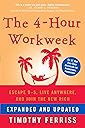
The 4-Hour Workweek by Tim Ferriss is a groundbreaking guide that redefines success by teaching you how to drastically reduce your work hours while increasing income. With over 100 pages of new content, it offers practical strategies to outsource tasks, automate income streams, and design a lifestyle of freedom and adventure. Ranked top in Work-Life Balance and Time Management, this bestseller empowers professionals to escape the rat race and live life on their own terms.


| Dimensions | 5.65 x 1.46 x 8.56 inches |
| Edition | Expanded,Updated |
| Isbn 10 | 0307465357 |
| Isbn 13 | 978-0307465351 |
| Item Weight | 2.31 pounds |
| Language | English |
| Print Length | 448 pages |
| Publication Date | December 15, 2009 |
| Publisher | Harmony |
| Reading Age | 5 years and up |
User
Life changing - if you want to change!
Follow your bliss, and doors will open", Joseph Campbell famously stated. In "The Four Hour Work Week" Tim Ferriss details how he has followed his bliss, and the doors have certainly opened for him. Rather generously, he then tells us how to do the same.I found this book to have much that is very worthwhile. There is an enormous amount of information here, and the reader is free to pick and choose what he/she wants to take or leave. It has changed my life for the better.Some reviewers commented that they found the first half of T4HWW fascinating, but then lost interest. Assuming they are not the very time-deficit folks Ferris talks about, this is probably because the first portion of the book is entertainingly anecdotal, while towards the middle it becomes heavy with lists of information sources - web sites, organisations, reference books and so on. I have personally found this later section to be incredibly useful. That's because I have read and re-read the book with an intention to actually use it. I get the sense that a lot of the critics have never really tried to apply the book's philosophy and specific tips, and quickly returned to re-testing the keypads on their Blackberries.I found many of the listed web sites very useful. I have always wanted to feel the rush of being a colonial master, so I have hired book editors, programmers, virtual assistants, and translators from sites mentioned in the book, and all at very inexpensive prices. If I hadn't read the book, I would not have been aware of that these people even existed; or at the very least, would never have thought that I, with my one-man writing/publishing business, could ever use them.One other philosophical positive, Ferris is scathing of the modern culture of work for work's sake, information overload, and time wasting with gadgets. I fully concur. People are wasting their lives tapping away on mobile phones, Blackberries and lap-tops, just like I am now. There's a whole world out there waiting for us when we unplug from the matrix of the money and machines society. I personally loved the stories Ferris relates about his experience with this.Some people have expressed concerns about the ethical side of this book, and someone compared Timothy Ferriss to a snake oil salesman. I don't share this view, but I understand it. A clear statement of ethics earlier in the book would go a long way - what is right and wrong. In one section detailing how to become an expert, Ferriss says that the idea of expertise is largely a myth. All one really needs to do is read the three leading books in the field and come up with a new angle, then sell it. It may well be true that you could pass yourself off as an expert doing this, but I don't see it as being ethical, because it is a deliberate deception. If you have a brilliant idea, a fair enough; but you shouldn't be telling people what to do or what to buy if you don't have significant experience and knowledge of the subject (go into politics instead, where you will find lots of friends). To be fair though, Ferriss much later states that he will not work with unethical or dishonest people.Nonetheless, I do agree that it is often great - and very freeing - the break the rules; but the golden rule is never do harm to others.Towards the end of T4HWW, Ferris encourages the reader to act upon what really moves us, what makes us happy; and he asks us to be of service to the world. "Take time to find something that calls to you, not just the fist acceptable form of surrogate work" (p. 297), he writes. Once we have decided this (or "permitted" might be a better word), the task is to find out how to help others, the future generations, to do the same. He then implores us to develop a habit of charity.This very closely approximates my own approach to life, as I've outlined in my books. One thing I would suggest though, is developing a set of specific tools to enable you to really follow your inner guidance system. I call it listening to the "Sage". Ferris doesn't address this issue specifically.I suspect T4HWW will work best for western audiences. Besides being a lot fatter and generally more annoying than just about everyone else, studies tend to show that westerners are more individualistic and free-thinking than other cultures. In comparison, Asian cultures have a low tolerance for ambiguity and change (Singapore has the lowest capacity in the world, Hong Kong, where I live, is fifth last - so don't come here trying to change anyone's mind). A central point Ferriss makes is that people develop life and work habits which drain their souls of vitality, spontaneity, and the adventurous spirit of the child (I am in complete agreement). To shift those habits one has to begin to jettison the conformist, conservative and restrictive culture of one's society.It is unfair to criticise Timothy Ferriss for not always having followed the formula outlined in T4HWW. He's a relatively young man in his early 30's who is finding his way through the world with active experimentation, by being adventurous. He is following his Bliss. So give the poor New Rich kid a break. I say, "Well done, Tim. Keep up the good work!" - and it is how to do good (fun, vitlising) work that he is teaching us. And as Ferriss points out on his web site, the title should not be taken too literally. The author doesn't work four hours a week. He merely does what he loves, when he wants to do it, where he wants to do it. That's what I call smart. That's living your Bliss.I give Timothy Ferriss' "The 4 Hour World Week" a 5-star rating. It is potentially life-changing. This is not a book you read just once for inspiration. It is hands on, and chock full of practical tips and know-how. T4HWW will work best for those who have an entrepreneurial and freedom-loving spirit, those who like to think outside the box, and preferably outside the country. It is highly recommended.Marcus T. Anthony, author of "Sage of Synchronicity" and "Integrated Intelligence."
User
A guidebook for escaping the rat race
This book provides a completely new way of looking at your job and potential residual income. It's a guide to help you shift your focus to your residual income which can set you free.Our school system teaches kids that, until they're in their late teens or early 20s, they're going to spend their days in school and college. These habits of showing up and punching the clock (via attendance) are so ingrained by this point in life that few question whether there's another realistic option. And adults go into jobs that perpetuate this cycle of clocking in early in the morning and checking out late in the evening.Timothy Ferris shows that it is indeed possible to escape this rat race. He shows a clear step-by-step plan to do so. And it's there for the taking if you're bold enough to grab the steering wheel of your life.This is quite a comprehensive book discussing everything from your job transition to your travel, and how to set up your company and manage it without taking too much financial risk.He talks about guarding your time, which I believe is one of the most valuable points in the book. He mentions throughout the book strategies to reduce getting caught up in time-wasting activities such as meetings, spending too much time on email at the wrong times, or wasting time on phone calls. He details out his techniques to keep distracting people on the sidelines while he's living his life and doing the things that his heart desires.This book is an instruction manual for escaping the rat race. It's somewhat of a memoir, and a work in progress, of how he's doing it. He has examples throughout the book of how different people have applied his principles and changed their lives. He included a few people who had kids, which is great because a lot of people will use that excuse as a reason to not be able to do what he's doing.He's so open in the book revealing how he takes care of many personal matters in his life, even down to giving his travel checklist and his preferred brand of underwear, relevant for people who want to travel light. He's probably one of the world's most eligible bachelors. That is, if he's willing to let someone get any time on his calendar? I like him. I'd love to run into him in a coffee shop in a foreign country and have some time to just chat with him.He warns that some people really don't know what to do if they aren't working. This is a vital component of the book. He's going full-force at experiencing life in different cultures and getting involved in many different activities that give him new life experiences and perpetuate more new ways of thinking. It's important to know what to do when you are free. Otherwise you just have a vacuum of time which can feel like a boring retirement, where you're available, but all your friends and family are at work.I'm a writer, so I wasn't interested in setting up another company, but he also addresses intellectual property and its intrinsic value. Despite the fact that I don't want to set up a product-based business, many of his strategies are completely applicable and I've begun to apply the techniques right away. Yesterday, I choose to schedule a quick phone call instead of an in-person meeting when the in-person meeting would have been much more time-consuming, for example. He reminded me that I really need to guard my writing time. I certainly can't spin out books on 4 hours a week, but I could if I were willing to farm out the writing activity. He gave me a whole new appreciation for time and what I do each day of my life.If you're not satisfied with your work, or if you're searching for more ways to expand your income and free up your time, this book will be well worth your time. It's urgent for parents to put their kids in a different situation if they don't want them to get caught up in the same rat race that hasn't been fulfilling for them. If they change their own happiness level, it will certainly inspire their family and everyone they know as well.I love the title--The 4-Hour Workweek. At first it seems so absurd, like how could anyone do that? Yet after I read the book, I have tremendous respect this man who is the architect of his own freedom. And he shares his path for others who want to follow.
User
He claims his methods can be applied universally, but I'm not so sure.
I had heard a lot of people rave about this book before I finally picked it up and decided to read it for myself. I'm glad that I read it, but I don't think it was quite as life-changing for me as it was for some of my friends. Don't get me wrong, Ferriss makes some excellent points and he's got some really great tips and tricks in here, I'm just not sure how universal they really are.First of all, when I picked up the book, I didn't expect that he was literally working only four hours a week. I thought he was just talking about ways to spend less time working, but that "The 4-Hour" just sounded good (since he now has a whole line of books with titles that start that way). Nope. Turns out he really only worked four hours every week for a few years. I hate him. Now, with his series of books and everything, that's not true so much, so I hate him less. Now his job is much more similar to what I actually want to do.As I said, Ferriss has some great ways of eliminating clutter and busywork, including things you don't even think of as busywork. I've already started implementing some of these tips at work, and they've come in pretty handy so far. I keep meaning to get rid of a bunch of my physical clutter, but my laziness keeps getting in the way of that. I'll get around to it in the next few weeks.I also appreciated his philosophy of taking mini-retirements throughout life, rather than one long retirement at the end of life. I never did understand the point of retirement, so Ferriss's plan sounds much more appealing to me. As he put it, retirement should be nothing more than a fail-safe in case something happens and you are physically (or mentally) incapable of working. My thoughts exactly.My main problem with his philosophy is that it really only works if you have a product that you are not actually making, but that you can sell. For example, even if I were to quit my day job and write all day every day, I would still be working a lot. Granted, that would make my job a whole lot more portable, but I could never get away with only working four hours per week (at least not until after I sell that bestselling novel, which is such a realistic plan!) In order to do it his way, I would need to have something that is already produced, or that someone else is making (clothes, dietary supplement, etc.) where all I have to do is collect the money that comes in from those sales.Of course, that's a lot harder than it sounds. His ways of eliminating the useless from his life are really quite impressive, and not to be underestimated, but I still wonder if someone in their twenties, who is just starting out in life, can really make his plan work? Some of his success stories include people negotiating working remotely, because they have built up value in their company. Someone who has only been working at their current job for a year or two does not have the kind of leverage necessary to do that.Additionally, he talks about the trick to getting out of your job so you can go have that great once-in-a-lifetime adventure. He mentions considering the worst-case scenario and the fact that worst-case is not necessarily all that bad. One of his points he brings up is that, if he loses his job, he can get another one fairly easily. Well, great for him, but the original book was written before the job market collapsed, followed by this lovely "jobless recovery". I was recently unemployed for eight months and it was not fun. I, too, thought I could get another job within a few months, but that did not turn out to be the case. So, if I go spend all my money on a mini-retirement now, and then come back only to find that I can't get a job for another year, I'll be screwed. Yes, even that worst-case scenario isn't that bad. I could always move back in with my parents, but I'd really rather not. I love them, but they have enough to deal with right now, and the last thing I want to do is burden the people around me because I decided to go globe-trotting for a few months. Timothy Ferriss told me it would be fine!
User
Plus the title made it sound like it belonged on an infomercial and not in my ...
I had seen the uber-orange cover of The 4 Hour Workweek by Tim Ferriss all over: Bookstores (duh!), backseats of cars, airplane terminals, frat houses and more. Yet despite its proliferation into the hands (and Kindles) of millions of people all over the world, and its catchy headline, I had yet to read it. In fact, I had no inclination to read it whatsoever.Quite frankly, I had no idea what it was about. Plus the title made it sound like it belonged on an infomercial and not in my book collection.Things changed when I started listening to the Tim Ferriss Show podcast just a few weeks ago. The podcast is fantastic and I haven’t been able to stop listening to it; I highly recommend it.From what I’ve noticed, if I enjoy reading someone’s articles or website, I generally enjoy their podcasts (the same holds true vice-versa). So when I saw that it was available for only $1.99 on Kindle I didn’t hesitate one bit.Can I really only work 4 hours?That’s what everyone wants to know. For the most part, no it is not feasible for most. In fact, Tim repeats in his podcasts and presumably other mediums that The 4 Hour Workweek is not to be taken literally. Rather, it drives the point home of what the book is really about: Optimizing your time, eliminating distractions, and finding passive streams of income to allow you to do minimal work while having maximum freedom.It’s a solid concept. In fact, there really is little basis for the traditional 9-5 schedule:How is it possible that all the people in the world need exactly 8 hours to accomplish their work? It isn’t. 9– 5 is arbitrary.”The idea behind this book is to essentially turn the idea of working hard on its head:Being busy is a form of laziness— lazy thinking and indiscriminate action. Being overwhelmed is often as unproductive as doing nothing, and is far more unpleasant. Being selective— doing less— is the path of the productive. Focus on the important few and ignore the rest.”Many books of this nature are simply filled with fluff, woo-woo, and other law of attraction platitudes, but The 4 Hour Workweek is absolutely filled to the brim with productivity tips. This makes the book worth the price of admission alone (that goes for the full price hardcover too!)There are a few concepts that he really stresses throughout the book and that will allow you to eliminate and optimize.The first of which is the 80/20 principle, also known as the Pareto Principle. This principle states that 80% of results (profit, happiness etc.) comes from 20% of output. Once Tim discovered this principle, he applied it to his nutritional supplement company so that he could focus on the select few clients that brought him the bulk of his income, and to eliminate the pesky customers who were nothing but trouble.Sure, it cost him some income, but it allowed him to reduce his stress exponentially and freed up a plethora of time.A second major principle is Parkinson’s law, which states:… that a task will swell in (perceived) importance and complexity in relation to the time allotted for its completion. It is the magic of the imminent deadline. If I give you 24 hours to complete a project, the time pressure forces you to focus on execution, and you have no choice but to do only the bare essentials. If I give you a week to complete the same task, it’s six days of making a mountain out of a molehill.”The best approach to Parkinson’s Law is to1. Limit tasks to the important to shorten work time (80/ 20).2. Shorten work time to limit tasks to the important (Parkinson’s Law). The best solution is to use both together: Identify the few critical tasks that contribute most to income and schedule them with very short and clear deadlines.”There are a plethora of other tidbits of wisdom throughout, such as:Check e-mail twice per day, once at 12: 00 noon or just prior to lunch, and again at 4: 00 P.M.At least three times per day at scheduled times [ask] the following question: Am I being productive or just active?More is not better, and stopping something is often 10 times better than finishing it.Getting Your Own Personal AssistantOne of the most engaging and laughable topics in the book was the chapter on virtual assistants (VA). I say laughable because it’s actually incredibly feasible to have a 3rd world virtual assistant, and I couldn’t help myself from laughing at the idea of having a team of Indians heeding my every beck and call.Consider this:If you spend your time, worth $ 20-25 per hour, doing something that someone else will do for $ 10 per hour…”Makes sense. Plus there are other good reasons to consider getting a VA:Getting a remote personal assistant is a huge departure point and marks the moment that you learn how to give orders and be commander instead of the commanded. It is small-scale training wheels for the most critical of NR skills: remote management and communication.”The Original Internet EntrepeneurWhen I began to read Meditations by Marcus Aurelius, I noticed something: I had read this before. But it wasn’t because Aurelius was plagiarizing content 2000 years in the future, rather it was the inverse.I’ve noticed this phenomena with The 4 Hour Workweek in that much of the content seemed all too familiar with the Digital Nomad and lifestyle design communities and advice of today. But seeing as it was written originally in 2007, one could say it was the first of its kind.In fact, the proliferation of internet entrepreneurs are likely a result of this book.On that note, look where Tim Ferris is today. He’s not lounging on a beach in Guatemala making money off his supplements. Rather, he’s busting his ass in Silicon Valley helping startups turn into massive success stories.This is no fault of his; I just think many readers of this book and these internet entrepreneurs lose sight of this. They get caught in finding ‘passive income’ and settling for 1-3K a month; just enough to make do in a foreign country of their choice.This is what I wanted for so long, but now this doesn’t seem like enough. I’d much rather be doing what Tim is doing now as opposed to what he recommend in his book.Don’t Follow This Book Like the GospelAgain, the 4 Hour Workweek isn’t designed to be taken literally. This is a pattern throughout the book.In fact, much of the information regarding internet marketing and asking a boss for a remote work agreement is completely useless for me and may be for you. Yet, overall I was really impressed with the book. There was plenty of solid, actionable advice throughout. In fact, I’ve already marked this book down as one I will have to read again to internalize the concepts that stood out to me.http://masculinebooks.com/2015/05/26/the-4-hour-workweek-by-tim-ferriss/
User
Transform Your Life and Work: Achieve More by Doing Less with 'The 4-Hour Workweek
I just had to share my thoughts on "The 4-Hour Workweek" by Tim Ferriss, a book that has been a game-changer for me, both professionally and personally. As someone who's deeply involved in helping others unlock their potential and transform their lives, I can't stress enough how valuable this book has been.Why This Book is a Game-ChangerEmpowering Lifestyle Design:Ferriss’s DEAL framework (Define, Eliminate, Automate, Liberate) is a clear roadmap for creating a life that prioritizes meaningful experiences over conventional work routines. It aligns perfectly with my approach to transformation, emphasizing the importance of living a balanced and purposeful life.Efficiency and Productivity:The book's emphasis on the Pareto Principle (80/20 rule) and Parkinson's Law has revolutionized how I manage both my work and personal projects. By focusing on the critical 20% of activities that yield 80% of the results, I've been able to streamline my efforts, achieving more in less time. This is something I actively teach my clients to help them eliminate unnecessary tasks and focus on what truly matters.Overcoming Fear and Taking Action:Ferriss's insights on overcoming fear and taking bold steps are incredibly empowering. His framework for evaluating worst-case scenarios and preparing for them has helped me and those I mentor to move past paralyzing fears and take decisive action. This approach is crucial in encouraging a mindset of resilience and proactive problem-solving.Selective Ignorance and Focus:The idea of a low-information diet has been revolutionary for me. By cutting out unnecessary information and focusing only on what is immediate and actionable, I’ve been able to maintain a clearer mind and better focus on my creative and entrepreneurial endeavors. In today’s information-overloaded society, this concept is a lifesaver.Practical Application and Sharing:Recognizing the transformative potential of this book, I’ve bought multiple copies to give to struggling friends and fellow entrepreneurs. Ferriss’s strategies are not just practical but also inspirational, offering a new perspective on work and life. By sharing this book, I aim to empower others to break free from the traditional 9-5 grind and create lives filled with purpose and freedom.In summary, "The 4-Hour Workweek" is more than just a guide to working less; it’s a manifesto for living more intentionally and efficiently. The principles in this book have significantly influenced my work and personal philosophy, making it a vital tool in my toolkit for transformation. I wholeheartedly recommend it to anyone looking to redefine their relationship with work and achieve a more fulfilling, balanced life.
User
Outsourced content - practice what he preaches but at price.
First of all, the book just arrived today and as per my verified purchase, you can see I've actually taken the time to read THIS version rather than only the first version like a couple of the early reviewers. Also, be sure to check out the number of reviews from some of the other reviewers...one review history...of this book only? I suspect that is a friend of the author. To that effect, it was a disappointment for those of us who actually purchased/read the first book and were expecting a lot of new information given the tough economy.Long time four hour workweek fans are likely to be disappointed...looks like Ferris outsourced this entire book to someone who collected some interesting blog posts/testimonials and then corrected a few spelling errors in the last book. Readers deserve so much more! Seriously, although he is practicing what he preaches, isn't everyone sick and tired of being suckered by greedy people? I know I am...from bankers to dream peddlers, how about giving us our money's worth rather than simply adding the testimonials from readers plus a few added bits of inspiration.This does indeed have over 100 pages of new content that makes the book much more substantial. The core of the book remains nearly the same as the first book...the additional 100 pages primarily consist of examples from others and testimonials taken from the blog. While these are certainly great additions - they don't change or update the core content. Former readers have little/nothing new to go on at a time when there is a need for even more (not less) REAL information. Not feel-good fluff.New readers will absolutely want to purchase this version rather than the first version since it is packed with great examples, testimonials and other tidbits but prior readers will find very little additional value from reading this version. Bottom line - buy this book if you are new to his work. Former fans of the four hour work week should save their money as they will find little/nothing new. A major let-down to long time fans and blatant laziness that is an insulting cash grab.For former readers that insist on ignoring this review and buying the new version anyway...you were warned. Like another reviewer said, "life is short"....why waste your time and money re-reading the same material twice. Want a life changing book? Go for one that has stood the test of time...Your Money or Your Life. Great stuff and no...I have no affiliation with those authors.
User
Learn to live life now
I am a first time reviewer. I don't know Tim. I only know his book. That there are so many first time reviewers speaks volumes about the book. That said, here is my review:It took a kid to get the grown-ups to acknowledge what everyone knew to be true: the emperor was naked. Tim Ferriss is a kid relative to most other "self-help" authors but, like the young boy in the fable, his simple, uncluttered collection of "information we already know" more explicitly and successfully states the truth: our idea of achievement that requires a slavish obsession with working ourselves into the ground is a naked religion. Success is joy.Few books have the potential to inspire passion and fuel personal revolutions. The 4-Hour Workweek is one of them. This book speaks the common yearning to be liberated from the punishing work habits that our society has convinced us are compulsory for success. In simple, often humorous, terms, Tim Ferriss tells us how most of us lie to ourselves about why and how we work and shows us how we can become free.The modern age promised to bring freedom to humanity. Automation would liberate us from the drudgery of many common tasks, allowing us to complete our work with lightening speed, reserving the rest of our time for leisure. Like millionaires who can afford servants to do the drudgery, the common person would be able to forget the mundane and engage in the profound, to travel, to explore, and most importantly, to be free of worry. Unfortunately, we humans forgot about freedom and became slaves to our machines. Machines increased productivity and the availability of things. We reacted by convincing ourselves that we had to have them all to be satisfied and so became slaves to the jobs we believed necessary to obtain those things. More recently, email and cell phones, which were intended to increase productivity and communication, did so by making us instantly accessible and required us to be instantly responsive at any time of the day or night. Cable television and the Internet also increased communications and the flow of information, but also resulted in an information bombardment that left us catatonic, unable to disengage, yet unable to absorb it all. The result? At the end of our working lives - many times not by our own choice but because of downsizing and outsourcing -- exhausted and demoralized, we cannot enjoy the delayed gratification that has been our beacon of light, our holy grail, for so many years.Tim Ferris has the audacity to set the whole paradigm on fire in order to illuminate its true nature. Tim questions our assumptions about what progress is and what progress has done for us by highlighting the terrific costs we have imposed on ourselves. With gleeful delight Tim opens our eyes to the fact that we have become the cyborgs, less human rather than more. In a clear, step-by-step fashion, he presents elegant concepts and applies them to life in practical ways that have profound results. He reminds us that "the opposite of happiness is not sadness but boredom" and employs Pareto's 80/20 principle to demonstrate how we can identify those aspects of our lives that hold us back from being happy. He urges us to understand that life is not about the acquisition of things for later enjoyment, life is about happiness, fulfillment in the present, rather than in some un-promised future. Unfettered by useless jargon and overly academic presentation, Tim demonstrates how we can return to sanity and achieve happiness by finally becoming masters over the technology that was supposed to free us. He challenges us to give ourselves permission to quit the rat race and rejoin the human race. These ideas are not entirely new, but Tim's particular expression of them is like sparkling water to the parched souls of millions who now labor incessantly to achieve success yet yearn to quench their thirst for freedom. You don't have to be a millionaire to live a millionaire lifestyle, Tim says. Do you have a dream? Live it now.
User
Ignore the critics and decide for yourself - I'm glad I did.
I hesitated a long time before buying this book (first got the audio version on Audible.com, then downloaded the Kindle version for a written reference version for all the resources he lists), and largely because of the many negative reviews that bash Tim Ferriss's ethics, yada yada yada. WHATEVER! (As my teen daughter likes to say). Some friends/colleagues/mentors, whom I genuinely respect, told me otherwise, and that even if I got 1-2 ideas out of it, it would be worth it. I am so glad I listened! Admittedly, I still have a long way to go in implementing these ideas - heck, there are so many, I haven't even been able to decide which ones most apply to me.So you know who I am: I am a small businessman/dentist, photographer, website designer and optimizer (out of financial necessity at first, then because I enjoyed it), and blogger - on top of being a husband and father of 2 girls. So yes, I am an EXTREMELY busy man, and in recent years, the busier I got, the more frustrated I got at not being able to do more. I felt like I'd finally run into the wall of "not enough time in each day." I'd already started reading/implementing David Allen's "Getting Things Done" systems, and that is helping, but it didn't make as much of a difference as I'd hoped, even though it did help me organize my desk at home and work and keep it cleaner than ever.As a dentist, I will never be able to have a 4-hour workweek, plain and simple. You just can't do that much dentistry in only 4 hours. However, most people never have a clue how much administrative work goes into running a small business, and that often seems to take more time than taking care of patients, which is what I really love and how I actually make money; doing paperwork, keeping up with government regulations, dealing with insurance companies, managing employees, email, mail.......it eats up time like crazy.Since I also manage my own websites (for photography and dentistry), with the increasing importance of Social Media, all the changes Google is making, etc. is is becoming important to manage my total "webutation," but it takes more and more time. How do I get it? And adding content on a regular basis? OMG - where am I supposed to find the time for research, writing, editing, link-building, Adwords, yikes!As I said, I haven't gotten a lot implemented yet, but after running a small business for 12 years, I've learned to recognize a quality resource for ideas when I see it, and Tim Ferriss has collected a HUGE number of resources in this book, with ideas on how to make it possible to focus on the IMPORTANT stuff and make it easy to delegate everything else. I am actually EXCITED about finding ways to implement as many of these ideas as possible, leaving me more time to enjoy my family, get to traveling and photographing more, and no longer just living to work long enough to retire "one day."JUST GET THE BOOK. Have an open mind when you read it. Recognize that it may not all be right for you, but you WILL find ideas to make your life easier, better, more productive, more profitable, and more enjoyable.UPDATE:I've recently come back to this book after a hiatus of several months, as I'm getting REALLY tired of working so much. One daughter has a year left before leaving for college, and the other is about to start kindergarden, and my wife and I want more time as a family, more time on vacation, more time AWAY from work, whereas it seems we are spending more and more time at work - NOT the goal. I just want to reiterate for those reading all the negative reviews - DON'T LISTEN. Tim offers real, systematic, solid, and ETHICAL ways to do better, and I am committed to putting more of them to work now. I'm excited about this book and what we'll be doing to LIVE more, not just work more.
User
Good
Good
User
Good book
Would really recommend this book, one of those you can read multiple times over your life
User
Good reading
Good book
User
Un livre qui fait réfléchir positivement !
J'ai hésité longtemps avant de lire ce livre, pensant qu'il n'allait pas m'aider à me motiver au travail. Et bien, au contraire, voici un ouvrage qui m'a redonné l'envie de prendre en main ma vie professionnelle. L'anglais est très facile à lire, avec quelques termes techniques bien évidemment mais se lit essentiellement comme une lettre de conseil à un ami de l'auteur (pas un ouvrage théorique). La version française est certainement très bien aussi. Du coup je l'ai dévoré contrairement aux livres d'organisation personnelle que j'ai pu lire avant. Et si, comme beaucoup d'entre nous, nous ne nous destinons pas à appliquer les méthodes et astuces à 100%, ce livre reste parfaitement utile. Rien que les clefs de réflexion sur la façon d'envisager son rapport au travail valent largement le prix et le temps passé à lire The 4 hour workweek. J'ai personnellement mis en place un certain nombres de conseils avec succès pour me dégager du temps et surtout de la disponibilité d'esprit au quotidien, par exemple en ne regardant mes mails qu'une fois par jour maximum et en limitant strictement la quantité d'informations auxquelles je m'expose.Un livre chaudement recommandé pour tous.
User
👍
The book is absolute 10 but I wouldn't recommend it as the first book to read it's too long for the first book. It will make you bored and you won't read other books 📚
Trustpilot
3 days ago
1 day ago