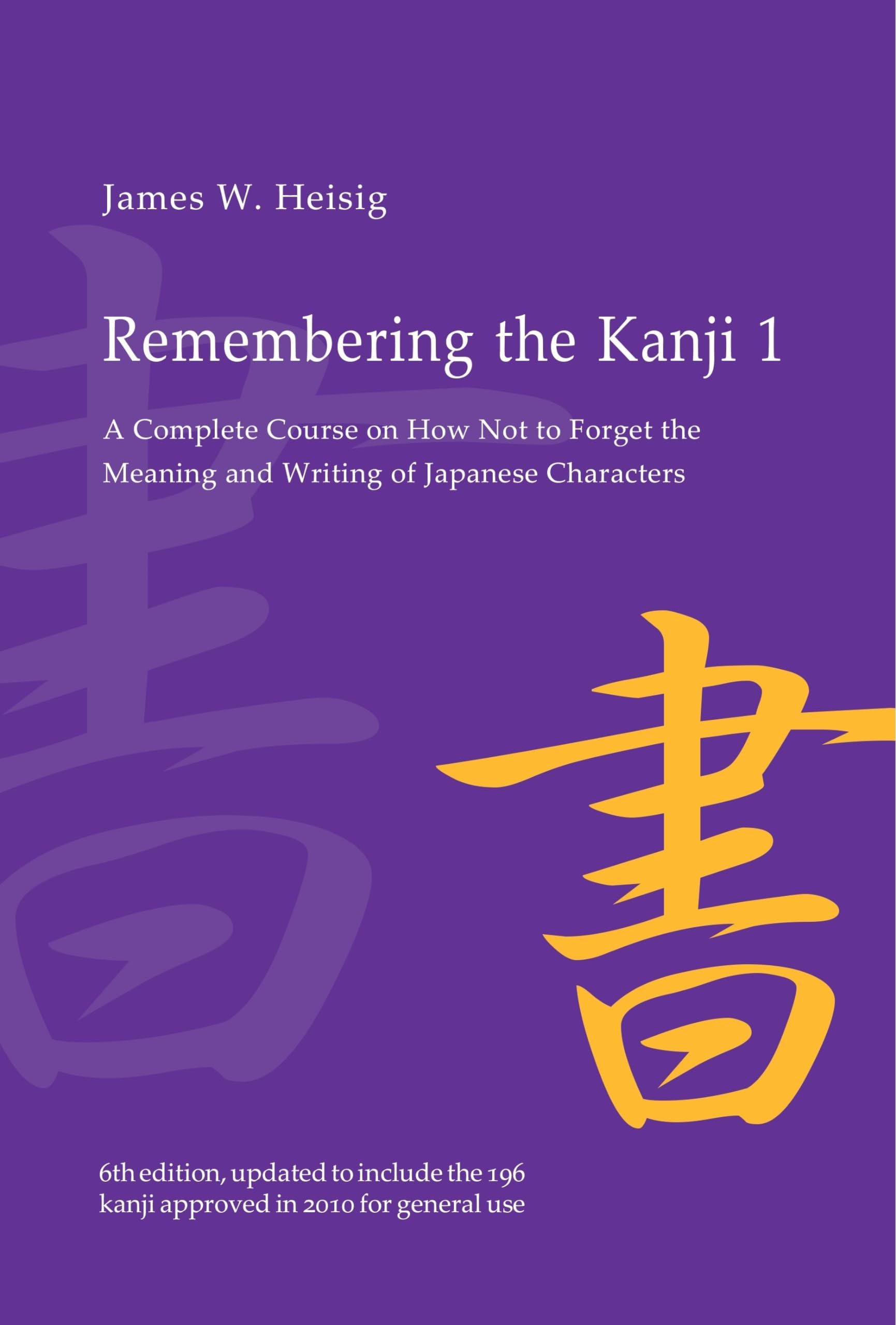
Remembering the Kanji 1: A Complete Course on How Not to Forget the Meaning and Writing of Japanese Characters
Product ID: 51445080
Desertcart purchases this item on your behalf and handles shipping, customs, and support to OMAN.
The aim of this book is to provide the student of Japanese with a simple method for correlating the writing and the meaning of Japanese characters in such a way as to make them both easy to remember. It is intended not only for the beginner, but also for the more advanced student looking for some relief from the constant frustration of forgetting how to write the kanji, or for a way to systematize what he or she already knows. The author begins with writing the kanji because―contrary to first impressions―it is in fact simpler than learning how to the pronounce them. By ordering the kanji according to their component parts or “primitive elements,” and then assigning each of these parts a distinct meaning with its own distinct image, the student is led to harness the powers of “imaginative memory” to learn the various combinations that make up the kanji. In addition, each kanji is given its own key word to represent the meaning, or one of the principal meanings, of that character. These key words provide the setting for a particular kanji’s “story,” whose protagonists are the primitive elements. In this way, one is able to complete in a few short months a task that would otherwise take years. Armed with the same skills as Chinese or Korean students, who know the meaning and writing of the kanji but not their Japanese pronunciations, one is then in a much better position to learn the readings (which are treated in a separate volume). Remembering the Kanji has helped tens of thousands of students advance towards literacy at their own pace, and to acquire a facility that traditional methods have long since given up on as all but impossible for those not raised with the kanji from childhood. The 6th edition has been updated to include the 196 new kanji approved by the government in 2010 as “general-use” kanji. Review: Bought as a gift for my son who lives in Japan. Love the book. - * **Clever Learning Method:** Heisig's mnemonic-based storytelling approach is an absolute game-changer. Instead of mindlessly rote-memorizing strokes, it helps build a strong framework for understanding the meanings and writing of kanji that actually sticks. * **The Perfect Gift:** Whether someone is living abroad, studying independently, or prepping for the JLPT, this is widely considered the gold-standard resource for anyone serious about conquering the Japanese writing system. * **Clear & Structured:** The step-by-step progression makes an intimidating subject feel genuinely manageable and rewarding to work through day by day. **Verdict:** An invaluable companion for anyone learning Japanese. Highly recommended for students, expats, and language enthusiasts alike! Review: Kanji drawing and meaning - The mnemonics are a little cringeworthy at times (lol), but they're good starter ideas if you can think of a better one. The book itself is well written and well paced. This will show you a logical list of the 2000+ kanji: both how to draw them in their correct sequential stroke order and what they actually mean as a pictograph. What it doesn't mention, and I have paired this up nicely with this: (https://www.desertcart.co.uk/dp/4805311703), is the on/kunyomi pronunciations and some example words/phrases that you might see each kanji in. For example, this book will show you how to draw the kanji for 'moon'/'flesh'/'body part' but it won't then tell you that it can be pronounced "GATSU"/"GETSU"/"tsuki" nor that you might see it written in ICHIGATSU (meaning January = One + moon). Conversely, the second book doesn't include what this book shows. Together, the two books cover everything you'd want unless hunting for kanji outside the standard list, though the kanji are not listed in the same order of course, so there's a bit of page flicking. I would advise sticking with this book's order, as it has been specially written to facilitate ease of learning stroke order patterns rather than purely by level of difficulty of concept/stroke complexity. If you can find the kanji you're looking for in this book by how to draw it, or use this book to work out how it's drawn indirectly, it's then incredibly easy to count up the number of total brush strokes (and the general direction it's drawn in) and then look it up in a kanji dictionary or in the index. It's going to take a LOOOOOONG time to learn these, but every journey starts with a single step, right?
| Best Sellers Rank | 23,617 in Books ( See Top 100 in Books ) 547 in Words, Language & Grammar (Books) |
| Customer Reviews | 4.6 out of 5 stars 2,135 Reviews |
W**S
Bought as a gift for my son who lives in Japan. Love the book.
* **Clever Learning Method:** Heisig's mnemonic-based storytelling approach is an absolute game-changer. Instead of mindlessly rote-memorizing strokes, it helps build a strong framework for understanding the meanings and writing of kanji that actually sticks. * **The Perfect Gift:** Whether someone is living abroad, studying independently, or prepping for the JLPT, this is widely considered the gold-standard resource for anyone serious about conquering the Japanese writing system. * **Clear & Structured:** The step-by-step progression makes an intimidating subject feel genuinely manageable and rewarding to work through day by day. **Verdict:** An invaluable companion for anyone learning Japanese. Highly recommended for students, expats, and language enthusiasts alike!
T**R
Kanji drawing and meaning
The mnemonics are a little cringeworthy at times (lol), but they're good starter ideas if you can think of a better one. The book itself is well written and well paced. This will show you a logical list of the 2000+ kanji: both how to draw them in their correct sequential stroke order and what they actually mean as a pictograph. What it doesn't mention, and I have paired this up nicely with this: (https://www.amazon.co.uk/dp/4805311703), is the on/kunyomi pronunciations and some example words/phrases that you might see each kanji in. For example, this book will show you how to draw the kanji for 'moon'/'flesh'/'body part' but it won't then tell you that it can be pronounced "GATSU"/"GETSU"/"tsuki" nor that you might see it written in ICHIGATSU (meaning January = One + moon). Conversely, the second book doesn't include what this book shows. Together, the two books cover everything you'd want unless hunting for kanji outside the standard list, though the kanji are not listed in the same order of course, so there's a bit of page flicking. I would advise sticking with this book's order, as it has been specially written to facilitate ease of learning stroke order patterns rather than purely by level of difficulty of concept/stroke complexity. If you can find the kanji you're looking for in this book by how to draw it, or use this book to work out how it's drawn indirectly, it's then incredibly easy to count up the number of total brush strokes (and the general direction it's drawn in) and then look it up in a kanji dictionary or in the index. It's going to take a LOOOOOONG time to learn these, but every journey starts with a single step, right?
B**A
The best thing ever, it's F amazing
The best thing ever. Let me tell you. If you are beginner in Japanese language, if you want to learn quickly you will use this book. There are people that do not like Heisig method, BUT.. that is because they do not understand what this book gives you. You will learn 2200 characters. You will remember them and have mnemonic meaning. People say "how does this help you with Japanese?" and "what is the point to know how to write character if you don't know the real meaning in context". Hear me. After you know 2200 kanjis and their mnemonic meaning, it will be so easy for you to go into grammar and vocabulary. Why? Because you will store new words in your head so quickly, because you know the kanjis already. It's so so so simple. Basically this method shortens the whole procedure of learning Japanese by a lot. When you were learning latin alphabet, you had to remember A, B, C, D to make a word. It is the same with kanjis. When you know them it's easy to remember the word. So trust me, and go through this book, once you remember the kanjis, Japanese grammar and vocabulary is peace of cake.
C**S
I never thought I'd be able to write so many kanji!
I am a Japanese speaker - I studied at uni, went to live in Japan, worked at a major games company as a translator and now at another huge company where I use Japanese every day. And yet I have always struggled with writing kanji. No matter what I did, I couldn't get them to stick in my brain when I wanted to write them by hand. Until now. A large number of my Japanese-speaking friends were using this book and so I bought it to join the bandwagon. I'm probably only 1/10 into the book but I can't believe the amount of kanji I'm able to write just like that, following this method. I use a website in conjunction with it, which has the kanji in the same order as the book and also has some alternative stories just in case you aren't happy with Heisig's ones (as I often am) and I highly recommend you use the website as well. A great book for beginners as you will learn what those "little picture things" mean, and great for people like me with a high level of Japanese, who can start to look at kanji in a much deeper way to try and remember how to write them.
M**Y
A quick and unique way to remember all the kanji
A great and unique way to learn the kanji. Don't expect to know how to pronounce all the kanji at the end, but that isn't what the book is designed to do. Instead you will go from seeing squiggles and funny symbols to being able to recognise each kanji using the primitives that make them up. I struggle with learning purely by repetition, but the method in this book can have you learning 10 plus kanji a day with minimal effort. Once you have this mental kanji dictionary, I find remembering the readings 10 times easier. It seems as though all the negative reviewers are expecting to learn the language from this one book. You will not learn a single Japanese word from this book, nor will you improve your speaking skills even a tiny bit. This is a supplement to learning Japanese, and should be used alongside something like genki or minna no nihongo.
M**E
It works, if used and understood correctly.
Excellent if used correctly. The good: If you follow the book page by page you will learn how to recognise all of the kanji. The bad: You will not learn the readings BUT you will have sowed the seeds of recognition and you can then apply layers onto this as you learn further instead of just trying to over load from the start and learn everything in one go only to forget most of it soon afterwards. The embarrassing: This book gets slated by people who have either never used it, never completed it, don't appreciate it for what it does do instead of what it does not do or worst of all, if they are an author of a rival book just looking to diss it in a you tube video because they don't like it. The bottom line is this, many many people swear by this method, if you go into it looking to be able to recognise all of the kanji so as to later on be able to attach the readings to them as needed then you wont be disappointed. Walk before you run = win.
L**.
Good place to start in learning Japanese
Absolutely brilliant method of learning the kanji. Of course you'll have to learn them in actual words, but this book gives you a solid framework to easily build from. Use in association with kanji.koohiidotcom where you can share mnemonics and use their SRS flashcards, as Heisig only provides mnemonics for the first part of the book. You can then adapt the techniques you learn here to create mnemonics for Japanese vocab, allowing you to pick up the language a lot faster. Took me about 5 months to complete. It's a bit dated and un-PC in places, but you can ignore any stories that are distasteful and create your own. It's worth reading alternative keywords on koohii as people have come up with better ones in places. I think it's worth getting a handle on the kanji before you start on the vocab as the kanji will not be an obstacle and you'll be building on what you already know.
P**N
Highly recommend, but be patient with this system
This book and system are great if you understand the purpose. This one book won't teach you how to pronounce or combine full symbols, that is book 2. Instead this focusses on the building blocks and how to put them together and give them meaning. As an adult learning this language it's incredibly important to make up for lost time by creating memories for each symbol rather than writing them repeatedly. Also, I'd recommend book 2, and the app Kanji Study which does incorporate the lessons from this. The Kindle version is fine once you LEARN THE STROKE ORDER from the physical book, therefore a decent revision tool if you can't pack the actual book on a trip.
イ**ン
Helpful Kanji Memorization Strategy
Solid kanji book that helps with memorization, if you have the money then I would recommend it.
D**P
as described
Great Seller, A+++++ Thank you.
S**R
Melhor método autodidático!!!
Esse livro possui a chave para o aprendizado de kanji. O método utilizado pelo autor de memória imaginativa realmente funciona, comigo esta indo muito bem e continuo lendo incansávelmente. Ao invés de memorizar uma definição escrita para cada kanji você deve imaginar os cenários dado no livro e associá-lo com a definição do kanji, tal cenário ficará gravado em sua memória, e junto do cenário, o kanji. Esse método é a melhor definição da frase "Uma imagem vale mais que mil palavras". Recomendo não só esse livro, mas a série toda com os volumes 2 e 3 de "Remembering the kanji" e o livro "Remembering the kana" do mesmo autor que se faz INDISPENSÁVEL, pois você precisa ler tal livro antes de seguir com o aprendizado do volume 2 de "Remembering the kanji". Para que possa usar de 100% do potencial desse método é altamente aconselhável o uso do aplicativo de flashcards do mesmo nome do livro que serve para vc rever os caracteres já aprendidos a qualquer hora para evitar que caiam no esquecimento. Boa sorte a todos que queiram aprender o alfabeto Japonês com esse método, é o melhor!!!
J**S
A very logical approach to learning kanji
This book is awesome. It presents kanji in a logical manner, allowing you to learn the kanji that make up other kanji first, which makes it much easier to learn and remember more complex kanji. It focuses on using what Heisig calls "imaginative memory" by coming up with simple stories to go with each kanji based on the primitives that make it up. For instance, the kanji for jealous is made up of the kanji for woman and stone, and Heisig suggests that you remember it based on the idea that a woman is jealous of the ring with a large stone on another woman's finger. Another example would be the kanji for bribe, which is made up of the kanji for money and possess, which you can then remember based on the idea that someone who has been bribed has been possessed by money or that you've possessed them using money. I think that my favorite is the one for elder brother, which is made up of the kanji for mouth and human feet (and used in other kanji to represent teenager); a mouth with feet is very obviously connected with a teenager or elder brother who's a teenager. The keywords that he uses for each kanji are often an oversimplification, I think, but it works well for learning them. This approach works better for some kanji than others (e.g. petition is made up of the kanji for meadow and head, and Heisig comes up with some story about you petitioning the Wizard of Oz's head in a meadow, which is downright weird, but it's not like it's symbol combination that has an obvious connection with the meaning of the resulting kanji). So, it's by no means perfect, but it's _way_ better than learning each of the kanji individually based on the frequency that they're used without taking into account which kanji are used to build other kanji. You get a very organized approach to constructing each of the kanji and making them easy to remember (or at least easier to remember) rather than trying to learn how to draw each of them without taking each of the others into account. Now, that being said, I think that Heisig puts too much store in imaginative memory and thinks that you shouldn't be practicing drawing each kanji over and over to help remember it. I have to argue that using multiple memory mechanisms is going to improve your chances of remembering something, and writing stuff down definitely helps. So, I think that practicing each character several times rather than just memorizing which kanji make it up and writing it maybe once (as Heisig seems to think you should do) is a worse approach. But the tools that he's giving you by organizing the kanji based on which other kanji make them up as well as giving you ways to remember them based on those pieces rather than simply what the kanji looks like as a whole are an _enormous_ help and makes learning more complex kanji far easier. So, while I don't agree with everything that he says, I think that his overall approach is very good. And since I'm an engineer, how logical and organized his system is is _very_ appealing to me. Now, a serious downside to all of this is that you're learning the kanji in a very different order than anything else is going to use. So, you're not going to get much help from elsewhere (and Heisig actually says that he thinks that learning the kanji using his method combines very badly with more traditional methods such that you shouldn't use this book if you're taking classes or using other textbooks at the same time). It also only covers the kanji themselves and not pronunciation or grammar or anything like that - which I don't think is a bad thing (Heisig points out that it makes it so that when you do learn those things, you're in a position closer to that which a Chinese person would be in, since they'd be familiar with the kanji and their rough meanings but not how they related to Japanese), but the other volumes are supposed to go into that stuff (I haven't gotten to them yet, so I can't comment on them in detail). But even if you were to switch to other textbooks after having learn the kanji covered in volume 1 of this series, you'd be able to go through them that much faster, because you'd recognize the characters and know how to write them, which is obviously a _huge_ barrier to learning Japanese. On a last note, I'd highly recommend that you pick up the mobile app that goes with this (at the moment, it's under $2). In addition to listing all of the characters in the order that they're in the book, giving you a handy referencee, it shows you how to draw them with an animation (the book shows you which order to draw each stroke but not the direction of the stroke), and it can be used for flash cards, which is fantastic (even allowing you to pick which kanji are in a study list rather than just having a preset set of flashcards). It does seem to be somewhat buggy at the moment, but it works well enough to be well worth it IMHO.
K**N
Pinch of Salt
For readers who learnt chinese langauage, the book doesnt really make sense. But probably good for western readers who are learning oriental characters for the first time.
Trustpilot
1 month ago
3 days ago