Desertcart purchases this item on your behalf and handles shipping, customs, and support to OMAN.
☀️ Power your adventures with the solar panel that’s as ready as you are!
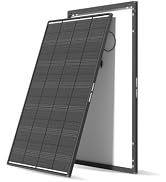
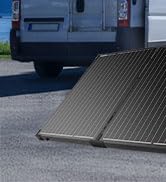
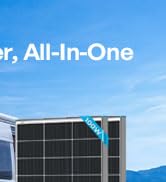
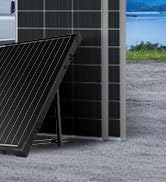
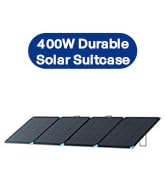
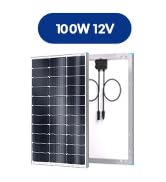
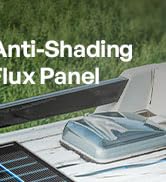
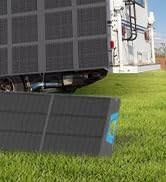
The Renogy 400W Portable Solar Panel combines premium materials like fiberglass and ETFE coating with high-efficiency 23% monocrystalline cells to deliver reliable, weatherproof power. Weighing just 30.2 lbs and folding down to a compact 33.7"x27.95", it’s designed for quick 1-minute setup with IP67 waterproof connectors, making it ideal for RVs, camping, and off-grid use. Backed by a 3-year warranty, it ensures durable, uninterrupted energy even in harsh conditions or partial shading.


| AC Adapter Current | 12.1 A |
| ASIN | B0D4LMVKYD |
| Amperage Capacity | 12.1 A |
| Best Sellers Rank | #30,978 in Patio, Lawn & Garden ( See Top 100 in Patio, Lawn & Garden ) #138 in Solar Panels |
| Brand | Renogy |
| Brand Name | Renogy |
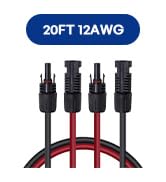
| Connector Type | IP68 solar connectors |
| Customer Reviews | 4.0 out of 5 stars 235 Reviews |
| Efficiency | 23% High Efficiency |
| Folded Size | 27.9*33.7*3.2in |
| Included Components | 1x solar panel |
| Item Dimensions L x W x H | 27.9"L x 3.2"W x 33.7"H |
| Item Highlight | Foldable Suitcase for Power Stations, Plug and Play with Sturdy Kickstand, IP67 Waterproof for RV Camping Off-Grid Blackouts |
| Item Type Name | Solar Suitcase |
| Manufacturer | Renogy |
| Manufacturer Part Number | RSP400LSC |
| Manufacturer Warranty Description | 3-year material and workmanship warranty |
| Material | Fiberglass |
| Material Type | Fiberglass |
| Maximum Power | 400 watts |
| Maximum Voltage | 67.5 volts_of_direct_current |
| Model Number | RSP400LSC |
| Number of Items | 1 |
| Product Dimensions | 27.9"L x 3.2"W x 33.7"H |
| Special Features | 23% High Efficiency, Foldable, Lightweight, Portable, with a carry case for easy transport |
| UPC | 840315218680 |
W**R
Great panel even in less than ideal conditions
After several camping trips and a few genuinely sunny days, I’ve finally been able to properly test this panel instead of just pointing it hopefully at the Seattle sky and negotiating with the weather. Back in December I was already impressed to get a bit over 200 watts in partial overcast conditions in Seattle. Now that I’ve had it out in real sun, I’m even more impressed. In good conditions I’ve regularly been seeing over 300 watts going into my power station, and on one particularly clear sunny day I managed to hit 395 watts, which is remarkably close to the rated output for a portable panel in real-world conditions. That’s more than enough to keep my camping setup comfortably powered without constantly checking battery percentages like a day trader watching the stock market. The overall build quality is excellent. The panels feel rigid and well assembled, the hinges inspire confidence, and the kickstands are much sturdier than I expected from a folding portable setup. Even the handles and latches feel substantial instead of “please don’t break after one season” plastic. Setup is also extremely easy. Unfold it, angle it toward the sun, connect the cables, and you’re done. The integrated stands deploy quickly and make it simple to reposition throughout the day. I especially appreciate that the cable management is clean and accessible instead of buried somewhere awkward. One unexpectedly useful feature of the folding design is that the gaps between the panels create a thin line of sunlight on the ground behind the array. I discovered you can use that line as a surprisingly accurate solar alignment indicator. As the sun moves, the line shifts with it. I found that if I wait until the line drifts roughly 10 degrees off center, then rotate the panel until it’s about 10 degrees to the opposite side, I can keep the panel very close to the ideal angle for around 90 minutes at a time without constantly adjusting it. Like all solar panels, tree cover is still the biggest challenge. Even a relatively small branch high overhead can noticeably affect output, especially when the sun is at the right angle to cast a shadow across the cells. That’s not really a flaw with this panel so much as the reality of portable solar in wooded campsites. That said, this panel seems to handle partial shading better than I expected. Instead of output completely collapsing the moment a little shade appears, it still continues producing useful power under partial tree cover. Clouds also turned out to be much less of an issue than I assumed. With full cloud cover but a clear view of the sky, I was still able to pull around 300 watts, which honestly exceeded my expectations for Pacific Northwest camping. Portability is about what you’d expect from a serious 400W panel. It’s definitely not ultralight, but for car camping, RV use, beach camping, or emergency backup power, the suitcase format works very well. The weight feels justified by the sturdiness. Nothing about it feels flimsy. Durability also appears excellent so far. After repeated setup, transport, and outdoor use, everything still feels tight and solid. The reinforced corners and frame design give confidence that this was designed to actually be used outdoors rather than just photographed outdoors for marketing materials.
J**S
Huge, powerful, great for backyard preppers, overkill for light camping
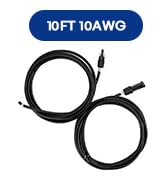
It is a beast. It weighs less than our other glass 200W Renogy briefcase panels, yet provides double the power. Folds and unfolds nicely, has two built-in handles and comes in a soft "cordura-like" case, not a hardshell like the glass briefcase panels from Renogy. But it doesn't need that much protection. There is no glass. The folding wire legs seem a bit flimsy, but they do their job. Still, be sure to have some solution worked out ahead of time to stake this behemoth to the ground, if you go camping with it. Figure it out ahead of time... not on site. On a calm day, its a no factor, but even a slight wind, can make this thing go fly. And it WILL fly! It is a really good panel overall, very well built, as I'd expect from Renogy. We have five portable folding panels of various sizes from them and they all work great. I was able to get 385W from this panel on a bright sunny day in Chicago area and that surprised me - I expected way less. Of course, if you add an MC4 cable extension to this, your watt yield will start dropping fast, the longer the cable the more loss, so go with the heaviest gauge copper you can for your MC4 cables. I know they are very heavy, but I never buy less than 10 ga cables for my extensions. It is worth the extra watts you save in reduced loss of amperage. IMO, this panel is not for picnics or day trips. It's an overkill for such use cases, but this is a perfect piece of kit for prepper nerds, zombie apocalypse afficionados, RV-ers, or those who are price conscious and want to save a buck or two during hot summer days and run their small mini split or window A/C, which is what we did - we hooked up our window inverter A/C to an Anker F2000 power station and then ran this panel into the power station. The A/C drew around 600W on average from the battery and the panel fed back 380W into the battery, and on a 2kW bank we were easily running for ~6 hours during the hottest summer days when our energy prices were hitting 50c a kWh. You would spend decades like this trying to recoup the money you put into purchasing the power station and the panel, but that's not the point. The main benefit is the grid independence. The fact that we can run two refrigerators, freezer, some lights, a couple fans, a router, wifi on a summer day, right after a heavy storm knocked our power out for a couple days (happens every year here in Chicago suburbs), that pays for itself many times over, especially when you think of the thousands of dollars in frozen/chilled food you have in your freezer, fridge right now. If you have a hungry family and keep well stocked, you probably know what I'm talking about. I've spent way too many days without power to not be conscious of this. If you need more than a 200W panel, then get this one, instead of buying two 200W units, which is what we originally did. Many power stations these days allow you to "overpanel" them, meaning you can have a larger wattage capacity panel hooked up to them than their MPPT will allow. It will simply only take as much amperage as the station can intake and not more. I know that my Anker C1000X can be overpaneled above its 600W limit. Anker confirmed it. Just be sure to pay attention to voltage limits, if you start stringing more panels in a series and thus doubling your voltage, because this particular panel is actually two 200W Renogy panels connected in a series into a giant 4-piece kit, so its VOC (voltage open circuit) is 47.2V, not the usual +/- 23V. Bear that in mind, if you were planning to get two of these and run in series, you'd be far above the 60V limit most power stations limit you to in today's market. Let alone that anything above 48V could severely shock you and even possibly electrocute to death. This is why I said earlier to buy this 400W panel instead of two 200W panels and put them in a series. Price wise, it saves you a couple hundred bucks. This model I'm reviewing doesn't have it, but Renogy also sells this panel on their website (same price + free shipping!!!) and offer a model with Renogy Rover charge controller, so you could literally hook this up to your RV battery + some fuses or circuit breakers. Their Rover charge controller works very well - I have it on our other Renogy folding panel and it has settings for AGM, flooded, gel, LIFEPO4 batteries and is fully waterproof! As I said, this a a really great panel for back yards as an energy backup or large camping or cabin trips into wilderness, to complement your power station. It's big, even when folded, it takes a decent amount of space in the trunk (and won't even fit in smalll compact car trunks (doesn't fit in my Subaru Impreza hatchback trunk, though, just by mere couple inches...). I bought some plastic tent stakes, small carabiners, and a bunch of bungee cords to fasten this to the ground, because even in a moderate wind, this thing will tip over in a blink of an eye. What I actually bought this for is to act as a secondary off-vehicle array for my cargo trailer I'm converting into an RV - I will already have 900W worth of Renogy CIGS panels on the roof, but need a second array to supplement them when the RV will be parked in a shade and I need to top off the 5kW battery. And this is where this folding panel will come in super handy. Besides the sale markdown price, my main selling point was the weight per 100W of power. It wipes the floor with the Renogy glass briefcase panels we alreayd have. It's no contest. That's how light this panel is compared to those 200W folding glass panels, which are well over 30 lbs each. No, it won't compete with my 150W CIGS roof panels, which weigh mere 6.6 lbs each, but those are specialty, very expensive, and you can shoot bullets through those, drive a car over them, endure heavy hail, partially shade them and they still work perfectly, because unlike regular panels where you shade 5% of their area and lose 30% of output, the CIGS panels lose output proportionate to the shaded area. One 150W Renogy CIGS panel also costs more than this entire 400W foldable panel. You get what you pay for and CIGS panels were developed by DARPA for U.S. military. But, that's another story. This particular 400W one, though not CIGS, is still very good and I do recommend it, as long as you are clear on what your intended use cases and scenarios are. Because I need to repeat this again: it's big...
C**R
BIG and HEAVY, but well packaged and easy to set up. Works OK.
First things first, even if you look at the dimensions, this thing is BIG and HEAVY. I didn't understand that until I got it out of the box. That said, set up is a breeze, the stands on the back are top notch, and the MC4 connectors are right were I need them to be, anyway. The magnets holding it closed are strong but not too strong. One odd thing is when it's folded up, the solar cells are on the outside, so care is needed carrying it around. the MC4 connectors are nice, they hook right up to my extension cable and then into the power station through the "solar switch". I've used this with two separate power station brands and not had any issue. I'm a LITTLE disappointed about the solar efficiency , I have seen over 300w, but not often. It may be some sort of user error, but it's not that hard ;). That's why the 4 stars. Renogy is a good quality product and hopefully once the smoke clears up I'll get better output.
C**N
Portable, Reliable, Sturdy, Stylish
I absolutely love these solar panels! I love the versatility since I can take them out when I go camping or keep them as an auxiliary power source on my sailboat, without the need to ever install them permanently. They are a little bigger than I anticipated but they are rated for 400W so the added size is expected, over let's say a 200W panel setup. Funny enough, these panels actually produce more power than some of my other permanently installed solar panels. The build quality is excellent, starting from the solar panels themselves to the carry bag. The color scheme is stylish and they look and feel premium. Using them does feel like using a top of the line product. The frame is sturdy and feels like it can easily withstand the outdoor elements. I also love the blue corner protectors that keep the panels a little bit off the ground and protect the edges. I've read and watched some reviews complaining that the kickstand is not adjustable, but it doesn't really bother me. I feel that having it adjustable doesn't add much and can lead to a potential weak point, breakage, or water sipping into the adjustment mechanism and leading to rust or other sorts of damage. The easier they are to use, the more reliable, and less prone to damage they are, the more points they score in my book. Since the build is mostly made of metal with very little plastic, they can be a little heavy. Personally, I consider the added weight a bonus since I don't have to worry that they will fly away with the wind, bend or break if something runs into them. If you're moving them short distances, such as from your car to your campsite, the weight is not an issue. The handles are also really well made and are constructed out of one piece of metal. They don't have any padding to make them softer which is good since you don't have to worry about the material rotting or going bad in the rain or snow. For longer distances, I move them using a collapsible cart/wagon which makes transportation a breeze. Connectivity is easy, just connect them to a charge controller and a battery and you are good to go. If you want to run your regular 110v appliances, just connect an inverter to the battery. Connect your coffee maker, toaster or any other electronics you like. It really is as ingenious and easy at it sounds. This solar panel is more than enough to power all of this. Just makes sure you have a good battery, good wattage on your inverter, and a good charge controller (recommend MPPT). Renogy makes all of these as well and I've owned several of them throughout the years without issues, but you can really use any brand you like, they are all inter-compatible (thank God). Price-wise, you get what you pay for. The cost spread out over years of use comes out to actually be low per year of use. At least, that's how I look at it and it makes sense to me when making this decision. If I buy a cheaper solar panel but it lasts me 6-12 months before the issues start appearing and I have to buy a new one every time, I'm actually financially better off by just buying this product. In terms of the enjoyment of use factor, every-time I use these solar panels it feels really good to use them. They are well made, reliable, and very pleasant to look at. Spread that enjoyment out over years of use and that makes me a happy camper (literally, pun intended).
D**E
Need better Product control Wires get bent if grommet doesnt work right
I got the package in undamaged except for some scuffs on the handles that were not padded, better padding would be better for the over all unit and better taping as 2 of the 3 tape pieces broke. The unit itself seem to produce power but it was later in the day and I only got about 140 watts. What I did notice was unlike the two side panels the middle panels wire connection was pinching as seen in the photos. The rubber Grommet was now allow the cables to slide through properly. Already the red wire show stress marks and it would be just a matter of time before the wire inside would be damaged. I immediately packed up and filed a return. I will post how my return will go, but I would have to say there is ZERO quality control from the factory otherwise a simple open and closing of this unit would have showed the problem. They are just making them and figuring if something is wrong they will return which is a hassle and ties up the funds to prevent me from buying something else. A lot of premium price to get this lack of quality control. My only fear is them not catching the wire again and sending this defective unit to someone else.
W**1
Super portable under perform rating.
The positive is they are super portable. The negative for us is that according to the Anker F3000 we've been charging with them, they consistently under perform. 2 of these plugged in is topping out at ~600w. They are more than sufficient for charging a C1000, but take all day to charge up an F3000 without any expansion batteries.
J**S
Unfolding/Solo Movement/Solo Movement Continued/Grabbing
So far so good, its huge and seems sturdy enough to handle movement by an individual person if your careful. Ive received 307 watts so far on a sunny day with some mist like clouds around the area of the sun, so in direct sunlight maybe like 350-400watts max. SOLO MOVEMENT : Imagine a north to south axis with an intersecting west to east axis, via connecting the north to west and east, and south to west and east. Now from the core to the east are the 2 right solar panels (if your standing up behind it and looking down at a 45 degree angle towards it. Youd be the south if that was the case) and from core 2 north are the 2 unfolded panels, your holding the handle of the unfolded core to north (which is positioned at the 50 marker of core to north. Also, you should know, while panels are folded the legs cant be kicked out because they connect magnetically via the powder blue things, via a small pull detaching them from eachother) panels because your squatting or stagger stepped and pulling the panels back, via already having the core to east panels legs kicked out and your right hands palm at the center of both core to east panels north to south axis's (of were they meet. You could call it the ridge of the back of the panels, like a phones bezels if that makes sense) while slowly lowering your form of heights balance (were you using all arms, or leg or back or all, etc etc during the slowly parts). Now Once you have the 2 core to east panels laying against the surface, unfold the core to north panels (stand up straight, shoulder length, for balance) slowly, so you can put your right hand on the center of the back of the right panel of core to norths 2 panels, so there isnt any snapping of the joints from hyper extension basically. I think thats what some people experienced via other amazon reviews of this 400 watt renogy panel. They struggled unfolding due to size or were careless in handling, because although it feels like it can handle hyper extension to some degree, i wouldnt push it. It cost $400 for a reason, you should probably be patient, or learn patience and take your time with it (like dumb phone drop tests, why pay $1000-$1800 if you werent planning to protect your investment, you probably have bad money management issues, especially considering the majority work 9 to 5 jobs). I knew from the first day, that unfolding the way that i was could lead to problems, and after careful thinking, my solution accurately gets it unfolded 100 percent of the time with 100 percent accuracy. SOLO MOVEMENT CONTINUED: When moving from the position mentioned in SOLO MOVEMENT, youll be behind the 2 panels opposite of the solar cable connector side. If viewing far left panel from front, the ne corner is where to grab with your left hand when your behind the left 2 panels. With your right hands fingertips indentationally against the middle of the second to last left solar panel (opposite of solar cable connector side. Fold the far left panels leg down when you feel balanced enough and then fold down the second to lasts solar panels leg) pivot from elbow and by way of your fingertips lift slowly and indentationally (feeling the weight of that second 2 last left solar panel) meaning your right wrist should be moving towards your body or towards the other 2 panels depending on your bodies balance from your crouched position. By lifting slowly the bottom corner of the far left panel (se corner if viewed from the front) wont scrape the ground allowing you to push inwards with your left grasp based on your assessment of its weight, hence the placement of your left hand at that ne corner of the far left panel (ne if viewed from the front) The rest is simple, it should form a capital letter L like it mentions above in SOLO MOVEMENT. GRABBING : When facing towards a completely folded up panel if you couldnt or didnt need the handle, just grab left middle and right middle (Position left 4 fingers on back and left thumb on front of middle left, right 4 fingers on back right thumb on front of middle right when facing towards the standing folded panel. From facing towards the folded standing panel, hence its left sides northwest upper corner and its left sides bottom southwest corner via this being considered a north to south axis, so its 50 marker is middle left) dont grab it crunchingly with all of each finger pressing against it smashingly with the palm (uncontrolled) instead grab it indentationally via fingertips where your wrist is more involved (youll understand what i mean by wrist involved once you pull upwards to lift or whatever.)
S**D
Not close to the rated output
We got two of these 400W panels and are using them with our Bluetti AC200L. On a clear day with full sun at the start of May, the most we get from them is around 260W per panel, 520W combined. I would have expected at least 80% of their rated capacity; around 320W or better. The Bluetti will accept up to 1200W from solar input. We've tried them individually, in parallel, and in series with the same results. The were easy to hook up to our Bluetti power bank though. The power bank has its own charge controller built in, so all we needed to do is get an extension cables and some Y-adapters and the panels connected right up. If we wanted to add a 3rd panel to our power bank, I'm not sure what to do. You're not supposed to mix panels, but I don't want another one of these. I would not recommend them.
J**Z
Calidad de Panel Solar
Buen producto, compre 2 paneles, pero ya vi que solo me cobraron 1 y me entregaron 1 pieza. Ya volvi a comprar el segundo
Trustpilot
1 month ago
2 months ago