
DOWNLOAD THE APP


Customer Services
Copyright © 2025 Desertcart Holdings Limited
DOWNLOAD THE APP


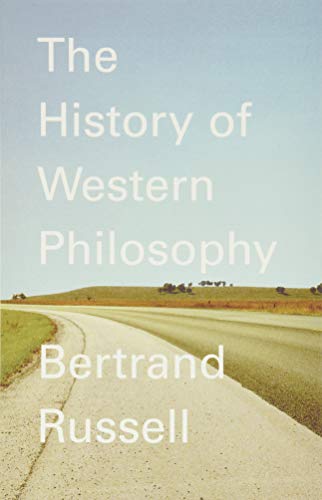


The History of Western Philosophy [Bertrand Russell] on desertcart.com. *FREE* shipping on qualifying offers. The History of Western Philosophy Review: 5 stars! Really well done! - This was a truly spectacular book and I rate it a solid 5 stars. I liked it much more than Will Durant’s acclaimed The Story of Philosophy, and equally as much as Leonard Peikoff’s History of Philosophy lectures. I like to think of this book as “a history of Western thought.” Russell profiles and summarizes every philosopher and philosophical movement from Thales to John Dewey and his own school of logical analysis. Each chapter was clear and interesting. I found Kant, Hegel, and Bergson less clear than other chapters, but that may just be because those philosophers themselves are hard to grasp. Russel didn’t just report on how ideas changed and impacted society, he also explained the history and workings of society in each period. I found this especially helpful for the first book about ancient philosophy and the second about the medieval ages. I also really loved how detailed Russell was in his analysis and retelling of the history of the Church. All of that was completely new to me, and I didn’t know how much I was missing by not delving into Church history! Also, I gotta say, his chapters on Rousseau, Berkeley, and Byron were exceptional. I loved the letters exchanged between Rousseau and Voltaire (I literally laughed out loud reading them). Berkeley was clearer than he’s ever been before. And even though I was never interested in Byron previously, Russell intrigued me with his description of him. I’ve already added some of his poems to my Kindle to check out! Usually long books annoy me. This one didn’t. Every sentence felt absolutely necessary, and I was often left with wanting to know more about each figure, idea, and period! Russell occasionally injected his opinion or brought up inconsistencies within the philosophies he was describing, but not nearly enough for my tastes. It was always very obvious when he was commenting as himself and when he was describing or speaking for the philosopher he was writing about though, which was great. Overall, this was an excellent survey of Western philosophy. It was great as an introduction to the ideas of these thinkers, as well as a “history of Western thought” like I mentioned at the beginning of this review. If you want something that goes deeper into the philosophies of some of these thinkers, check out Leonard Peikoff’s History of Philosophy. If you’re more interested in the history aspect, you can check out Will Durant’s Story of Philosophy . (I think Russell’s book is complimentary yet slightly superior to Durant’s.) I highly recommend this book, and the Audible version narrated by Jonathan Keeble. Review: My first successful attempt at reading a philosophy-related book - I'm almost 40 and I've been mildly curious about philosophy throughout my adult life. Unfortunately, I had yet to read anything meaningful about it, because all the previous attempts to educate myself were thwarted by the pretentiousness of all the authors I had tried to read on the topic; I suspect one can't be accepted in this field if they speak like human beings. History of Western Philosophy, however, is different: even non-experts can read this introductory book! How amazing is that? On top of that, Russell has a delicious whimsical side to him, which transpires in this book just enough for the occasional comic relief. Although an atheist himself, he does show the necessary formal reverence to religious matters as avoid offending anyone (in fact, he even uses the appropriate jargon regarding heathens, heretics and the such, although I believe most of it is tongue in cheek). Apart from all that (which was the critical part for me), the book is obviously well respected, and it's remarkably thorough (which means you shouldn't be concerned with the content's verity or its coverage of the topic). Speaking of thoroughness, I'm quite happy that I happened upon it in digital format, because I later realized how thick the paper version must be, and that I would most likely have been intimidated by it to the point of not buying the book in the first place. The Kindle version does have a few OCR problems (typically spaces missing between words), but they're few and far apart enough not to become any meaningful hindrance to fluid reading. UPDATE: I finally finished reading the book, and I wanted to add a few things specifically for novices like myself. If you're a newcomer to philosophy AND you're just a casual reader, expect that you won't be able to understand everything, and that you will remember much less than what you understand. This is important in two ways. On one hand, knowing this, you shouldn't get discouraged when you don't understand something as well as you'd want to: you'd probably forget it anyway, so just keep on reading -- the important thing is to get an overall idea, not to remember every little detail (which is anyway impossible). On the other hand, the fact that you'll unavoidably forget a lot of stuff is quite unfortunate, because after you finish with the Antics, the cross-references become increasingly more important and relevant. So I suggest that, if your reading habits allow it, you might want to jot down a few words about each philosopher IMMEDIATELY after finishing each chapter; you probably wouldn't need more that two or three phrases with what you found most distinctive about that person, so you can later remember more about each of them at a glance. Having said all that, expect that in the end you'll leave with maybe 10% of what you've been reading -- and that's if you're lucky. But that's ok: what matters is that you leave with an understanding of what philosophy is really all about, and that you will definitely get. Plus, you'll certainly be able to place almost any Western philosopher in roughly the right period, you'll develop likes and dislikes, and you'll end up with a much better understanding of what and why it is that Western philosophers have been doing what they've been doing for the past few thousand years. And let's be honest: what more can you hope for?
| Best Sellers Rank | #20,912 in Books ( See Top 100 in Books ) #8 in Modern Western Philosophy #32 in Ancient Greek & Roman Philosophy #1,246 in Reference (Books) |
| Customer Reviews | 4.7 4.7 out of 5 stars (2,014) |
| Dimensions | 5.5 x 1.6 x 8.44 inches |
| ISBN-10 | 0671201581 |
| ISBN-13 | 978-0671201586 |
| Item Weight | 1.7 pounds |
| Language | English |
| Print length | 895 pages |
| Publication date | October 30, 1967 |
| Publisher | Simon & Schuster/Touchstone |
C**E
5 stars! Really well done!
This was a truly spectacular book and I rate it a solid 5 stars. I liked it much more than Will Durant’s acclaimed The Story of Philosophy, and equally as much as Leonard Peikoff’s History of Philosophy lectures. I like to think of this book as “a history of Western thought.” Russell profiles and summarizes every philosopher and philosophical movement from Thales to John Dewey and his own school of logical analysis. Each chapter was clear and interesting. I found Kant, Hegel, and Bergson less clear than other chapters, but that may just be because those philosophers themselves are hard to grasp. Russel didn’t just report on how ideas changed and impacted society, he also explained the history and workings of society in each period. I found this especially helpful for the first book about ancient philosophy and the second about the medieval ages. I also really loved how detailed Russell was in his analysis and retelling of the history of the Church. All of that was completely new to me, and I didn’t know how much I was missing by not delving into Church history! Also, I gotta say, his chapters on Rousseau, Berkeley, and Byron were exceptional. I loved the letters exchanged between Rousseau and Voltaire (I literally laughed out loud reading them). Berkeley was clearer than he’s ever been before. And even though I was never interested in Byron previously, Russell intrigued me with his description of him. I’ve already added some of his poems to my Kindle to check out! Usually long books annoy me. This one didn’t. Every sentence felt absolutely necessary, and I was often left with wanting to know more about each figure, idea, and period! Russell occasionally injected his opinion or brought up inconsistencies within the philosophies he was describing, but not nearly enough for my tastes. It was always very obvious when he was commenting as himself and when he was describing or speaking for the philosopher he was writing about though, which was great. Overall, this was an excellent survey of Western philosophy. It was great as an introduction to the ideas of these thinkers, as well as a “history of Western thought” like I mentioned at the beginning of this review. If you want something that goes deeper into the philosophies of some of these thinkers, check out Leonard Peikoff’s History of Philosophy. If you’re more interested in the history aspect, you can check out Will Durant’s Story of Philosophy . (I think Russell’s book is complimentary yet slightly superior to Durant’s.) I highly recommend this book, and the Audible version narrated by Jonathan Keeble.
B**U
My first successful attempt at reading a philosophy-related book
I'm almost 40 and I've been mildly curious about philosophy throughout my adult life. Unfortunately, I had yet to read anything meaningful about it, because all the previous attempts to educate myself were thwarted by the pretentiousness of all the authors I had tried to read on the topic; I suspect one can't be accepted in this field if they speak like human beings. History of Western Philosophy, however, is different: even non-experts can read this introductory book! How amazing is that? On top of that, Russell has a delicious whimsical side to him, which transpires in this book just enough for the occasional comic relief. Although an atheist himself, he does show the necessary formal reverence to religious matters as avoid offending anyone (in fact, he even uses the appropriate jargon regarding heathens, heretics and the such, although I believe most of it is tongue in cheek). Apart from all that (which was the critical part for me), the book is obviously well respected, and it's remarkably thorough (which means you shouldn't be concerned with the content's verity or its coverage of the topic). Speaking of thoroughness, I'm quite happy that I happened upon it in digital format, because I later realized how thick the paper version must be, and that I would most likely have been intimidated by it to the point of not buying the book in the first place. The Kindle version does have a few OCR problems (typically spaces missing between words), but they're few and far apart enough not to become any meaningful hindrance to fluid reading. UPDATE: I finally finished reading the book, and I wanted to add a few things specifically for novices like myself. If you're a newcomer to philosophy AND you're just a casual reader, expect that you won't be able to understand everything, and that you will remember much less than what you understand. This is important in two ways. On one hand, knowing this, you shouldn't get discouraged when you don't understand something as well as you'd want to: you'd probably forget it anyway, so just keep on reading -- the important thing is to get an overall idea, not to remember every little detail (which is anyway impossible). On the other hand, the fact that you'll unavoidably forget a lot of stuff is quite unfortunate, because after you finish with the Antics, the cross-references become increasingly more important and relevant. So I suggest that, if your reading habits allow it, you might want to jot down a few words about each philosopher IMMEDIATELY after finishing each chapter; you probably wouldn't need more that two or three phrases with what you found most distinctive about that person, so you can later remember more about each of them at a glance. Having said all that, expect that in the end you'll leave with maybe 10% of what you've been reading -- and that's if you're lucky. But that's ok: what matters is that you leave with an understanding of what philosophy is really all about, and that you will definitely get. Plus, you'll certainly be able to place almost any Western philosopher in roughly the right period, you'll develop likes and dislikes, and you'll end up with a much better understanding of what and why it is that Western philosophers have been doing what they've been doing for the past few thousand years. And let's be honest: what more can you hope for?
R**D
This book is wise and clever and dry and witty and challenging and entertaining . . . and at times it is even humorous. There are more concise listings you can read of who said what, where and when but few that will place the facts of how the ideas we still debate today came to be, came to hold sway, came to be such a critical part of all of our lives whether we know it or not, whether we have any idea at all about some any or all of them. They so thoroughly permeate our lives, how we look at our world, how our world gets presented to us, how we look at each other - family, friends, our countrymen, refugees, foreigners, aliens and gods, and even at ourselves, that to look away from a work such as this is a folly, a sin of omission as those nasty nuns tried to beat into me. Instead of reading this, many of us would prefer a preacher or a guru or a parent figure to walk us through some system of thinking which they generally sell as a formula for living, as a manual for what to think and how to act, and in doing this we so often sell ourselves and the rest of the people on the planet way, way short of the truth. We notice it easily when we see ordinary good people joining up as Jehova's Witnesses, as scientologists, as yoga devotees, as Catholics or as Protestants. We "get it" when we see people living by the words of those who make grandiose claims for the Koran or the Bible, the Torah or the Book of Morman. But we generally don't get it at all when it comes to whatever beliefs we have grown in to ourselves, because like most people, our beliefs are more explored and mined for further possibilities, rather than critically examined. Bertrand Russell is arguably the greatest logician and philosopher, and possibly even the greatest mathematician, of the twentieth century and this is no mean feat in a century where ideas were published and distributed like no other. Even now we can see great swathes of the world who have not yet adapted to this relatively recent world of easily available ideas, where the censorious notions of "being offended" or "blasphemy" or "incitement" are over played to stifle debate. I am not saying that we should stand by and allow hate speech, or incitement to hate crimes, or that we should live in a world that feels it must ridicule all ridiculous ideas, but we have to allow and actively promote the study of ideas different from our own and we should be prepared to put any ideas we put out there as having applicability beyond our own lives to the test of unhindered public scrutiny. The problem comes when the scrutiny itself relies on cherished beliefs rather than rigorous debate, logic and philosophical insight. Make no mistake, you have an abundance of theory and philosophy in your life. You couldn't set your watch or pat your cat without theory to inform your practice. A lot of what we do is all mapped out through repetition and our brain's capacity to file things i place for . . . so we don't after a certain young age have to think about where we should put the spoon or the cup or the toilet tissue. It's automatic. We can think about other things while we drink a hot coffee without scalding ourselves by mistaking our ear for our mouth. But disturbingly in the post Bill Clinton era of KISS (keep it simple stupid), where sound bites shape our news and current affairs, and were "txting has rplced wrting and eevn spleling", and we way too often trade off being concise for something that is really just being approximate and too often plainly stupid. if we keep it up for much longer, and the signs are fairly beak, this urge to act on minimal information, to avoid complexity, to slag off at things and people and ideas we do not really understand, to purge what little we think we know on talk back radio, while we listen to other tossers doing the same, to delight in our own shorthand take on almost everything that might actually matter, from how we treat refugees to how we give massive tax breaks to the rich, we will yet see large parts of our planet become uninhabitable. And the weak minded journalists and commentators who profit handsomely from it all lead a chorus of ignorant, fearful, simple-minded climate change deniers into our collective oblivion!. I will defend your right to believe what you want, but unlike Voltaire, I draw the line at having to die as a consequence of your scientific illiteracy and your intellectual arrogance. It's the situation we find ourselves in when so many people turn to radio shock jocks and often highly prejudiced print columnists to get answers to critical scientific questions, rather than turning to our scientists who are fighting for airspace. Our scientists have the difficult task of struggling to reduce highly complex arguments to ideas we can get our heads around, but which then often become absurdly knock-able. The widespread of laziness hiding behind the KiSS principle has long appalled me. Once you reduce complex ideas to what they are not . . . simple ideas . . . you betray the truth to convenience and to sound bites. So here it is. A challenge. Read this book, not with a view to demolishing it with your current cherished prejudices, and take whatever time you need to come to terms with the panoramic intellectual journey on which Russell will lead you. Your reward may be an increased dissatisfaction with the shallow KISS level of public debate, but you will at least know something worth knowing about the struggle of good men and women over millennia who have tried to walk us out of the dark places where stupidity lurks, where prejudice reigns, where we sanction harming our fellow travellers rather than have our own intolerance too challenged or exposed. I imagine many people will find this book difficult at different levels, and clearly some who have review it wrote ill of it or make it out to be less than it is in order to soften its challenge to their own belief systems. Approach it for the history of western thought, realise that other non-Western traditions of thought have also developed, and you will emerge from it grateful to Bertrand Russell for living and thinking and bothering to share such an encyclopaedic mind. Russell has a highly developed sense of the human condition, of how unfair it is and of the ways in which ideas on social justice have arisen and been resisted, abused and sometimes actually succeeded. He wrote this magnificent book without the benefit we all have derived from the work of that other truly great Briton, Alan Turing, the inventor of the computer. Anyone whose mind could span such a wide universe of ideas, arguments, counter arguments and often complex propositions, and put it into a readable single volume without resorting to Wikipedia or the moron-making KISS principal, deserves to be read and valued for what is a monumental contribution to the life of anyone who reads it. And a footnote. You can download it for free from various sites because it is out of copyright but you will soon learn that it has not been typeset as a free publication. You will almost certainly be downloading a scan which has been made using an optical character recognition program . . . and so, on every second page or so you will need to sort out a typo, which will have arisen because the inking or typesetting or printing of the original was not 100% perfect. It becomes very imperfect and tiring trying to read a scanned copy and my very strong recommendation is that you PAY for a copy that comes from a current publisher who will ensure that your hardcopy, or your download, is not only inexpensive but is all that you would want for such a brilliant book.
G**O
Bertrand Russell is in My Opinion unique! This Book is a Bible simply saying. A Rare and True Contribution To Mankind. This Book Will always Be My Bedtime Reading.
A**E
Das beste Buch zum Einstieg in die Philosophie bis zum Beginn des 20. Jahrhunderts, das ich kenne!
A**N
There is little to say about what Russell wrote. It's great and classic, albeit rather biased in some parts. The book itself, however, does not match its contents. I will never understand why the use of blindingly white pages are so common in books published in the USA and the UK. Combine that with the small font size, and reading this book becomes rather taxing on the eyes. Spending some more money and ordering the hardcover copy might be preferable.
S**N
Book arrived as described. Good customer orientated seller. Came with a very polite message to get in touch with the seller if there was at all anything amiss with the product.
Trustpilot
2 weeks ago
5 days ago