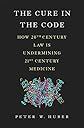
The Cure in the Code: How 20th Century Law is Undermining 21st Century Medicine 1st Edition
Product ID: 1701334
Desertcart purchases this item on your behalf and handles shipping, customs, and support to OMAN.
Full description not available
L**A
Understanding today's law in science.
I find that this reading is very interesting. You don't have to be a lawyer or a scientist to be interested in this type of book.Reading it makes you stop and think regarding the subject.
L**N
A must read for every U.S. citizen. Clear, concise and riveting synthesis of our current health care dilemma
The author provides a succinct and easily understood synthesis of recent breakthroughs in scientific technologies and capabilities to illustrate the unprecedented opportunity we now have to reduce human suffering and dramatically improve health of humans worldwide. He then summarizes current U.S. legislation that guides the FDA regulatory process for development of novel therapeutics, articulates how the regulations were appropriate when originally written, and then makes a compelling argument to illustrate how the current regulations are actually impeding progress. More important and more impressive - he provides thoughtful and provocative solutions to facilitate and accelerate progress.A must read for everyone in the health care industry, especially anyone interested in how to facilitate development of novel therapeutics for currently untreatable diseases.Actually, this is a must read for every U.S. citizen as it is only through reform of our outdated regulatory laws that the potential of modern scientific understanding can be unleashed and fully realized.
V**I
) But it is a very good foundation and overview of the strides that are being ...
It's a bit dated now. (Written in 2013 and this is a very fast evolving field.)But it is a very good foundation and overview of the strides that are being made in medical research on multiple levels and in multiple areas. And the multiple mismatches between enormous potential of the scientific breakthroughs of the last decade.Huber makes a powerful case that current FDA approval process is a significant constraint to progress.Very clearly written.
A**L
Need a new FDA
Huber does a fantastic job of explaining the developments in microbiology and the human genome and showing how they will be used to prevent, treat, and cure disease. The future of medical science is custom care by the physician for the individual patient. The book equally demonstrates how little of this will actually occur until the FDA abandons the obsolete approach of analyzing the "safety" and "effectiveness" of medications based on lengthy studies comparing large groups of (genetically varied) people.One criticism. While each chapter can stand on its own, this causes the book to be somewhat repetitious.
L**S
It is like peering through a window at the future of medicine and medical treatments
Thought-provoking, insightful, and concerning in light of the current changes in healthcare which will stand in the way of "sniffers" and individualized cures for the diseases of today and tomorrow.
J**E
life and death
This is a well-written and important book on the future of medicine and regulation of medicine. Don't confuse it with the debates on the Affordable Care Act; it's about the regulatory impediments to investment in and approval of new medicines. Like Huber's earlier books, this one has lots of interesting stories (some funny, many tragic) to make the broader points concrete and memorable. The opening chapter is as tightly written and compelling as Dawkins's Selfish Gene.
S**Y
The author makes good points and defends them very well
The author makes good points and defends them very well. However, at times his writing can get a bit off-track - it can be a challenge to remember how every aspect of the book fits into his central thesis.
J**J
I don't envy the authors task. Taking a complex ...
I don't envy the authors task. Taking a complex and nuanced subject such as drug discovery and regulation and making it accessible to a broad audience would be a journalist feat. Unfortunately, Huber attempts this by removing all the nuance and couching his argument in folksy euphemisms. (Diagnostics become sniffers, Epidemiologists become Crowd Doctors ect.) Chapters 9 &10 present some interesting ideas but unfortunately are buried in 200 repetitive pages extolling the omniscience of the modern physician and sanctity of patient choice.
M**R
You can get a good taste of this book from the articles the author ...
This is the story of how medicine is turning from treating overarching illnesses with standardised treatments to treating specific dysfunctions with personalised treatments. It also considers how policy needs to change to maximise the benefits of that revolution (generalising from the prototype in how HIV has been managed with cocktails of drugs developed).I gave up using the highlighter in this book because more of the book was being highlighted than left blank. Absolutely fascinating, vitally important and - I checked with a friend working in the field - relevant beyond the US. You can get a good taste of this book from the articles the author has posted on the Manhattan Institute website, but you should still read the whole thing.
Trustpilot
3 weeks ago
2 months ago