We remain fully operational. Our teams are working around the clock to ensure your deliveries continue safely.

DOWNLOAD THE APP


Customer Services
Copyright © 2025 Desertcart Holdings Limited
DOWNLOAD THE APP
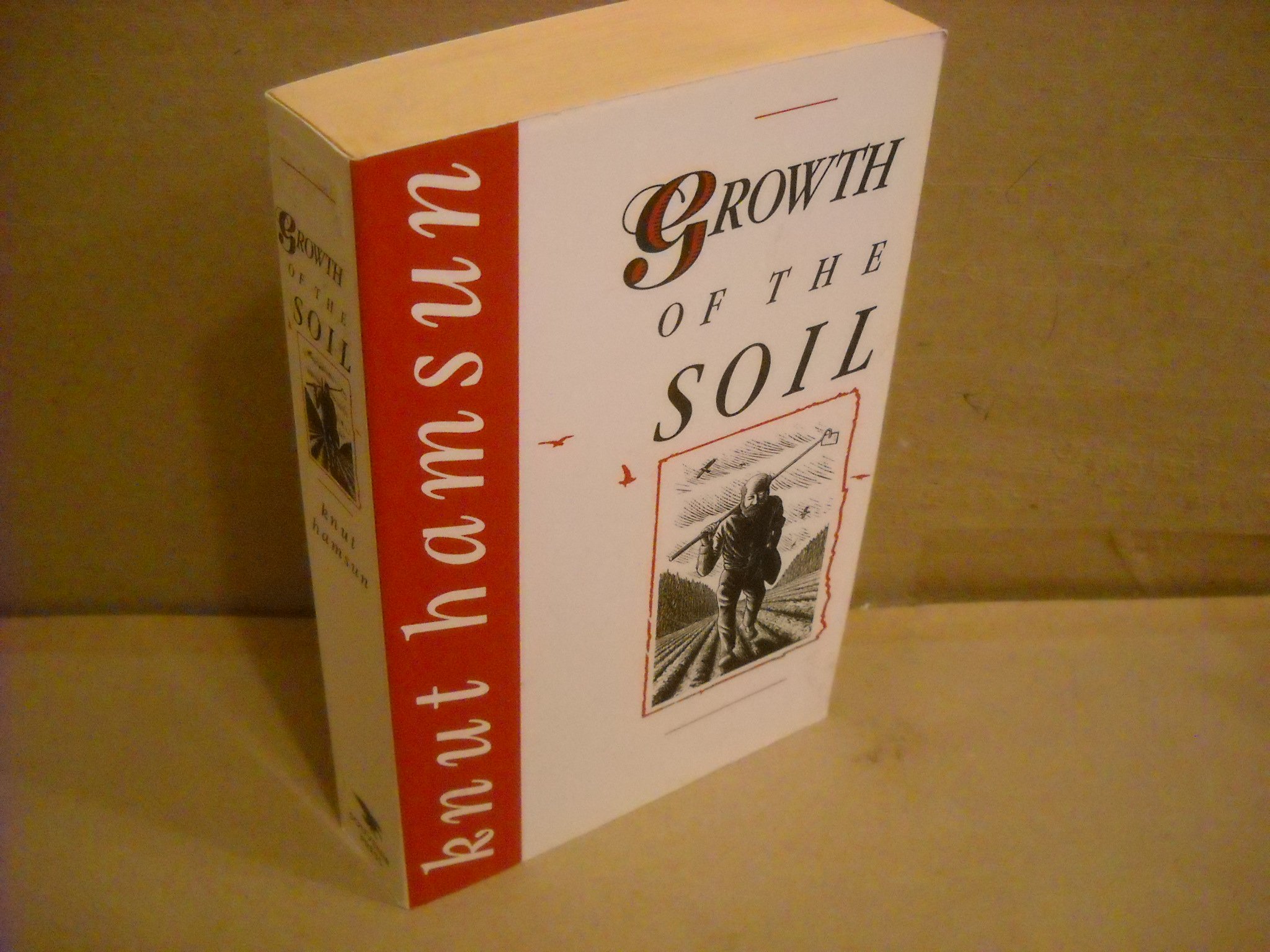
desertcart.com: Growth Of The Soil: 9781440414220: Hamsun, Knut: Books Review: Hamsun weaves a compelling story of how man and nature should coexist and how we've been led astray - This book is an amazing testament to the way things used (ought..?) to be. In this mythical world Hamsun has created a lone man comes to wild land with a PURPOSE. His purpose is to cultivate and build and inhabit and 'grow' the land into something human, something sculpted, something meaningful. Some people still live this purposeful existence, or try to, in places very remote (there are few left), such as Northern and Western Alaska and Siberia. It's a hard life but also a wonderful one. Few people get to experience it in our modern world. Can you imagine leaving the comforts of your city, suburban, or even semi-country life, and moving out into the middle of the wilderness on your own, constructing your own dwelling, growing crops, and raising livestock? Not for the feint of heart. No one wants to do this kind of thing anymore and it's sad. This is a very powerful way to stay connected to the land and the inhabitants of the land. Hamsun does a wonderful job of illustrating this way of life and it's encroachment by more and more humans as time goes on. Most of the people in the novel don't get corrupted by the influence of the encroaching civilization except one of the main character's sons who goes very astray in a sad (and at times depressing) strain of the story...but he represents all (or many/maybe most) of us. Hamsun is a crafty and thoughtful storyteller. I've also read his book 'Hunger' which is extraordinary and worth reading. Don't be put off by his Nazi sympathies. An artists prejudices and other personality traits/quirks or what have you, should not be confused in most cases with the art they create. You can dislike Hamsun the person and love his work. And you should love his work it's some of the best written material around. Review: The Once Universal Way of Life - It’s hard to understand different types of human consciousness. If it was easy we’d all be experts in Hegel. But it’s undeniable that consciousness has changed as society has become more literate and technological and governments have become more free. While it’s possible to access some of the earliest civilizations’ kinds of consciousness—one need only, for example, read the Hebrew Bible—Growth of the Soil is at its finest when it portrays what life was like for a farmer and his wife settling untilled land in the far northern part of Norway during the late nineteenth century. Knut Hamsun actually thought that the solution to the problems of the twentieth century was a return to this way of life but that lack of foresight doesn’t diminish from the power of the novel. As it progresses, the nineteenth century catches up with the farmer and one sees the contrast between modern urban life and the more staid ways of the country. To put its themes into words would, unfortunately, be to engage in a number of cliches. But I can guarantee that any reader will come away with a new appreciation for what the first settlers were like—their manners, customs and ways of thinking. I don’t mean to suggest this is an exercise in cultural anthropology. With a slow but steady pace, mirroring the growth of the tilled land, Hamsun introduces a panoply of characters from the Lutheran villages nearby as well as fellow farmers in the Arctic Circle’s wilderness. And these characters have adventures and dilemmas ranging from the tragic to the comical. You couldn’t really even describe a way of life without the necessary drama of human living. But it’s perennial interests comes, not from a great sense of the landscape—which actually is barely described, not from the story arcs and plot twists—though there are many, but from the insight into the manner in which almost all human beings used to live and which turned out to be on the point of almost vanishing (at least in Europe). Because of this unique perspective, I would argue that Growth of the Soil is almost a must read to fellow explorers of the human condition.
| Best Sellers Rank | #1,346,634 in Books ( See Top 100 in Books ) #7,994 in Psychological Fiction (Books) |
| Customer Reviews | 4.5 4.5 out of 5 stars (643) |
| Dimensions | 7 x 0.57 x 10 inches |
| ISBN-10 | 144041422X |
| ISBN-13 | 978-1440414220 |
| Item Weight | 1.12 pounds |
| Language | English |
| Print length | 226 pages |
| Publication date | August 30, 2008 |
| Publisher | CreateSpace Independent Publishing Platform |
S**.
Hamsun weaves a compelling story of how man and nature should coexist and how we've been led astray
This book is an amazing testament to the way things used (ought..?) to be. In this mythical world Hamsun has created a lone man comes to wild land with a PURPOSE. His purpose is to cultivate and build and inhabit and 'grow' the land into something human, something sculpted, something meaningful. Some people still live this purposeful existence, or try to, in places very remote (there are few left), such as Northern and Western Alaska and Siberia. It's a hard life but also a wonderful one. Few people get to experience it in our modern world. Can you imagine leaving the comforts of your city, suburban, or even semi-country life, and moving out into the middle of the wilderness on your own, constructing your own dwelling, growing crops, and raising livestock? Not for the feint of heart. No one wants to do this kind of thing anymore and it's sad. This is a very powerful way to stay connected to the land and the inhabitants of the land. Hamsun does a wonderful job of illustrating this way of life and it's encroachment by more and more humans as time goes on. Most of the people in the novel don't get corrupted by the influence of the encroaching civilization except one of the main character's sons who goes very astray in a sad (and at times depressing) strain of the story...but he represents all (or many/maybe most) of us. Hamsun is a crafty and thoughtful storyteller. I've also read his book 'Hunger' which is extraordinary and worth reading. Don't be put off by his Nazi sympathies. An artists prejudices and other personality traits/quirks or what have you, should not be confused in most cases with the art they create. You can dislike Hamsun the person and love his work. And you should love his work it's some of the best written material around.
A**S
The Once Universal Way of Life
It’s hard to understand different types of human consciousness. If it was easy we’d all be experts in Hegel. But it’s undeniable that consciousness has changed as society has become more literate and technological and governments have become more free. While it’s possible to access some of the earliest civilizations’ kinds of consciousness—one need only, for example, read the Hebrew Bible—Growth of the Soil is at its finest when it portrays what life was like for a farmer and his wife settling untilled land in the far northern part of Norway during the late nineteenth century. Knut Hamsun actually thought that the solution to the problems of the twentieth century was a return to this way of life but that lack of foresight doesn’t diminish from the power of the novel. As it progresses, the nineteenth century catches up with the farmer and one sees the contrast between modern urban life and the more staid ways of the country. To put its themes into words would, unfortunately, be to engage in a number of cliches. But I can guarantee that any reader will come away with a new appreciation for what the first settlers were like—their manners, customs and ways of thinking. I don’t mean to suggest this is an exercise in cultural anthropology. With a slow but steady pace, mirroring the growth of the tilled land, Hamsun introduces a panoply of characters from the Lutheran villages nearby as well as fellow farmers in the Arctic Circle’s wilderness. And these characters have adventures and dilemmas ranging from the tragic to the comical. You couldn’t really even describe a way of life without the necessary drama of human living. But it’s perennial interests comes, not from a great sense of the landscape—which actually is barely described, not from the story arcs and plot twists—though there are many, but from the insight into the manner in which almost all human beings used to live and which turned out to be on the point of almost vanishing (at least in Europe). Because of this unique perspective, I would argue that Growth of the Soil is almost a must read to fellow explorers of the human condition.
A**U
excellent book and seller
A**R
The awful translation pretending to be country side Americans is very distracting. The novel having so many characters also doesn't help. This particular edition with black cover says it's printed by amazon with no mention of translator as well. I recommend trying other editions or just. learning norwegian and getting the original
A**R
To put it simply, I like this book. No great surprise, nor twist, just a nice read allowing the reader to see how life develops in places that seem inhospitable. Hamsun lets you draw whatever conclusions you desire and leaves enough hints to allow you to imagine how the lives of the characters continue after the story ends.
J**A
Bien escrito y con trasfondo
V**I
Published in 1917 and instantly recognized as a masterpiece 'Growth of the Soil' marked the high point of Knut Hamsun's literary career. The plot of the novel is at once simple, sublime, elemental and transcendental, for it is the story of creation. A man, Isak, comes to an uninhabited part of Norway. In this cold, forbidding place he makes his covenant with the land. He is joined by Inger: his wife, partner and co-creator. Isak has a visceral bond with the earth and through sheer physical strength and will he creates a home, a homestead and in time a community of fellow settlers who come in his wake. Through the viscissitudes of life, it's flourishes and disappointments Isak never breaks his covenant. He tends to the earth, his animals and they, unfailingly, tend to him. For Isak the soil is not a means to get food or clothing, his relationship with the soil is primordial. He farms because he must, not only because he needs. The covenant between man and earth is ancient, hallowed, mystical and Isak sustains it. The novel is pastoral and goes into considerable detail about the life on a farm. Hamsun's experience working as a farm hand lends authenticity while his consummate skill makes a three page description of cowshed building a gripping read. The novel is didactic in tone, without being overbearing or preachy. It covers multiple themes, as is wont, in a story of biblical aspirations. The primary theme is the relation of man and nature. Isak is a simple man, a few passage of Psalms and stories from the Bible being the sum total of his formal education. He is a man of few words, fewer emotions and of simple certainties. He works the earth and the earth gives him all he needs. Sometimes the weather is inclement but Isak is judicious and the Lord rewards him with a bumper harvest the next year. He has faith, patience, strength, a companion: Inger, and that is enough. For people like me, who live in a city but are only one generation removed from a pastoral life,reading the book is to face a sense of loss, of a bond having been irrevocably severed. It brings to mind this passage from VS Naipaul's India : A Wounded Civilization "... the custom was possible only with an open fireplace. To have to give up the custom was to abjure a link with the earth and the antiquity of earth, of the beginning of things. ... So that awe in the presence of the earth and the universe was something to be rediscovered later, by other means" The corrupting influence of the City is the other major theme of the novel. This does seem overdone at times. Inger is arrested for infanticide and spends five years in prison. The prison is progressive and they teach her sewing, provide education and perform surgery on her harelip yet the affectations of City, it's pretensions and superfluous nature leave a mark on Inger. Everyone who comes from the city or spends time there is worse for it. From Isak's son Eleseus (a rather overdone caricature of Hamsun himself), his neighbour Brede and even his benefactor Giessler all show flaws of character. The City is a necessary evil, it is parasitic upon the village. This view of the City isnt terribly original or nuanced and is the one weak point of the book. The sacred union of man and wife, the strength of this bond is a recurring theme. Isak has Inger and she shares his world, nurtures it. She gives him a family, a purpose and children. Aksel, a later settler as hardworking as Isak, lacks a wife and his farm never rises above providing for bare necessities. Aksel looks at a wife in terms of a utilitarian transaction of recruiting a co-worker while Isak's union with Inger has a sense of providence. As far as love stories go it is hard to top Hamsun's narration: "They entered the hut, ate of her food and drank his goat milk; then they made coffee. They lingered pleasantly over their coffee before going to bed. At night he lay feeling greedy for her and took her. In the morning she didn't leave, nor did she leave the rest of the day, but made herself useful, milked the goats and scrubbed the pots with fine sand. She never left. Inger was her name, Isak his. " Another aspect of the novel which, for an Indian reader, would stand out is the supportive role of the State and its bureaucracy. Geissler, the sheriff, is supportive of Isak and helps him get a formal title to the land he has worked on, a fair price for the copper that is discovered in Isak's land. Geissler, a worldly wise man, knows that Isak, and people like him, are the true engines of civilization. Inger, in prison, recieves education, skills of a seamstress and a sense of self worth. This benign, welfare state is not without its flaws. As the remit of the State grows it invades the private and communal space of the settlers. The simple Christian morality of Psalms, embodied by Isak and Aksel, comes in conflict with the progressive ideas of the new bureaucracy. Hamsun shows the inevitable conflict and the hollowness of liberal ideas of progress. Deracinated officials, who succeed Geissler, try to impose liberal, enlightenment values onto an ancient tradition. Hamsun evokes this in the differential treatment of Inger and Barbro(the daughter of one of Isak's neighbor) at the hands of the State for the crime of infanticide. Inger is treated with sympathy, her crime was one of necessity, her remorse genuine but the scales of justice have to be balanced and she serves 5 years in prison, the minimum possible and is treated well. Barbro commits her crime a few years later, she does it to escape marriage, responsibility, never confesses and feels not a sliver of guilt. Yet the wife of the new sheriff, the paradigm of liberal progress, holds up Barbro as the emblematic victim and frames the murder of an infant as an act of freedom. Barbro is found not guilty. The scales have come unstuck. At the end of the novel we find Isak, still at work even as his prodigal strength begins to desert him with age. Inger is there, by his side and his younger son Sivert, a chip off the old block. They are happy, Isak knows the worth of what he has done. He has created a city; he was the first man, from his sweat and blood life has sprung forth. Hamsun encapsulates the meaning of his novel in this elegant passage "The settlers didn't make themselves suffer on account of goodies they hadn't got: art, newspapers, luxuries, politics were worth exactly as much as people were willing to pay for them, no more; the growth of the soil, on the other hand, had to be procured at any cost. It was the origin of all things, the only source." The book, a literary sensation, has had an eventful afterlife. Hamsun's support for Nazism has bedevilled his ouvre and no other book has suffered more than Growth of the Soil. After all it was the book Goebbels, the Nazi propaganda minister, gave to German soldiers as they marched to conquer Europe. Heidegger, the greatest philosopher of the 20th century, and a Nazi supporter recommended in 1926 that Hannah Arendt (his student and sometime lover) read Hamsun. I found this extremely interesting. In 1926 no one would have accused Heidegger or Hamsun of being proto Nazis / Fascists. Yet here we have a meeting of minds, Heidegger's attraction to Hamsun prefigures the dark turn both were about to take. Study of intellectual history is peppered with such Aha! moments. Isak is the Ubermensch of Maistre. 'Growth of the Soil' is a canonical work in every sense of the word. Read it we must, life itself depends on it.
Trustpilot
1 day ago
1 week ago