📸 Elevate your craft with the powerhouse mirrorless that pros swear by!
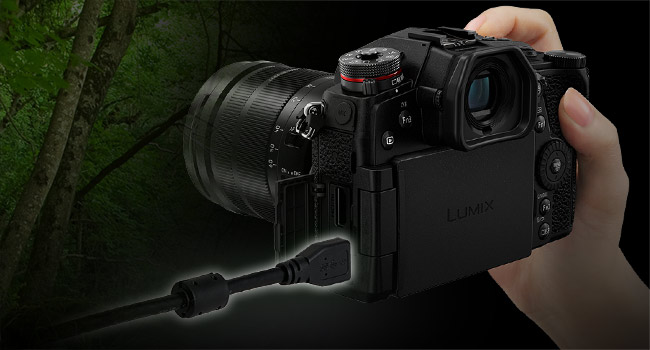
The Panasonic LUMIX G9 is a professional-grade mirrorless camera featuring a 20.3MP Micro Four Thirds sensor with an 80MP high-resolution mode, housed in a durable magnesium alloy body that’s splash, dust, and freeze-proof. It boasts advanced 5-axis Dual I.S. 2.0 image stabilization, 4K 60P 10-bit video recording, and extensive connectivity options including dual UHS-II SD card slots, full-size HDMI, and 3.5mm audio ports. Designed for demanding photographers and videographers, it offers customizable controls, lightning-fast autofocus, and a bright OLED viewfinder, making it a versatile tool for creative professionals who demand reliability and exceptional image quality in any environment.


| ASIN | B0774KTV1X |
| Are Batteries Included | Yes |
| Aspect Ratio | 16:9 |
| Auto Focus Technology | Contrast Detection, Multi area, sensor |
| Autofocus | Yes |
| Autofocus Points | 225 |
| Best Sellers Rank | #215,902 in Electronics ( See Top 100 in Electronics ) #598 in Mirrorless Cameras |
| Bit Depth | 10 Bit |
| Brand | Panasonic |
| Built-In Media | Camera |
| Camera Flash | Hotshoe |
| Camera Lens | Telephoto lens for Micro Four Thirds mount (not included) |
| Color | Black |
| Compatible Devices | Computers, Smartphones, Tablets, External Storage Devices (SD Card compatible), USB-compatible Devices |
| Compatible Mountings | Micro Four Thirds |
| Connectivity Technology | Bluetooth, HDMI, USB |
| Continuous Shooting | 12 FPS |
| Crop Mode | 4:3 |
| Customer Reviews | 4.7 4.7 out of 5 stars (419) |
| Digital-Still | Yes |
| Display Fixture Type | Articulating |
| Display Resolution Maximum | 1040K |
| Display Type | LCD |
| Effective Still Resolution | 20.3 |
| Expanded ISO Minimum | 100 |
| Exposure Control | aperture-priority, manual-and-automatic, shutter-speed-priority |
| File Format | RAW |
| Flash Memory Bus Interface Type | UHS-II U3 |
| Flash Memory Speed Class | UHS-II |
| Flash Memory Supported Size Maximum | 2 TB |
| Flash Memory Type | SDXC |
| Flash Memory UHS Speed Class | UHS-III |
| Flash Memory Video Speed Class | V90 |
| Flash Modes | Automatic, High Speed Sync |
| Focus Features | AFS (Single) / AFF (Flexible) / AFC (Continuous) / MF |
| Focus Mode | Continuous-Servo AF (AF-C), Manual Focus (MF), Single-Servo AF (AF-S) |
| Focus Type | Auto Focus |
| Form Factor | Mirrorless |
| Global Trade Identification Number | 00885170328679 |
| HDMI Type | Type A Standard HDMI |
| Hardware Interface | SATA 6.0 Gb/s |
| Has Color Screen | Yes |
| Has Self-Timer | Yes |
| ISO Range | 200-25600 |
| Image Capture Type | Stills & Video |
| Image stabilization | Sensor-shift |
| Item Weight | 1.5 Pounds |
| JPEG Quality Level | Basic, Fine, Normal |
| Lens Type | Telephoto |
| Light Sensitivity | ISO 25600 |
| Manufacturer | Panasonic |
| Maximum Aperture | 3.5 Millimeters |
| Maximum Image Size | 5184 Pixels |
| Maximum Shutter Speed | 60 Seconds |
| Memory Slots Available | 2 |
| Metering Methods | Center-Weighted Average, Multiple, Spot |
| Minimum Shutter Speed | 1/8000 Seconds |
| Model Name | Panasonic Lumix G9 |
| Model Number | DC-G9KBODY |
| Model Series | Lumix G |
| Movie Mode | Yes |
| Night vision | No |
| Number of Diaphragm Blades | 7 |
| Optical Zoom | 1 x |
| Photo Sensor Resolution | 20.3 MP |
| Photo Sensor Size | 17.3 x 13.0 mm (in 4:3 aspect ratio) |
| Real Angle Of View | 65.5 Degrees |
| Recording Capacity | 30 Minutes |
| Remote Included | No |
| Screen Size | 3 Inches |
| Self Timer | 10 Seconds |
| Sensor Type | CMOS |
| Series Number | 9 |
| Shooting Modes | Bulb Mode,Aperture Priority, Manual, Program, Shutter Priority |
| Skill Level | Professional |
| Special Feature | Brightness Control |
| Supported Image Format | JPEG, RAW |
| Supported Media Type | Multimedia |
| Total Still Resolution | 20.3 MP |
| Total USB 2.0 Ports | 1 |
| Total USB 3.0 Ports | 1 |
| Total USB Ports | 1 |
| Total Video Out Ports | 1 |
| Touch Screen Type | Capacitive |
| UPC | 885170328679 |
| Video Output | HDMI |
| Video Resolution | 4K UHD 2160p |
| Viewfinder | Electronic |
| Warranty Description | Manufacturer |
| White Balance Settings | Auto, Cloudy, Color Temperature, Daylight, Flash torch, Incandescent, Shade |
| Wireless Technology | Bluetooth, Wi-Fi |
| Write Speed | > 312 MB/s |
| Zoom | Optical Zoom |
J**.
Powerhouse flagship of the Panasonic M43 line, packing incredible value, design, quality & features.
After exhaustive research, I decided to go with this camera above even its "full-frame" and APS-C competitors. The 80MP RAW hi-res mode was a big part of it, and as a fine art landscape photographer, I've been using that mode very heavily. I have one of the custom buttons on the camera set to activate it when pressed and have made probably 90+% of my images with this camera using that mode. It also creates a 20MP file as well, just in case you need it for anything. I'm used to waiting for the leaves to stop blowing around before exposing, as I shoot a lot of film and long exposures with my other cameras, so the motion limitation wasn't a big deal, and neither was the tripod requirement. The ergonomics and menu design on this camera are leagues better than the competing cameras, especially Sony, who's menus seem to have been programmed by a drunk engineer after too much overtime. Compared to Olympus, they are far better as well. The menus are very intuitive and easy to figure out as well as customize. You can also configure most of the buttons and knobs on the camera to do anything you want, which is great and truly allows you to make the camera your own by setting it up exactly how you want it. The size is rather large for a Micro 4/3rds camera, but for a good reason: it makes the camera meld with your hand like it was custom molded to do so. I have held a lot of Sony and Olympus cameras, as well as Fujifilm, and they all felt like greased bricks in my hand compared to this thing. Panasonic seems to have really put a lot of thought into the placement of controls, the weighting and balancing, and even the texture of the grip. The camera feels extremely well balanced and secure in the hand. I feel like I could shoot all day without fatigue, which is a lot more than I can say for most of the other many cameras I've used. Ergonomics matter, design matters, balance matters, and in each category, Panasonic hit home runs with this camera. The 4:3 aspect ratio is another thing people never seem to talk about. I vastly prefer 4:3 to the very wide and almost unwieldy 2:3 ratio found in most other cameras. Again, I shoot a lot of film, and this is much closer to the aspect ratios of medium and large format cameras, which were created for a very good reason: they both look more balanced in either orientation and tend to be easier to work with, in both print publications and framing applications. For this reason, I tend to crop 2:3 images anyway, so I would compare the native 20MP size to a 24-26MP APS-C or full-frame camera. In that sense, if you crop down to a 4:3 aspect ratio often, you have about the same resolution. Regardless of this, the actual resolving power tends to be about the same as a 24-26MP APS-C or full-frame camera, as thanks to the aspect ratio difference, you are basically just trimming off the sides of of the frame while retaining about the same vertical resolution if that makes sense. So the 20MP thing is more of an aspect ratio difference than an actual difference in resolution when compared to 24-26MP cameras. I have found noise at high ISOs to not be a significant issue, though you do get some noise at the higher ISOs in low light, it tends to have a fairly pleasing look to it, much like film grain. I routinely shoot at up to ISO 640 to freeze motion, and many others use it up to around 6400 without issue. Of course, if you routinely shoot weddings in dark venues or something like that, you might either want to invest in a full-frame body like the S1/S1R (basically the same camera with a bigger sensor) or just get some of the excellent M43 fast max aperture lenses that are readily available. The camera does an excellent job in low light at high ISOs, especially compared to even full-frame bodies from a few years ago, but obviously, each tool has its strengths and weaknesses so pick the best setup for your intended use case. AF speed isn't something I use, so I'll refrain from saying much on this except that this camera is incredibly fast and focuses immediately, even when slewing from front to back of a scene at 100mm/200mm equivalent. It's quick. The video features are class-leading, right up there with the GH5, thanks to the new 2.0 firmware update, which added 10-bit and HDR/HLG support. There is also an activation code you can get to enable vectorscopes and waveforms. The mic jack is very wisely placed in a spot where you can have an L-bracket or cage mounted and still reach the port without having to reach through the bracket. It also does not block the display when you have the screen flipped around in selfie mode. This sort of stuff sets Panasonic head and shoulders above so many other camera companies who seem to routinely overlook real-world use details like these. Overall, this is the best-designed camera I've ever owned, and I've owned and used a ton of cameras over the years as both a pro-level photographer and YouTuber with many years of experience. I would buy this camera again and recommend it in a heartbeat.
N**T
Excellent stills and 4K camera
I bought this camera primarily for video over the GH5 thanks to its recent firmware update allowing 10-bit video, plus the stills capability of this camera. It shoots beautiful 4K, the kit lens 12-60 is a ver versatile lens, the IBIS is excellent, image quality is great, and the weather sealing is an added bonus. If you’re coming from a DSLR, the handling isn’t as good as some people say, but for a mirrorless, it’s great. I switched from a Canon and the video autofocus on this G9 is lacking compared to that, but it’s good enough and the recent firmware helped. Autofocus with pictures is great, though. It takes a little bit to get used to all of the settings if you’re new to Panasonic, but the customization is fantastic and can really speed up your work flow. For the price this camera is killer. If you’re debating full frame S1, consider this if you don’t need superb low light or super creamy bokeh. The low light auto focus stinks but the focus peaking in manual mode is very helpful. I purchased the Viltrox speedbooster which helps achieve better bokeh and low light, although that isn’t perfect either. Overall, just buy it. It’s a great camera.
V**R
Fine camera at a reduced price
There's something that just feels right about this camera in my hand. The right size, the right weight, the right feel, and the right functionality. The high quality electronic viewfinder (your main interphase with the camera in a way) is quite enjoyable to use. Obviously not a point and shoot sort of camera, much more for someone who has, or wants to develop photographic skills. Never owned a full frame digital camera but have had several APS-C cameras, and I've found the output to be quite good with this camera. Also has very useful video capabilities. Some compromise with iq, in micro four thirds but there is the savings in size and weight for the camera and the lenses. A lot of good lenses available particularly from Panasonic and Olympus. Generally any micro four thirds lens from any manufacturer with be compatible with any micro four thirds camera, (there may be some limits in functionality if you are using different manufacturers) One particular advantage of micro four thirds is if you're doing long telephoto shooting, the 2X factor, a 200mm lens becomes a 400mm equivalent, and an 400mm lens becomes an 800mm equivalent etc. Even though the lenses can be made smaller and lighter than full frame or APS-C counterparts, they can still be quite expensive if you're buying high end models. This is a pro-level or enthusiasts level camera, but what made it particularly attractive to me was the great reduction in price because it's an older model. Probably wouldn't have bought it for full or near full price when it came out, (check out the prices on the G9 II and you'll see what I mean), but that depends on your needs and your circumstances.
A**Z
Gets Job Done
Originally bought a similar camera, but different brand because of reviews. That camera was hard to set up. Not intuitive. Had a 2-3 second delay in saving photos. But worse, didn't record true colors. Was out $450 ('restock fee') and no camera. I have a Lumix DMCLX100 that is my workhorse because I primarily take pics while biking and wanted a smaller package. Read reviews of the G9 and decided to stick with Lumix. Great decision! Top things I like. 1. Not compact, but smaller than most full- frame type cameras (note: G9 not full frame). 2. The WB-ISO-Light Compensation dial is ergonomically located and easy to use. These are frequently used settings by me and I love how user friendly the dial is. 3. Speed up to 1/8000. 4. Tilt screen. 5. True colors! I'm more or less a point and shoot guy and haven't tried night pics or slow apertures etc. But I'm happy with the quality, size, dial setups and ease if use of the G9
I**R
Me encanto la calidad de imagen y las funciones . Sin embargo para los lugares con poca luz necesitarás lentes de mucha apertura 1.7 min . . Mucho ruido a partir de los iso 3600 La pantalla táctil se fundió de la nada . Blackout . Me salió mala la pantalla . Se dañó. No me hicieron válida la garantía amazon . El vendedor la quería mandar a Hong Kong bajo mi responsabilidad. No gracias La pierdo !
A**S
Large than my older model Lumix, but very manageable . I like the "Touch Shutter", just by touching the subject as a point of focus camera will focus and take picture automatically.
B**L
Moved from Canon to Lumix system 2018 and never felt to turn back again. Upgraded to this flagship in 2021. Underrated camera series.
U**J
Excellent Handling. Excellent feature. Tomorrow's technology today.
D**Z
Vengo de usar Pentax durante los últimos 10 años, pero busco una cámara más ligera para salir de viaje y a mis caminatas. Después de mucho buscar y revisar y comparar, me decidí por la Lumix G9, que aunque salió en 2017, ha tenido actualizaciones en su firmware que la han modernizado. La compré con el lente Lumix 12-60 que viene en "kit", aunque la foto la muestra con lente Leica 12-60. Tiene muchas funciones y botones a los que poco a poco me voy acostumbrando y aprendiendo. Hay una "curva de aprendizaje (para mí)" que no estoy acostumbrado al uso de la pantalla táctil en la cámara, pero las fotos que he tomado (como la que muestro) salen muy bien.
Trustpilot
1 month ago
1 month ago